Onikola Waliyu: The Nigerian Innovator Who Built a Bookkeeping Tool for Traders
Nigerian digital product architect Onikola Waliyu built Ghost Ledger, a WhatsApp-based bookkeeping system designed to help informal traders turn everyday transactions into structured financial records.

For many traders in Nigeria’s informal markets, keeping financial records is less about spreadsheets and accounting software and more about memory, piles of paper, WhatsApp messages, a long-standing old book, and whatever can be remembered after a busy day.
A trader may complete dozens of transactions before noon, yet much of that activity can disappear without a reliable record. It is this gap between how informal businesses operate and how formal financial systems expect them to keep records that Nigerian digital product architect Onikola Waliyu set out to address.
Waliyu, who works as a Digital Product Architect at Sabo Finance, began his technology career in 2019 as a junior product data analyst at DevCrib Technologies. Despite studying sociology and anthropology, he moved into technology and product development, eventually working with databases, product analytics, and financial technology systems.
By September 2024, he had become a digital product architect, a role through which he developed the Smart Digital Commerce System (SDCS), known as the Ghost Ledger.
The Problem Waliyu Wanted to Solve

The idea behind Ghost Ledger came from a simple observation: informal traders were already generating valuable business data, but much of it was never properly captured.
In busy markets, traders have little time to stop serving customers and enter transactions into conventional accounting applications. Many instead rely on memory, handwritten notes, or informal messages.
Waliyu argues that this is not necessarily a literacy problem. Many traders already use smartphones and WhatsApp, but conventional bookkeeping platforms can require too many steps and too much time.
Ghost Ledger therefore takes a different approach by bringing record-keeping into a platform traders are already familiar with. The system allows users to communicate transactions using ordinary market expressions, including combinations of English, Nigerian Pidgin and shorthand such as “3K” or “5K.”
Its AI-powered processing layer converts those messages into structured financial records, making informal transactions more usable within formal financial systems.
Turning Market Language Into Financial Records

What makes Ghost Ledger particularly interesting is that it is not simply another accounting application. Its premise is to make formal record-keeping fit around the trader rather than requiring the trader to completely change how they work.
Waliyu's system is designed to process conversational transaction entries and convert them into structured data. According to a report from Techpoint, internal testing recorded more than 95% accuracy in converting market-style language into usable structured information, while the system was designed to work effectively in environments where low-end smartphones and weaker connectivity are common.
The product also uses server-side rendering to reduce the amount of processing required from users' devices, an important consideration in markets where 3G connections and older smartphones remain common.
Rather than building a sophisticated tool that assumes perfect internet access and powerful devices, Waliyu has focused on the conditions in which many of his intended users actually operate.
The potential consequence goes beyond simply knowing how much a trader sold in a day. Proper transaction records can make informal businesses more visible to banks and other financial institutions, potentially giving them evidence of revenue and business activity when seeking formal credit.
From an Idea to More Than 1,500 Businesses
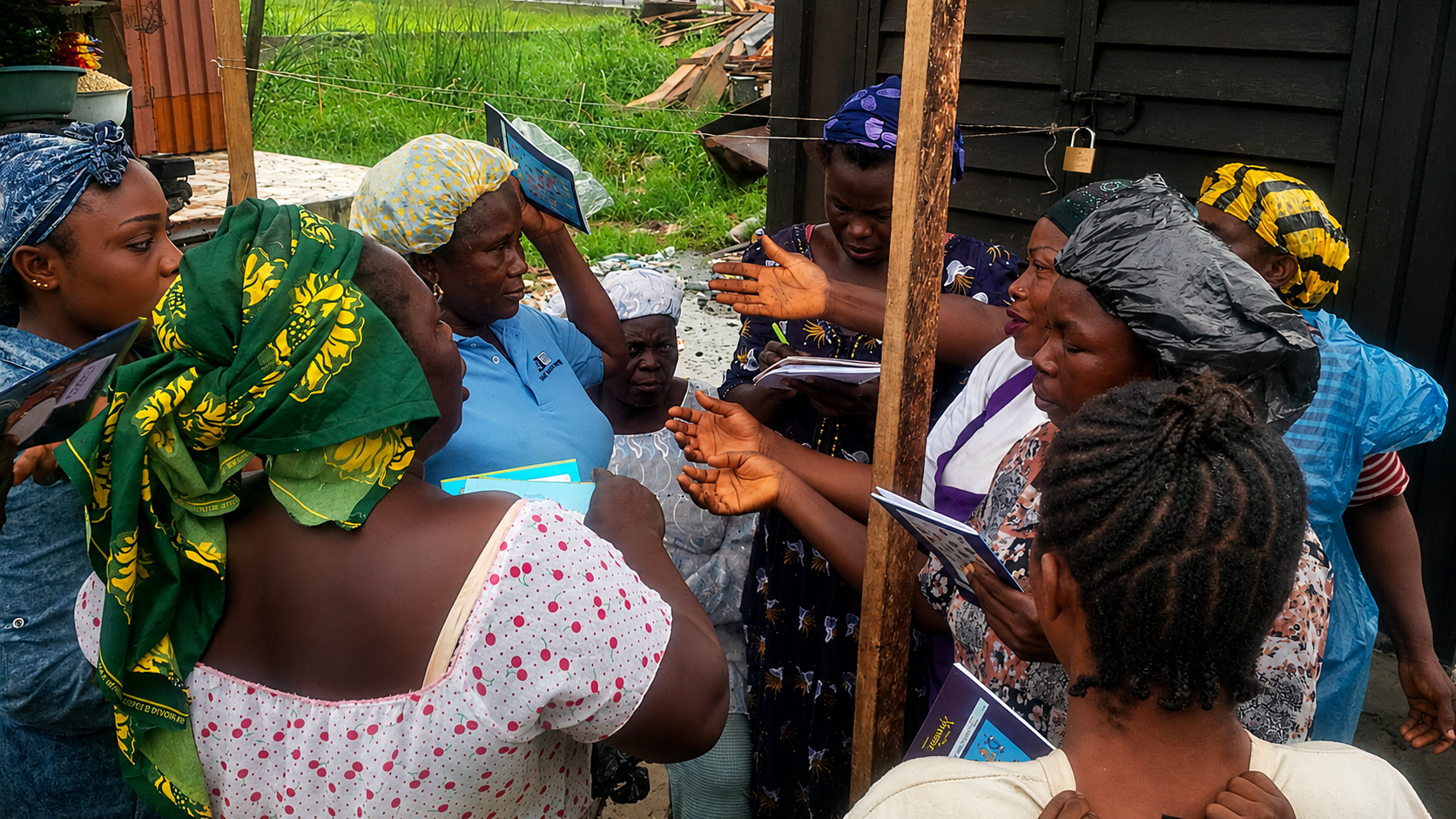
Ghost Ledger entered limited deployment in early 2025 and has since reached more than 1,500 micro and small businesses across Lagos and surrounding areas. The information provided by Waliyu indicates that 1,570 merchants had been onboarded, with thousands of transactions being processed through the platform and more than ₦42 million recorded through it.
The project was initially self-funded before attracting support from individual investors. Waliyu has also said the project was open-sourced in 2026, allowing other contributors to participate in its development and helping reduce some development costs.
The larger idea behind Ghost Ledger is perhaps more important than the application itself. Nigeria's informal economy contains millions of businesses whose activities are economically significant but poorly represented in formal financial records. Waliyu's approach attempts to capture that existing activity without forcing traders to abandon the tools and language they already understand.
Whether Ghost Ledger can eventually scale beyond its current reach remains to be seen. But the problem it is addressing is clear: the informal economy does not necessarily lack financial data; much of its data simply remains invisible to the systems designed to recognise it.