Story of Bessie Coleman: The First Black Woman Pilot
Bessie Coleman shattered racial and gender ceilings in aviation, becoming the first Black and Native American woman pilot. Her story continues to inspire generations to fly beyond limitations.
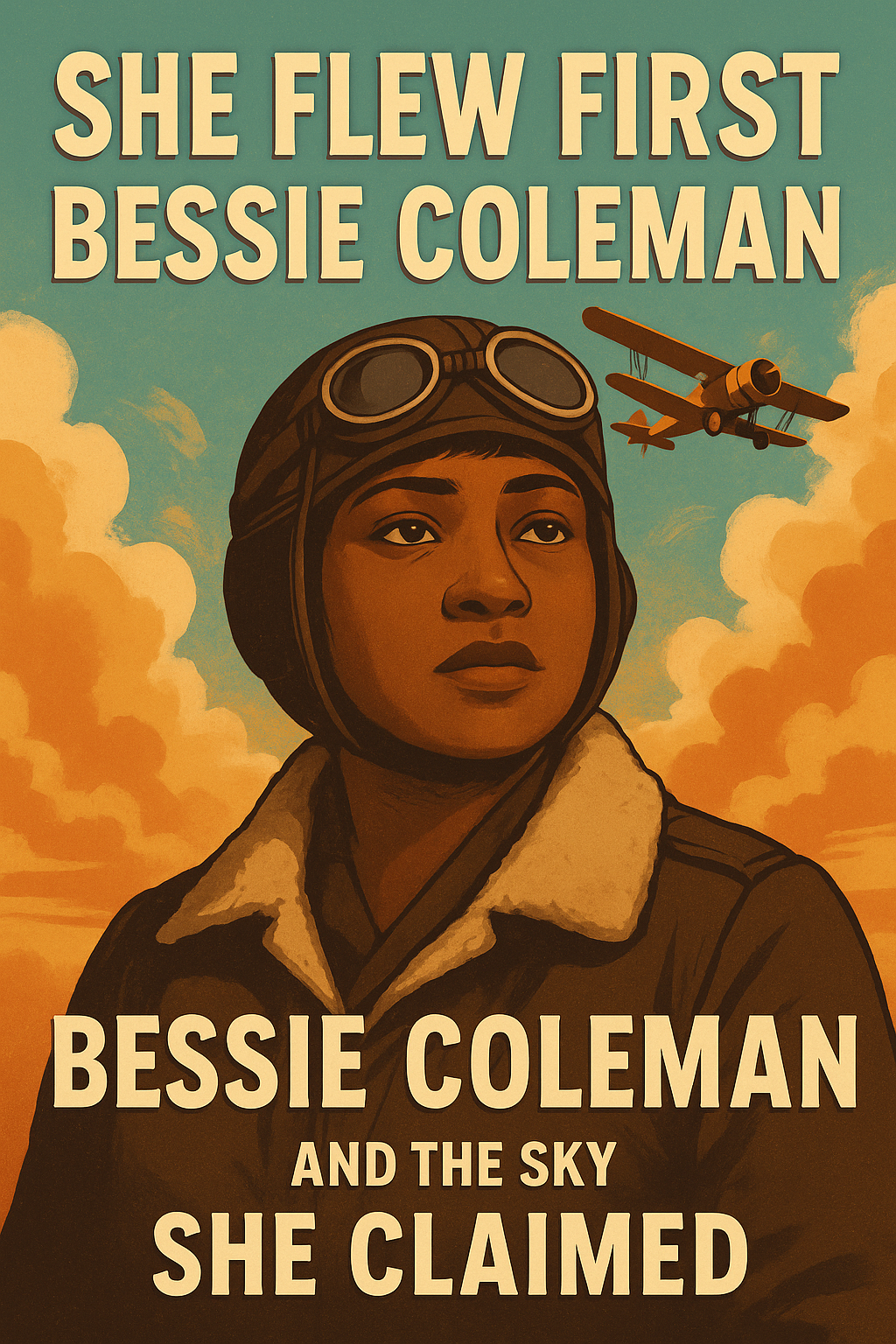
Long before the Tuskegee Airmen flew into history, before Mae Jemison danced among the stars, there was Bessie Coleman, the indomitable daughter of African American and Native American heritage who carved her name into the skies.
Born in 1892 in Atlanta, Texas, Bessie became the first African American woman and first Native American to hold a pilot’s license, earning it in France in 1921 after being denied flight school opportunities in the United States due to both her race and gender.
Humble Beginnings
Bessie Coleman was born into a family of sharecroppers, the tenth of thirteen children. Her father, George Coleman, of Cherokee ancestry, left for Indian Territory when she was young, and her mother, Susan, raised the children alone.
Despite financial hardship and walking four miles to a segregated school, Bessie excelled in reading and math. Her thirst for knowledge eventually took her to Oklahoma Colored Agricultural and Normal University (now Langston University), which she had to leave due to lack of funds.

Chasing the Impossible
In her early twenties, Bessie moved to Chicago and worked as a manicurist. There, she heard stories from World War I pilots and became captivated by aviation. Rejected by every American flight school she applied to, Bessie refused to let racism and sexism ground her dreams.
With financial backing from Chicago Defender publisher, Robert Abbott and banker, Jesse Binga, she learned French and enrolled at the Caudron Brothers School of Aviation in Le Crotoy, France.
In June 1921, she earned her international pilot’s license from the Fédération Aéronautique Internationale, making her an aviation pioneer in more ways than one.

The Rise of Queen Bess
Returning to the U.S., Coleman became a barnstorming pilot, performing aerial tricks, parachute jumps, and death-defying stunts. Her stage name was "Queen Bess", and she drew huge crowds, inspiring awe and admiration—especially among African Americans who had never before seen someone like her command the sky.
Yet, she refused to perform at events that barred Black people from attending. Her career was marked not only by daring but also by defiance. Coleman used her fame to promote aviation for African Americans, advocating for an inclusive flight school, and giving lectures across the country.
History
Rewind the Stories that Made Africa, Africa
A Journey Through Time, Narrated with Insight.

Tragic End
On April 30, 1926, during a test flight in Jacksonville, Florida, the aircraft Bessie was a passenger in malfunctioned. She was thrown from the plane and died at just 34 years old. Her mechanic and co-pilot, William Wills, also perished.
Her death shocked the world, but her impact never waned. Her funeral was attended by thousands, including many members of the Black community for whom she had become a beacon of possibility.


The Legacy Bessie Coleman Left Behind
Bessie Coleman left an indelible mark as the first African American and Native American woman to earn a pilot’s license, achieving this milestone in France in 1921 after being denied entry to American flight schools due to her race and gender.
Her international pilot’s license, issued by the Fédération Aéronautique Internationale, not only broke significant racial and gender barriers but also set a precedent for inclusivity in aviation.
Challenging Segregation and Inspiring Change
Coleman became a celebrated barnstorming pilot, captivating audiences across the United States with daring aerial stunts.
Yet, her mission extended beyond entertainment. She used her platform to challenge Jim Crow-era segregation, refusing to perform at venues that enforced racial separation.
Her insistence on equality and her refusal to compromise on her principles made her a powerful symbol of resistance and hope for marginalized communities.
Role Model and Inspiration
Despite her untimely death at age 34 in a plane accident, Coleman’s legacy has continued to inspire generations. She demonstrated that women and people of color could excel in fields from which they had been systematically excluded.
Her example directly inspired later pioneers in aviation and astronautics, including John Robinson, Cornelius Coffey, Willa Brown, Janet Harmon Bragg, Robert H. Lawrence Jr., and Mae Jemison. Lieutenant William J. Powell, who founded the Bessie Coleman Aero Club in 1929, wrote,
“Because of Bessie Coleman, we have overcome that which was worse than racial barriers. We have overcome the barriers within ourselves and dared to dream.”
Commemoration and Ongoing Honours
Coleman’s legacy is honored in multiple ways:
Annual tributes by pilots who drop flowers over her grave
Establishment of organizations such as the Bessie Coleman Aero Club and the Bessie Coleman Aviators Club, which promote diversity in aviation
Her image on a U.S. postage stamp (1995), a commemorative quarter (2023), and a Barbie doll in the Inspiring Women series
Inductions into the National Women’s Hall of Fame and the National Aviation Hall of Fame
Roads, scholarships, and aviation programs named in her honor
Modern pilots and astronauts—including those at NASA—cite her as a trailblazer. Black women pilots, still underrepresented in the aviation field, often refer to themselves as “Bessie’s daughters.”
Global and Enduring Impact
Coleman’s story resonates worldwide, inspiring individuals in countries with histories of racial and gender exclusion, such as South Africa, where her legacy encourages young people to pursue aviation and other dreams despite systemic barriers.
Her life is a testament to the power of resilience and vision, reminding future generations that “the air is the only place free from prejudices.”
Keeping Her Legacy Alive: Enter Gigi Coleman

Bessie Coleman’s legacy lives not only in aviation history but in the heart of her family, especially through her great-niece, Gigi Coleman, who has become a passionate steward of her aunt’s story.
History
Rewind the Stories that Made Africa, Africa
A Journey Through Time, Narrated with Insight.
In a powerful interview with Gale Robertson, Gigi shared how Bessie’s courage shaped the course of aviation and how her family continues to uplift that story today.
Gigi emphasized that Bessie’s legacy is not just about flying—it’s about breaking barriers and opening skies for those shut out of opportunity.
“A lot of people don’t know her name, and they should,” Gigi said in the interview.
“She paved the way—not just for Black pilots, but for every underdog who was told they didn’t belong.”
As president of the Bessie Coleman Aviation All-Stars, Gigi travels the country reenacting Bessie’s story, speaking at schools, aviation events, and youth programs. She helps introduce the next generation—particularly young people from underserved communities—to careers in aviation, aerospace, and STEM.
Thanks to her work, the spirit of “Queen Bess” continues to soar far beyond the skies she once conquered.
Conclusion: Wings of Change
Bessie Coleman did not just break barriers—she blasted through them with the roar of an engine and the courage of a revolutionary. Her life remains a testament to what’s possible when determination defies limitation. She didn’t just learn to fly—she taught a whole generation that they could too.
In a world that once told her no, Bessie Coleman built her runway.