Personal Tragedy to Global Innovation: The Art of John Anaman

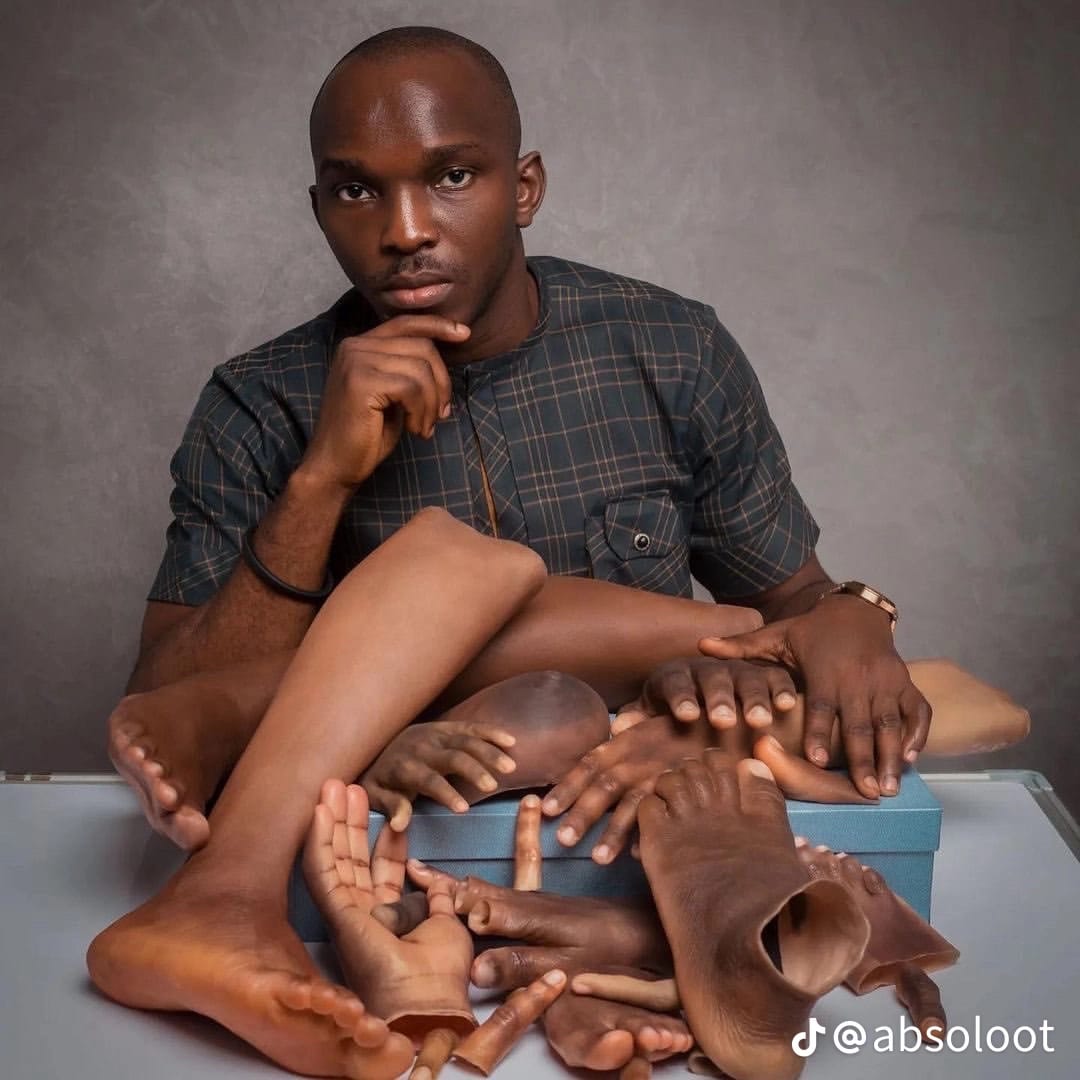
Innovation doesn’t always come from tech labs or billion-dollar startups. Sometimes, it begins at home—with heartbreak, clay, and a refusal to accept invisibility.
For Nigerian sculptor John Amanam, innovation was born the day his younger brother lost several fingers in a devastating accident. When the family sought prosthetic options, what they found was both disappointing and dehumanizing: pale, plastic limbs that looked nothing like his brother’s skin. Lifeless. Alien. A constant reminder of erasure.
John, a trained fine artist from the University of Uyo, couldn’t accept that. His brother deserved more than a prosthetic—he deserved to feel seen, to feel whole. So John went to work. Using his sculpting skills, he created a prosthetic hand that matched his brother’s melanin-rich skin tone. Realistic. Human. Beautiful.
What began as a deeply personal act of love became the beginning of a quiet, powerful revolution.
Making the Invisible Visible
Through his company, Immortal Cosmetic Art Ltd, John Amanam began crafting hyper-realistic prosthetics for Black and Brown individuals—ears, noses, fingers, limbs, each sculpted and painted to match real skin tones with astonishing detail.
These are not medical accessories. They are sculptures of dignity. For amputees who had lived with prosthetics that didn’t reflect their identities, John’s work was more than cosmetic—it was redemptive.
Redefining Innovation in Five Transformative Ways
1. Representation in Prosthetics
For decades, the global prosthetics industry has mass-produced limbs with default light skin tones, ignoring the existence of billions of people with darker skin. John’s designs directly challenged this norm, offering prosthetics that finally looked like us.
2. Emotional Healing
Amputation comes with more than physical pain—it leaves emotional scars. A prosthetic that reflects your skin tone does more than restore appearance; it restores identity. It helps people feel whole again, from the inside out.
3. Ending Social Stigma
In many African cultures, visible disability attracts stigma. And when prosthetics look foreign or artificial, that stigma only deepens. Amanam’s lifelike work allows amputees to move through society without being reduced to their condition.
4. Creating Local Solutions for Local Realities
Africa has long imported prosthetic devices built for different skin, climates, and cultures. John’s work is a local solution to a global problem—designed for African people, by an African innovator.
5. Merging Art and Medicine
John didn’t just create a new prosthetic model—he created an entirely new category: sculptural medicine. His work sits at the intersection of fine art, healthcare, and social justice, reminding us that healing isn’t just clinical—it’s also cultural.
Global Reach, Human Roots
What started in a small studio in Uyo, Nigeria, has now reached over 60 countries. Clients around the world—particularly those of African descent—are seeking John’s prosthetics not just for their quality, but for what they represent: visibility, identity, and pride.
And he’s done it without waiting for institutional approval. No gatekeeping. No delay. Just empathy turned into action.
What True Innovation Really Looks Like
In a world obsessed with the next big thing—AI, blockchain, biotech—John Amanam’s work reminds us that some of the most transformative innovations are deeply human.
Social Insight
Navigate the Rhythms of African Communities
Bold Conversations. Real Impact. True Narratives.
They don’t disrupt the world with code. They restore it with compassion.
John didn’t just build prosthetics, he rebuilt confidence and redefined dignity. He also reimagined what it means to heal.
From his younger brother’s pain, John Amanam sculpted a global movement—one that reshapes how we see disability, diversity, and design.
Not all revolutions are loud.
Some are quiet.
Handcrafted.
And deeply personal.
Sometimes, the most radical thing you can do…
Is to help someone see themselves again.