PCOS Just Got Changed to PMOS. And If You Have Ever Been Misdiagnosed, Now You Know Why
Polycystic Ovary Syndrome has been renamed Polyendocrine Metabolic Ovarian Syndrome after a global consensus process involving 22,000 people over 11 years. Why was the old name a problem? and what happens next for the 170 million women affected?
If you have ever been told you have Polycystic Ovary Syndrome, the first thing most doctors do after delivering that diagnosis is explain what it is not.
It is not, strictly speaking, about cysts. The name says cysts. The name has always said cysts. But many women diagnosed with the condition have no ovarian cysts at all. Others have what looked like cysts on a scan but turn out to be follicles, which are a completely normal part of how ovaries work.
The cysts in the name were spotted by doctors in the 1930s who were physically examining ovaries during surgery and noticed they looked, as one researcher described it, lumpy and bumpy. They named what they saw. What they saw was not the full picture.
For ninety years, that incomplete name has been sitting at the centre of one of the most common hormonal conditions in the world, quietly causing confusion, delayed diagnoses, missed treatment, and a particular kind of frustration that comes from being told you have a condition named after something you might not even have.
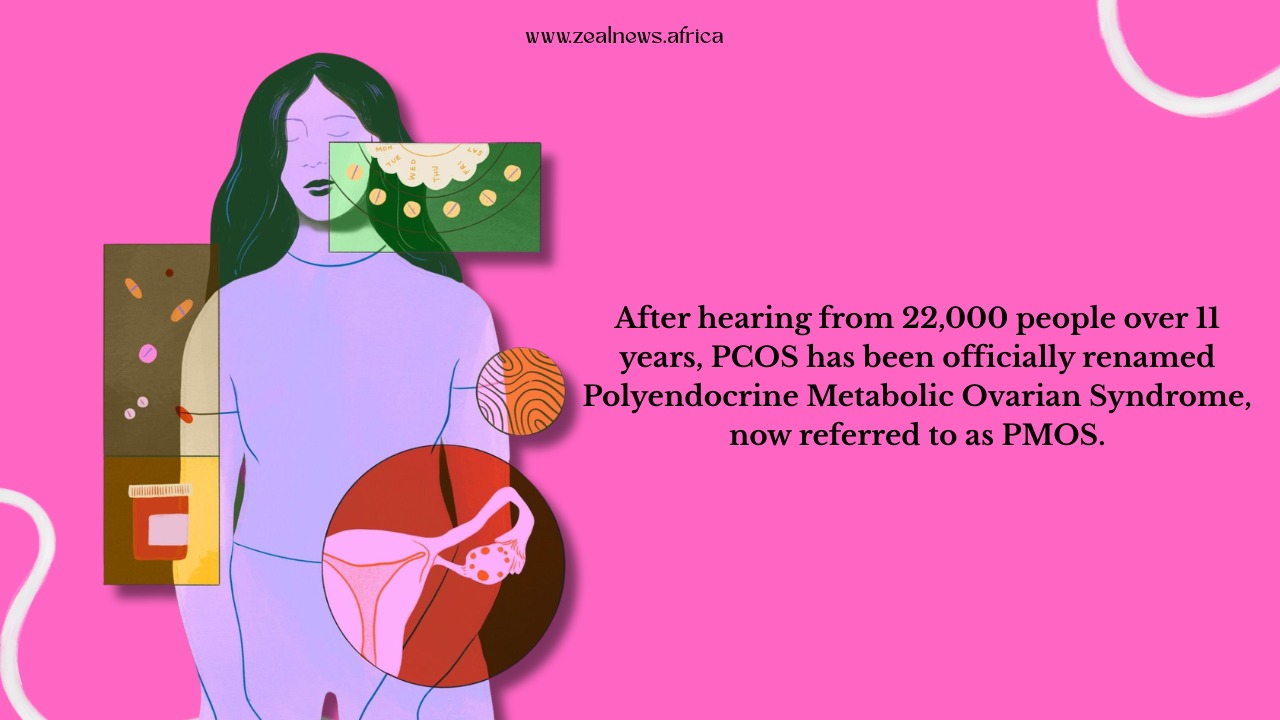
That changed on Tuesday. After hearing from 22,000 people over 11 years, Polycystic Ovary Syndrome has been officially renamed Polyendocrine Metabolic Ovarian Syndrome, now referred to as PMOS.
The new name was introduced in a paper published in The Lancet and presented at the European Congress of Endocrinology in Prague.
What Was Wrong With the Old Name
PCOS affects more than 170 million women of reproductive age worldwide. It is diagnosed based on criteria including irregular or absent ovulation, elevated androgen levels, and either polycystic ovaries or elevated anti-Müllerian hormone levels.
The problem is that none of those three criteria requires cysts. You can be diagnosed with Polycystic Ovary Syndrome without a single cyst on either ovary.
The US National Institutes of Health recommended a name change after experts concluded the name PCOS was a confusing distraction for both patients and doctors.
"The name focuses on a criterion, polycystic ovarian morphology, which is neither necessary nor sufficient to diagnose the syndrome," NIH experts wrote in a 2012 National Institutes of Health (NIH) Evidence-based Methodology Workshop
That sounds like a technical complaint. In practice it had real consequences for real women.
Up to 70 percent of affected individuals remain undiagnosed. The mischaracterization of the condition contributed to delayed diagnoses, fragmented care, stigma, and missed opportunities for early intervention in metabolic and cardiovascular risks.
A woman goes to a doctor with irregular periods, weight gain she cannot explain, hair growing in places she did not expect it, and exhaustion that does not respond to sleep.
The doctor runs a scan. No cysts. The name of the condition says cysts. The doctor moves on. The woman spends years looking for an explanation that the name of her condition was obscuring.
The term PCOS implied pathological ovarian cysts, obscured the condition's diverse endocrine and metabolic features, contributed to delayed diagnosis and fragmented care, and curtailed research and policy framing. When a condition is misnamed, the misunderstanding travels. Into medical training. Into research funding priorities. Into the questions doctors ask and the ones they do not.
What the New Name Actually Means
PMOS. Polyendocrine Metabolic Ovarian Syndrome.
Break it down. Polyendocrine means involving multiple endocrine glands, not just the ovaries. This is a condition that affects how insulin works, how the thyroid functions, how androgens are produced and processed across the body.
Metabolic means it has significant effects on weight, blood sugar, cardiovascular health, and long-term risk of type 2 diabetes. Ovarian is still there, because the ovaries are involved. Syndrome, because it is a cluster of features rather than a single disease with a single cause.
PMOS is characterised by fluctuations in hormones, with impacts on weight, metabolic and mental health, skin, and the reproductive system. For too long, the name reduced a complex, long-term hormonal disorder to a misunderstanding about cysts and a focus on ovaries. This contributed to missed diagnoses and inadequate treatment.

The new name is longer. It is harder to say quickly. But it is accurate in a way the old one never was, and accuracy in medicine is not a cosmetic concern. It is the difference between a woman being told she has a reproductive issue and a woman being told she has a systemic hormonal condition that requires monitoring across multiple body systems.
How It Happened
This did not happen overnight. It followed more than a decade of vigorous debate over the need for a name that more precisely and completely describes the condition.
The process involved 56 leading academic, clinical, and patient organisations. Using iterative global surveys with responses from 14,360 people with PCOS and multidisciplinary health professionals from all world regions, modified Delphi methods, nominal group technique workshops, and marketing and implementation analyses, researchers identified principles prioritising scientific accuracy, clarity, stigma avoidance, cultural appropriateness, and implementation feasibility.
14,360 people were surveyed: women living with the condition, doctors treating it, researchers studying it, the people who attended patient support groups and the people who ran clinical trials.
All of them fed into a process that took years because the people running it understood that changing the name of a condition affecting 170 million women is not a rebranding exercise. It is a structural change to how medicine understands, teaches, and treats an illness.
Dr Helena Teede, an endocrinologist and professor of women's health at Monash University in Australia who chaired the steering group, said: "It was very clear that the name was inaccurate." She spent decades researching the condition and watching patients arrive confused, misdiagnosed, or dismissed before she could put a name to what they were experiencing.
What Happens Next
The implementation plan runs over three years. Clinical guidelines, medical education curricula, electronic health records, textbooks, and international disease classification systems will all be updated to reflect the new terminology.
The process is targeting the2028 international guideline update used across 195 countries, with planned engagement with the World Health Organisation for incorporation into the International Classification of Diseases.
That means PCOS will not disappear from medical records tomorrow. Doctors will continue using the term during the transition. Women currently diagnosed with PCOS do not need to do anything immediately. The condition has not changed.
The diagnostic criteria have not changed. Only the name has changed, and that change will move through the global health system gradually over the next three years.
Renaming this condition is more than semantics. It is about finally recognising the full reality of what patients experience. For too long, the narrow definition of PCOS has overlooked its metabolic and hormonal complexity, leaving many patients undiagnosed or misunderstood.
Ninety years. 170 million women. One letter changed in the abbreviation, and everything it stands for finally changed with it.