No More Dollars: What the CBN's Remittance Ban Means for Families Surviving on Money From Abroad
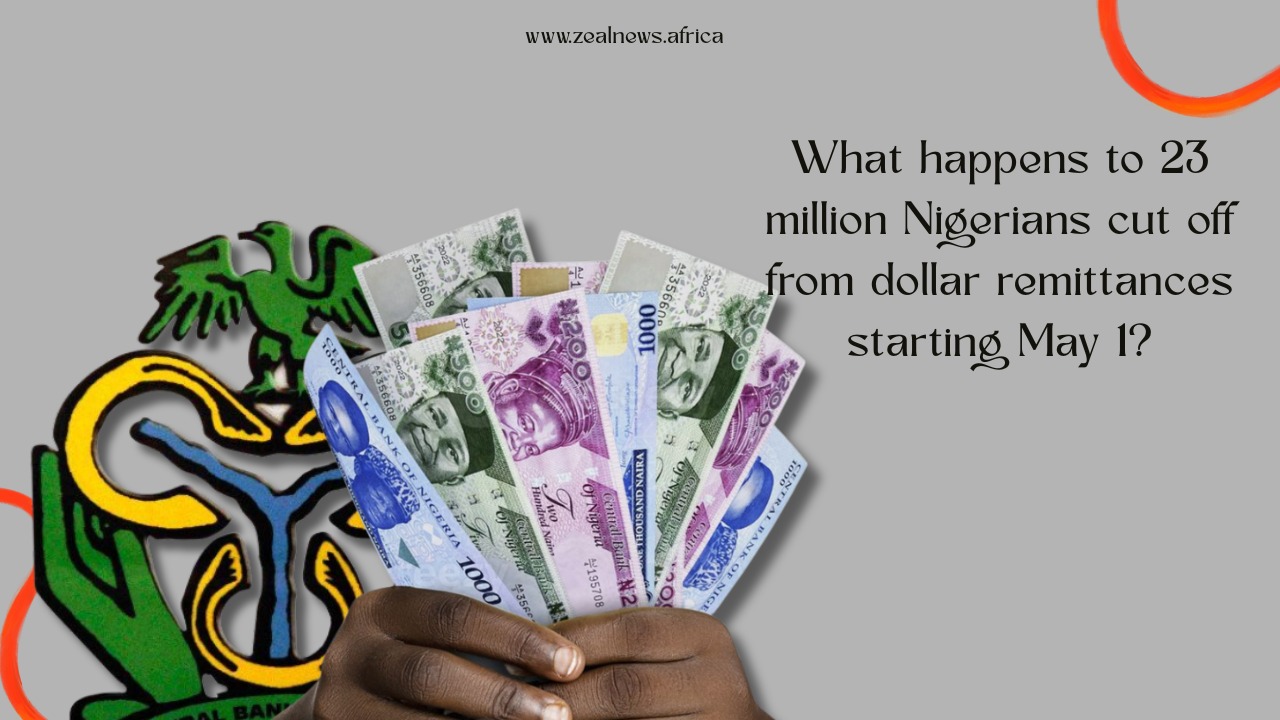
From May 1, 2026, Nigerians can no longer collect remittances in dollars. The CBN says it will stabilise the FX market. For 23 million families depending on money from abroad, the cost is already being counted; N22,500 at a time.
Amara has the numbers memorised before her phone even rings.
Every month, her brother Chidi calls from London around the 15th. The conversation is always short: How is Mama. How are the children. Is everything okay. Then the alert comes through — Western Union, £600, converted at whatever rate the BDC man on her street is offering that week.
She walks five minutes, collects in dollars, and sells them herself. The difference between doing it that way and letting the bank convert automatically is usually around N35,000.
That is the children's school bus for the term. That is the gas cylinder refill twice over. That is the number she has built her monthly budget around for three years, quietly, without telling anyone, because it is the kind of thing that disappears if you talk about it too loudly.
On May 1, 2026, it disappeared anyway.
The Central Bank of Nigeria directed all International Money Transfer Operators, including Western Union, MoneyGram, Remitly, and others, to pay remittances only in naira, using the official Bloomberg BMatch exchange rate.
Recipients can no longer receive dollars or choose how they are paid. The directive was formalized, a deadline was announced, and in Surulere, Amara read the news on her phone and sat still, absorbing what it would mean for her.
What N35,000 Actually Buys
Before you can understand what this policy costs families like Amara's, you need to understand what that exchange rate gap actually represents in real life.
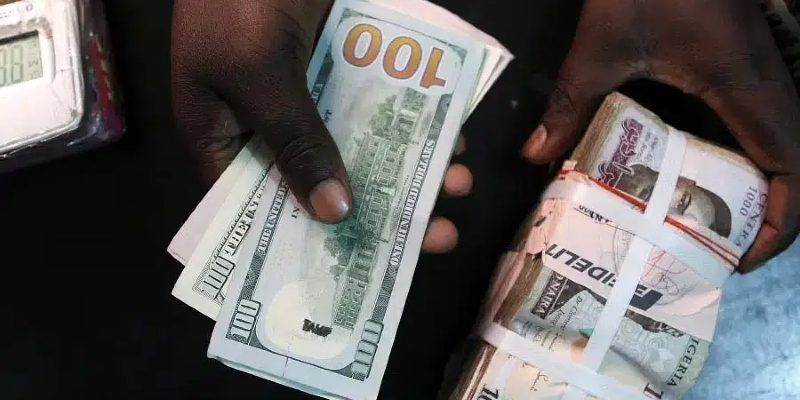
On a $500 remittance, the difference between collecting at the official rate and selling at a modest parallel market rate is roughly N22,500. On $1,000, it is N45,000; enough to cover almost a full 50-kilogram bag of rice, a month of electricity top-up, or school fees for one child in a Lagos public secondary school.
That gap is not a luxury. For most remittance-receiving households, it is the cushion between surviving the month and not. Nigerians received roughly $23 billion in remittances in 2025, one of the largest inflows on the continent. An estimated 23 million Nigerians depend on money sent from abroad.
For most of them, this is not supplemental income. It pays school fees. It covers hospital bills. It is what keeps the household running.
Amara is one of 23 million. She does not appear in CBN policy documents. She does not show up in FX market reports. But she has been doing the same calculation every month for three years, and she knows to the nearest thousand naira exactly what this policy is going to cost her family.
Chidi called when he heard the news. He asked if she was okay. She said yes. After she hung up, she did the maths again, slowly, and then she opened her notes app and started rearranging the monthly budget.
The school bus money had to come from somewhere else now.
Why the CBN Did It Anyway
Here is the thing about this policy that the people most affected by it are too angry to acknowledge right now, and the people who designed it are too cautious to say clearly: the CBN is not wrong about the problem it is trying to solve.
Nigeria's FX market genuinely needs greater transparency in remittance flows, better price discovery, and stronger regulatory visibility over cross-border inflows.
The parallel market; or let’s just call them black markets, that Amara and millions like her have been using is also the same market that enables capital flight, currency manipulation, and the arbitrage schemes that have destabilised the naira repeatedly over the past decade.
Every dollar that moved through informal channels was a dollar the CBN could not see, could not price, and could not use to stabilise the market.
Officials flagged an 11.78 percent decline in IMTO inflows in the first half of 2025 as evidence that informal channels were already syphoning remittance money away from the banking system. The money was still coming into Nigeria. It just wasn't coming in through routes the regulator could track. And an FX market you cannot see is an FX market you cannot manage.

By routing everything through authorised channels and requiring IMTOs to benchmark against the Bloomberg BMatch platform, the CBN creates a paper trail for every dollar that enters through a licensed operator, reduces arbitrage gaps, and pushes pricing into a transparent, real-time framework.
What Happens to the Money That Won't Follow the Rules
Nigerians are not passive recipients of policy. They are relentlessly creative problem-solvers operating in an economy that has been making official channels unworkable for decades.
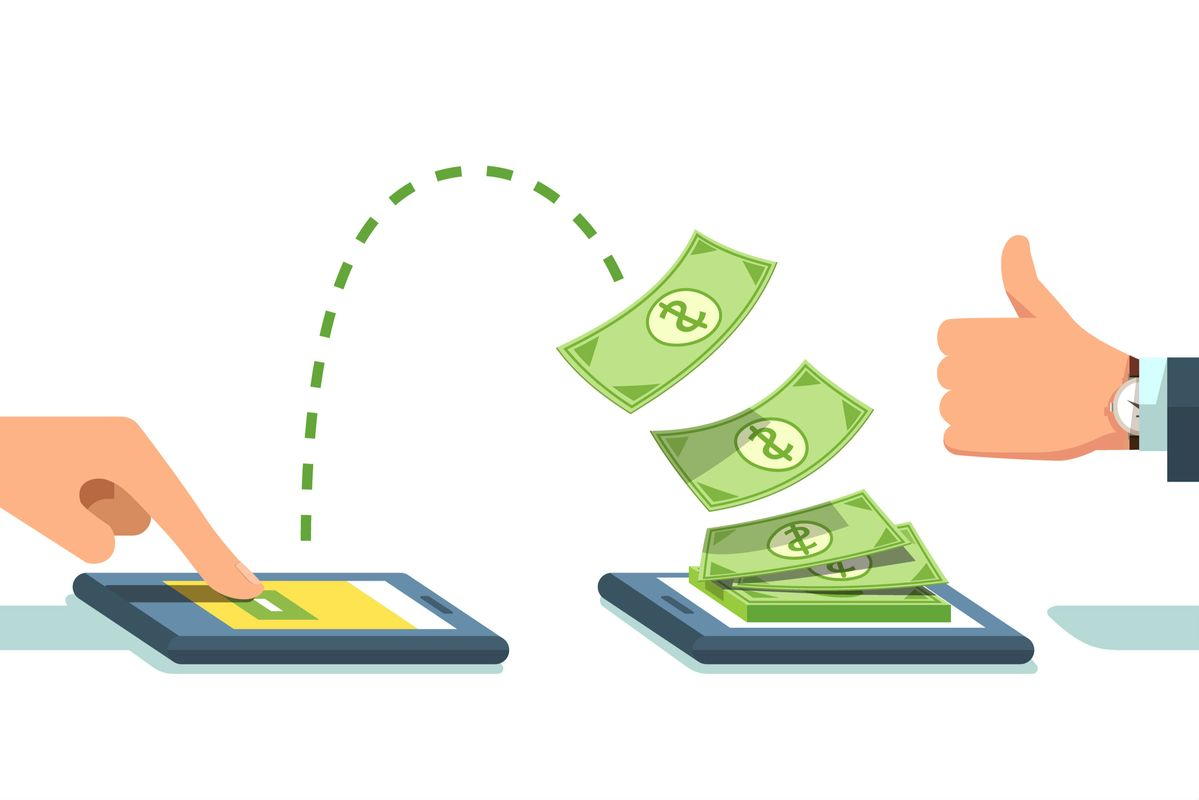
Informal alternatives are already circulating among Nigerians abroad — USDT stablecoin transfers settled peer-to-peer inside Nigeria, informal cash carriers, gift card arbitrage.
The pattern is familiar to anyone who has watched Nigeria's shadow currency market operate. When a door closes, a window opens. When the window closes, someone cuts a hole in the wall.
If even a fraction of $23 billion migrates back underground after May 1, the CBN will have gained visibility into less money, not more.
The policy succeeds only if enough remittance senders and receivers decide that the official channel, even at the official rate, is worth staying in. That is a trust problem as much as it is a policy problem. And trust is built over time, not mandated by circular.
Chidi is already asking questions. He has a friend in London who has been moving money through USDT for two years. No fees and no rate risk. The money arrives in the recipient's crypto wallet in minutes and gets converted to naira through a P2P platform at whatever rate the market is offering that day.
He has not made the switch yet. But he is asking questions.
The Month After
Amara adjusted the budget. She moved the school bus contribution to her own salary line, which meant reducing the amount she was putting aside for the generator fuel, which meant the generator runs less, which means the children do homework by phone light more often now.
She is not angry at Chidi. She is not even particularly angry at the CBN. She is the quiet, exhausted anger of someone who has been asked to absorb one more thing and is doing it because there is no alternative.
Chidi, working shifts in London to make that transfer happen, knows what the WhatsApp message coming next month will say before she sends it.
“It's not enough anymore. Can you send more?”
He is already thinking about how to make that happen. At N35,000 less per month, the numbers stopped adding up. And in 23 million households across Nigeria, someone is sitting down right now, doing the same calculation, and coming to the same conclusion.