NFF President Ibrahim Gusau Steps Down Amidst Government Pressure & AFCON Concerns

Ibrahim Gusau and the Nigeria Football Federation executive committee have resigned following immense pressure stemming from the Super Eagles' failure to qualify for the 2026 World Cup and the Super Falcons' historic miss of the 2027 Women's World Cup. This leadership vacuum creates significant uncertainty for the Super Eagles' upcoming 2027 AFCON qualifiers and necessitates a rapid rebuilding effort for Nigerian football.
Uche Emeka
Uche EmekaSports5 hours ago5 minute read
NFF President Ibrahim Gusau Steps Down Amidst Government Pressure & AFCON Concerns

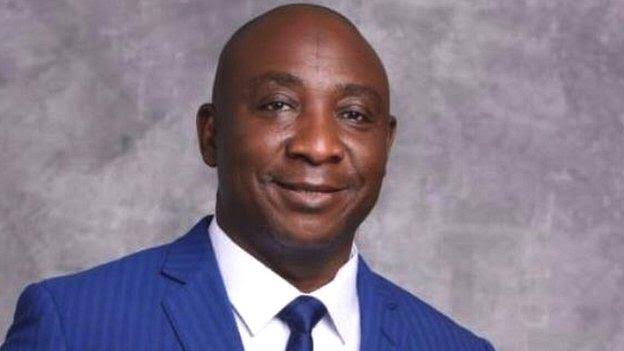
Ibrahim Gusau has resigned as president of the Nigeria Football Federation (NFF), along with members of the federation's Executive Committee and General Secretary Mohammed Sanusi, following intense public and governmental pressure. Their resignations, confirmed on Thursday, August 27th, came just weeks before the NFF's scheduled general elections. This leadership shake-up follows a pattern of NFF presidencies stepping down under direct pressure from the Federal Government, rather than through a boardroom vote, amidst weeks of public fury and a string of unacceptable results from Nigeria's national football teams.

A primary catalyst for the widespread discontent was the Super Eagles' failure to qualify for the 2026 FIFA World Cup, marking their second consecutive absence from the global tournament. Despite a record ten African nations qualifying for the newly expanded finals, Nigeria missed out. Their campaign in CAF Group C started poorly, securing only three points from their opening four matches even before Eric Chelle was appointed head coach in January 2025. While Chelle led a significant turnaround, with Nigeria winning four of their remaining six qualifiers and drawing two, it was only enough for a second-place finish in the group, one point behind Bafana Bafana.

This led to a playoff route where the Super Eagles defeated Gabon 4-1 in the semi-final in Rabat, Morocco. However, they were ultimately eliminated in the final, losing to DR Congo on penalties after the match finished 1-1 after extra time. NFF General Secretary Mohammed Sanusi later admitted that the use of three different managers across the qualifying campaign had cost Nigeria the World Cup ticket. This failure also resulted in the federation losing out on a guaranteed $12.5 million in FIFA preparation funding, adding to the financial strain on the NFF.

Adding to Gusau's woes was the Super Falcons' historic failure to qualify for the 2027 Women's World Cup, their first absence since the tournament began in 1991. As defending Women's Africa Cup of Nations (WAFCON) champions and Africa's most successful women's team, they entered the 2026 WAFCON. They experienced a setback early on, losing their opening group match 3-2 to debutants Malawi. Although they bounced back with wins against Zambia and Egypt, they were eliminated in the quarter-finals by Cameroon, thus missing automatic World Cup qualification. A subsequent play-in match against South Africa's Banyana Banyana in Casablanca also ended in a 2-1 defeat, officially eliminating the Super Falcons from the 2027 World Cup in Brazil.

The fallout from the Super Falcons' performance was swift. The NFF ordered head coach Justin Madugu and his entire technical crew to step down and convened a six-member fact-finding committee, headed by Ambassador Fanny Amun, to investigate both the WAFCON exit and the World Cup miss. Former Super Falcons forward Desire Oparanozie, a member of the committee, publicly called for a complete overhaul of the team's structure. These senior team failures were compounded by struggles at the youth level, with the Golden Eaglets missing the U-17 Africa Cup of Nations and the U-17 World Cup, and the Flying Eagles also facing qualification setbacks.

This unprecedented situation marks the first time in Nigerian football history that both the men's and women's senior national teams, along with youth teams, will miss their respective World Cups in the same cycle. The Federal Government's intervention included a 24-hour ultimatum for the NFF board to resign, and it was reported that Gusau's board was summoned to the Presidential Villa before the resignations were confirmed. Gusau had appealed directly to FIFA to intervene and block the government's move, warning of the sanctions risk associated with third-party interference in national federations; however, his appeal did not save his position.

The administrative crisis is further complicated by financial investigations. The Economic and Financial Crimes Commission (EFCC) and the Independent Corrupt Practices and Other Related Offences Commission (ICPC) are currently investigating the utilization of a ₦12 billion Federal Government intervention fund released in 2024, intended to settle unpaid wages, bonuses, and allowances. The NFF stated that relevant records have been provided to the anti-graft agencies.

The NFF's leadership vacuum emerges at a critical juncture, particularly for the Super Eagles, who are due to begin their 2027 AFCON qualifying campaign in September, with Madagascar as their first opponent. This administrative transition could severely impact crucial areas such as funding, logistics, camp arrangements, and communication with the coaching staff. There are also questions surrounding head coach Eric Chelle's recent contract and his relationship with the incoming administration. The NFF’s elective congress, originally scheduled for September 27th, has now been altered by these resignations, meaning Nigerian football must navigate a leadership void as competitive fixtures loom.

The new NFF leadership faces an immediate challenge to stabilize the federation and rebuild the national teams, ensuring that political transitions do not overshadow footballing priorities. Despite the current crisis, Gusau's administration did oversee some achievements, including the Super Eagles reaching the 2023 AFCON final, the Super Falcons returning to the Paris 2024 Olympics after a 16-year absence, and the backing of new training and accommodation facilities at the Moshood Abiola National Stadium in Abuja. However, these successes were ultimately overshadowed by the comprehensive failures that led to their departure.

Loading...