Living or Filming? The Modern Obsession with Capturing Everything
In a world where every moment is content, have we traded genuine experiences for curated aesthetics? This thought-provoking piece by Bakare Zainab explores how social media is reshaping how we live, remember, and connect — urging us to choose presence over performance.
.jpeg)
Written By Bakare Zainab
They were at a birthday dinner, the kind showcased to look like luxury, all soft lighting, sparkles, and aesthetics. There were two cakes, a ring light, and three phones filming from different angles as the celebrant posed, smiled, and pretended to blow out a sparkler that wouldn’t go out. The guests clapped on cue, maybe out of joy, but mostly because the camera needed a climax.
That night, some didn’t even eat. Not because the food wasn’t good, but because the phones had eaten first. By the time the content had been served, the hunger had passed.
This has quietly become the norm in today’s world — a culture where if a moment isn’t recorded, it might as well not have happened. Life itself is now viewed through phone screens and what was once spontaneous is now staged and scripted.
The world has traded presence for proof, experience for aesthetics. But in trying so hard to document life, are people actually living it?
Social Media’s Role in the 'Main Character' Lifestyle
In today’s digital society, everyone is a director, actor, and audience, all at once. Social media platforms like TikTok, Instagram, YouTube have turned ordinary people into performers of their own realities.
Every walk to the market, every picnic, every quiet restaurant visit is turned into a content opportunity. There is always a phone in hand, just in case something "vlog-worthy" happens.
This generation is growing up with the pressure to constantly look like they are living their best lives. But often, the performance takes precedence over the experience. What is supposed to be a fun day out becomes a marathon of content creation. The aesthetic matters more than the atmosphere. It is not just about feeling good anymore; it is about looking like you are feeling good, for the feed.
When the Moment Becomes Content
There is barely any event that is free from the grip of filming. Weddings, protests, church services, even funerals, everything is content-worthy for the front camera.
Guests at weddings spend more time capturing the couple than celebrating them. Little wonder weddings are starting to uphold the “no phones” policy at their venues.
At protests, phones are held up as much as placards. During emotional moments, people go live. The question isn’t “How do I feel right now?” but “Is this record-worthy?”
It is not that documentation is inherently wrong. It is the motive behind it that has shifted. Photos and videos were once gifts — ways to freeze time and remember a feeling. Now, they are proof.
Proof that someone was there and that they matter. That their lives are just as exciting as everyone else’s highlight reel. Moments that should be sacred have become scripted.
Social Insight
Navigate the Rhythms of African Communities
Bold Conversations. Real Impact. True Narratives.
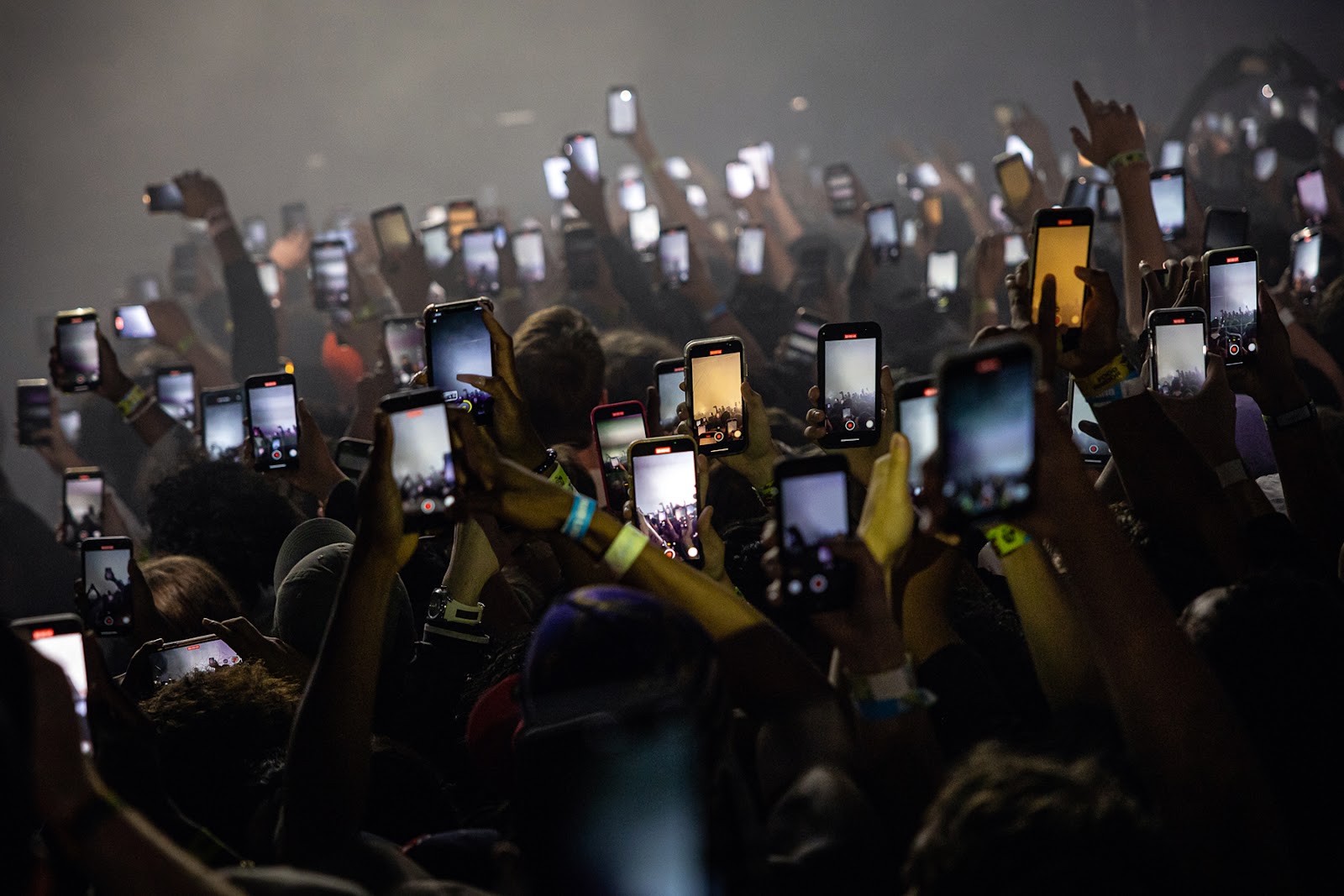
Photo Credit: Rolling Stone
Memory vs. Media
Ironically, in trying to preserve moments forever, many are losing the ability to remember them at all. Psychologists refer to this as the “photo-taking impairment effect.” Essentially, when a person records something, they subconsciously rely on the device to remember for them; therefore, the brain offloads the responsibility.
That is why so many can barely remember the concerts they attended, because they were too busy filming. Or why a family vacation lives more vividly in an Instagram highlight than in the heart.

The camera becomes the middleman between people and their experiences. They are there, but not really present.
What is more, most of the footage people obsessively record is never even revisited. It is taken, posted, and forgotten — a fleeting digital footprint with no lasting emotional weight.
Performance Over Presence
In a society obsessed with “being seen,” performance is now valued over presence. Every activity is presented for consumption. The “soft girl” aesthetic, morning routine vlogs, skincare routines, gym check-ins, daily voiceovers, all point to lives customised for views, not intimacy.
What gets lost in all this is emotional connection. The need to be spot on or picture-perfect makes real joy feel like a set. Real grief, real boredom, real mess don’t make the cut. In their place are filters, trending audios, and endless retakes.
There is also the silent anxiety of not having enough content. The fear of going “offline” and becoming invisible. If there is nothing to post, was the day even worth having?
Digital Legacy or Digital Burden?
This generation is building a digital archive of their lives — one selfie, one story, one clip at a time. But the question remains: is it legacy or noise?
With so much emphasis on capturing, people often miss the magic in moments too quiet to record — the deep belly laughs that come out of nowhere, the quiet look exchanged between friends, the silence that says more than a thousand words. These things rarely make it to the feed, but they shape lives in lasting ways.
There is a danger in living life like a movie trailer. In becoming so consumed with filming memories that the actual feeling of them fades. In trying so hard to be seen, people risk forgetting to be.
Social Insight
Navigate the Rhythms of African Communities
Bold Conversations. Real Impact. True Narratives.
Choosing Presence Over Proof
There is rebellion in not recording. In choosing stillness and letting a moment pass without proof — just felt, absorbed, and kept.
Some are starting to embrace that shift. Choosing to go phone-free at concerts, having “unplugged” gatherings. Letting a sunset be a sunset, not a story. They are finding value in the kind of memory that lives in the body, not in the cloud.
Stillness is radical in a world that demands documentation. But it is also healing. It reminds people that they don’t always have to perform their lives. That living quietly, deeply, and fully is enough.

Photo Credit: Mindful Musings
Living in the Moment Vs Living for the Feed
Not every moment needs a lens. Not every smile needs a caption. The best moments are often the ones that escape the camera. They are messy, blurry, imperfect and real.
Living is not a content strategy, it is a privilege. One that becomes harder to enjoy the more we trade presence for performance.
In the end, people must ask themselves: Are they living the moment — or just filming it?