How Indomie Went From Import to Household Staple in Nigeria
Indomie may feel Nigerian, but it started in Indonesia. Here's how this imported noodle became a household staple across Nigeria.
Walk into any Nigerian home on a busy weekday evening, and the odds are high that a pot of noodles is boiling somewhere. For an entire generation, Indomie feels as Nigerian as jollof, suya, or puff-puff.
It is comfort food for students, a quick fix for parents, a survival tool for bachelors, and a childhood memory for millions of kids who believed “Indomie children” were an actual tribe. Yet the story of noodles did not begin in Lagos, Kaduna, Enugu, or Port Harcourt. It didn’t even begin on the African continent.
The First Noodles Weren’t Made in Africa
Archaeologists discovered the oldest known noodles in North western China, preserved in a sealed clay bowl dating back about. They were made from millet flour, not wheat, and they show that the earliest noodle-like foods emerged in East Asia long before Africa ever saw its first packet.

These noodles were simple strands of dough, shaped by hand and boiled over an open fire, reflecting early humans’ ingenuity in transforming basic grains into portable, nutritious food.
China’s culinary history confirms that noodles were a recognised staple centuries before written records could even fully describe them.
Later, wheat-based noodles spread across East Asia, and regions such as Japan and Korea created their own versions adapted to local tastes, becoming ramen, soba, and ramyeon.
Meanwhile, in Southeast Asia, Indonesia developed its own noodle culture, which would later play a pivotal role in Nigeria’s food landscape.
Indomie Was Born in Indonesia
Indomie is a brand produced by Indofood, an Indonesian food giant established in the 1970s. While instant noodles already existed as a convenient form of sustenance, Indomie became one of the world’s most recognisable versions, known for its affordability, speed of preparation, and unique flavour profile.
Its arrival in Nigeria in the late 1980s marked the beginning of an entirely new food phenomenon. Initially, the noodles were imported from Indonesia, and they were an exotic product for Nigerian consumers, many of whom had never tasted pre-packaged instant food before. Despite its foreign origin, Nigerians quickly adapted, appreciating the simplicity and versatility of the noodles.
The early 1990s saw exponential growth in demand, particularly among urban dwellers, students, and young workers who needed quick meals in increasingly crowded cities. Nigerian families were beginning to embrace convenience foods due to shifting lifestyles, and Indomie fit perfectly into this emerging trend.
How Nigeria Turned Imported Noodles into a National Food
By 1995, the demand for Indomie in Nigeria had grown so large that it became necessary to produce locally. Dufil Prima Foods, a joint venture between Indofood and the Singapore-based Tolaram Group, established Nigeria’s first instant noodle factory in Ota, Ogun State. This facility was not only the first of its kind in Nigeria but also the largest instant noodle factory in Africa at the time.
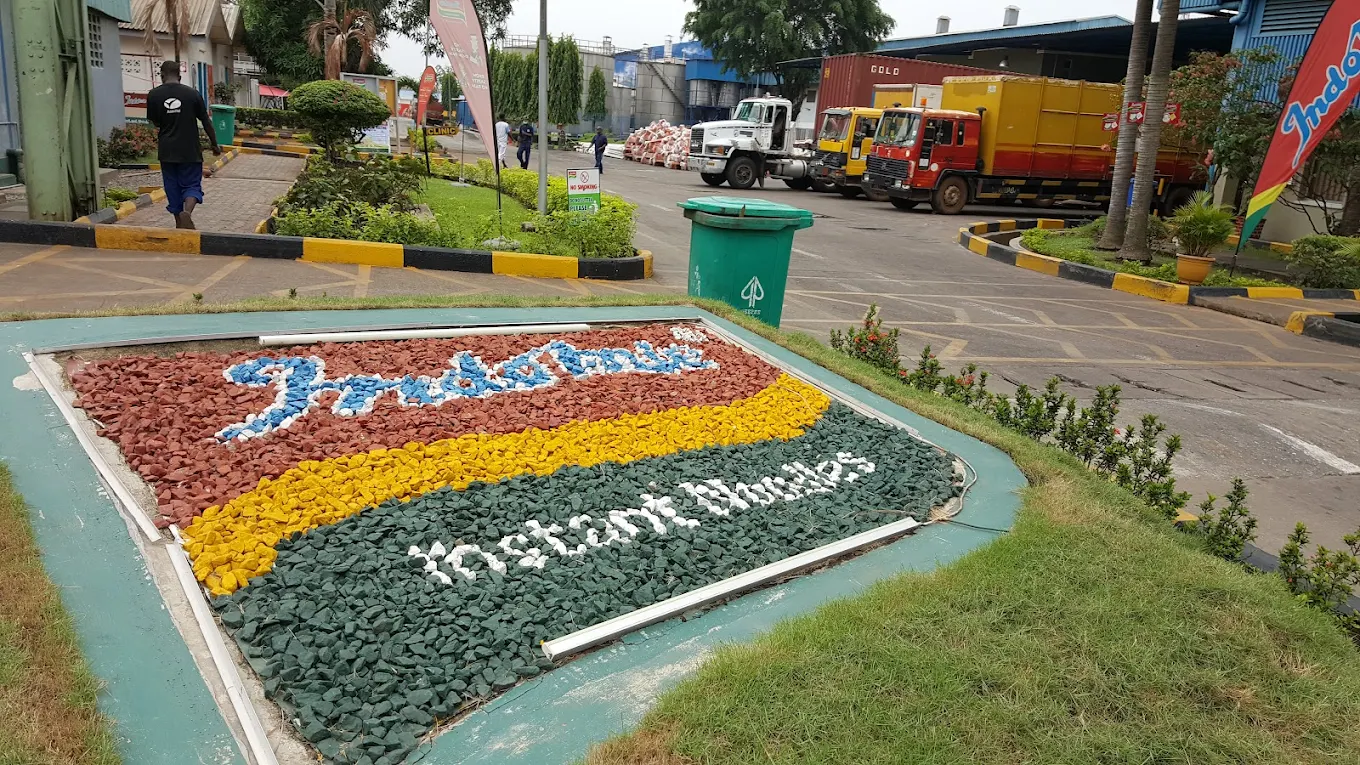
Local production had immediate effects on pricing, availability, and market penetration. The cost of a pack of noodles decreased, making it accessible to a wider range of consumers across urban and semi-urban areas.
Distribution expanded rapidly to reach not just the major cities but also smaller towns and villages, integrating Indomie into the daily routines of Nigerians nationwide. With mass availability and affordability, Indomie transitioned from being a foreign convenience to a core element of Nigeria’s urban food culture.
Indomie’s Range and Flavours in Nigeria
Indomie Nigeria offers a variety of flavours specifically designed to suit local tastes. These include Chicken, Onion Chicken, Chicken Pepper Soup, and Oriental Fried Noodles.
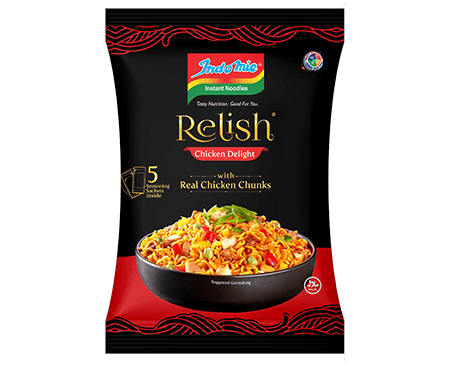
The brand also introduced the Indomie Relish series, featuring Chicken Delight and Seafood Delight, which include additional seasonings and garnishes that elevate the simple noodles into a more complete meal.

Over the years, these products became a staple in homes, schools, offices, and even street food culture. The flexibility of Indomie allowed consumers to combine it with eggs, vegetables, or meats, creating personalised meals that could fit almost any preference or budget.
Marketing Genius: Capturing the Hearts of Children
Indomie did more than sell noodles. It embedded itself into Nigerian culture through clever, locally resonant marketing strategies. One of the most memorable aspects of this campaign was the way the brand appealed to children.
Nigerian children in the 1990s and early 2000s were introduced to the iconic Indomie jingles. The catchy chorus “Mama do good o, she gives us Indomie” became instantly recognisable and is still recalled nostalgically by adults who grew up with it.
The jingle reinforced the idea that Indomie was a wholesome, desirable, and affordable treat that parents could trust to feed their children. It positioned the noodles as both tasty and nurturing, blending convenience with the warmth of home cooking.
Another brilliant marketing tactic was the inclusion of magnetic stickers called the indomitables in Indomie packs. Every packet purchased often contained a collectible sticker that children could attach to their refrigerators. The anticipation of discovering which sticker would come next became part of the excitement of buying Indomie.
Kids would actively look forward to this, making every pack more than just a meal. It transformed a simple noodle purchase into a small, interactive experience that strengthened brand loyalty from an early age. Parents were effectively buying convenience and nutrition, while children were getting delight, games, and collectables.
Marketing and Sales Strategy
Indomie’s marketing strategy in Nigeria combined mass media, physical presence, and emotional appeal. Television commercials, radio jingles, and print advertisements created widespread awareness. The brand used culturally relevant imagery and messaging, highlighting families, students, and children enjoying noodles together. By making the product appear as a family-friendly and aspirational choice, Indomie built deep emotional connections with Nigerian consumers.
The company’s distribution strategy was equally effective. Indomie ensured that its products were available in supermarkets, convenience stores, boarding schools, university canteens, and roadside kiosks. This saturation strategy made the noodles unavoidable, creating familiarity and habit among consumers.
Additionally, the company invested in regional marketing teams who could tailor promotions and events to local tastes and languages, reinforcing the message that Indomie was for everyone, everywhere in Nigeria.
Annual events like the Indomie Heroes Award further cemented the brand’s cultural impact. Through nationwide searches, the brand recognised exceptional Nigerian children who displayed intelligence, bravery, or community service. This initiative not only promoted the brand but also created positive social narratives around Indomie, linking it to achievement and aspiration for children across Nigeria.
Indomie is now considered a part of Nigerian identity, yet it retains its foreign origins. Children grew up knowing the thrill of discovering stickers, singing along to jingles, and experimenting with different ways to enjoy noodles at home or school.
Street vendors adapted the product into small snacks and meals, adding fried eggs, vegetables, or local spices. Recipes like Indomie Jollof, Indomie stir-fry, and emergency late-night Indomie became creative expressions in homes across the country.
These cultural adaptations underscore how foreign products can be fully integrated into local cuisine. Nigerians did not merely consume Indomie; they transformed it into a national experience. By the time new competitors entered the market, Indomie had already achieved deep cultural resonance that was difficult to challenge.
Economic Contributions
The impact of Indomie in Nigeria extends beyond culture. The local factory in Ota created thousands of jobs in manufacturing, logistics, sales, and marketing. It stimulated local supply chains for packaging, seasoning ingredients, and wheat flour, indirectly supporting Nigerian agriculture and ancillary industries.
The company also contributed to Nigeria’s industrial growth by setting a standard for large-scale food production and marketing in the country.
Moreover, Indomie’s success inspired other international and local noodle producers to enter the Nigerian market, expanding consumer choice and solidifying the instant noodle industry as a significant segment of Nigeria’s food economy.
It also showed how foreign investment could be successfully adapted to meet local tastes, preferences, and purchasing habits, creating a model for other FMCG companies seeking growth in Africa.
Why Nigerians Embraced Noodles So Deeply
Several factors explain the extraordinary adoption of noodles in Nigeria. Urbanisation created a need for fast, convenient meals as families migrated to cities and lived increasingly busy lives. The product’s affordability made it accessible to a wide demographic, from students in hostels to parents managing household budgets.
Strong marketing created emotional attachment and excitement, particularly among children who associated Indomie with rewards, fun, and family care. The noodles were versatile and adaptable, allowing consumers to mix in local ingredients to create meals that reflected their individual taste. All of these factors combined to make Indomie more than a product; it became a cultural staple, a culinary habit, and a childhood memory.
Indomie’s journey in Nigeria highlights a fascinating aspect of global food culture: a foreign product can become locally embedded through effective marketing, cultural resonance, and practical utility. It shows that food culture is not only about origin but also about adoption, adaptation, and belonging.
Although noodles originated in East Asia and Indomie in Indonesia, Nigeria embraced the brand in a way that made it feel entirely local. By producing the noodles domestically, tailoring flavours to Nigerian tastes, saturating the market with availability, and emotionally engaging children and families through jingles, stickers, and campaigns, Indomie became deeply rooted in the Nigerian experience.
Even today, nearly every Nigerian household has a personal story of Indomie, whether it is a dormitory snack, a student’s late-night meal, or a family dinner on a busy weekday. Noodles are a part of school memories, childhood games, and culinary experiments, demonstrating the brand’s integration into the rhythm of daily life. The product has inspired recipes, memes, pop culture references, and even a sense of identity among the generation that grew up with it.