From Viral Game to $500,000 Funding Round: What Should Tech Founders Learn From Lagos Life?
Lagos Life’s rapid growth, $500,000 funding round, and in-game partnerships show how local insight can shape digital products and turn attention into opportunity.
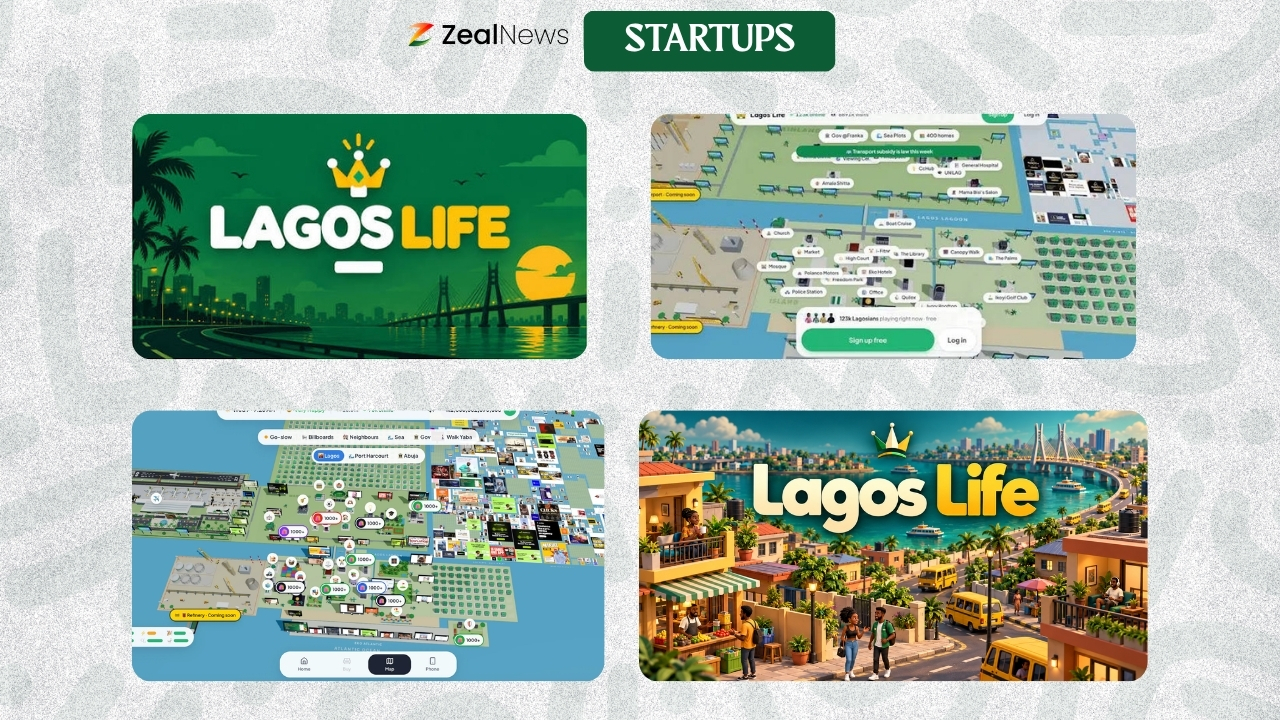
A person opens a game, creates a character, and is immediately confronted with a familiar Nigerian question: What kind of life have you been given, and what will you do with it? In Lagos Life, you might begin as a Nepo Baby, with advantages that make survival easier, or take the LAPO route, where cash comes with debt and repayments.
Before you find a job or rent a home, the game introduces one of Nigeria’s most uncomfortable realities: people don’t start life on the same line, and they can’t choose that.
Created by Nigerian software developer Shalom Rayhamen, Lagos Life launched on October 1, 2026, Nigeria’s Independence Day.
Inspired by The Sims and the viral Lagos Run browser game, it translates familiar Nigerian experiences into a playable world: work, rent, transport, nightlife and the constant calculation of whether money will stretch until the next payday.
The first version was reportedly built overnight, with AI tools assisting development. Within three days, the game’s own dashboard had crossed one million players; by October 9, the reported total had passed five million.
Those figures have not been independently audited, but the speed of the attention is difficult to ignore.
It Was Lagos, Not Just Another Simulation
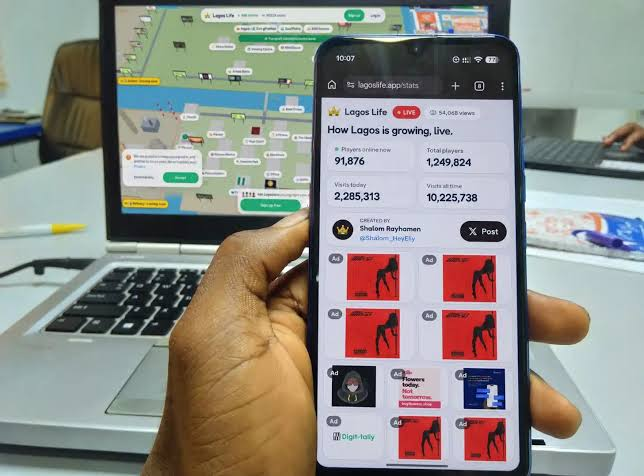
Plenty of games let players build lives and buy houses. Lagos Life made those mechanics feel recognisably Nigerian.
A player could work towards a better home, take a danfo, or discover that a virtual lifestyle takes more planning than their ambitions suggested. The Lapo and Nepo Baby profiles invite players to consider how much easier the same city feels when one person starts with help and another starts with obligations.
It is not a perfect simulation, but the references are close enough to be understood without explanation. The game does not need to teach Nigerians what rent anxiety feels like or why a better-paying job changes the options available to someone. It gives those experiences a new setting, allowing players to joke about them, compete over them, and share their own stories.
That relatability helped the game travel beyond its original audience. It also arrived after Lagos Run had already shown the appeal of putting local experience into a simple browser game. Lagos Life expanded that idea from navigating traffic to navigating an entire life. Abuja and Port Harcourt have since joined the virtual world, giving the concept room to grow beyond one city.
The lesson for builders is not that every Nigerian product must contain danfos, Lagos slang, or local celebrity references. It is that local reality can be a product advantage rather than a limitation.
A product designed around experiences people already understand has less cultural explaining to do. In fintech, that might mean addressing the way people actually save, borrow or transfer money. In logistics, it could mean building around the realities of addresses, traffic and informal delivery networks. In food, fashion and lifestyle, it means understanding how people discover, buy and pay, not importing a model because it worked elsewhere.
The Attention Is Real. The Economic Value Still Has to Be Proved.
Lagos Life’s rise also challenges the assumption that a product needs a large advertising budget before people will care.
Its launch spread through players, screenshots, jokes, and the curiosity of people who wanted to see what everyone was discussing. That is powerful distribution: the experience gives people something to talk about, and their conversations introduce it to the next person.
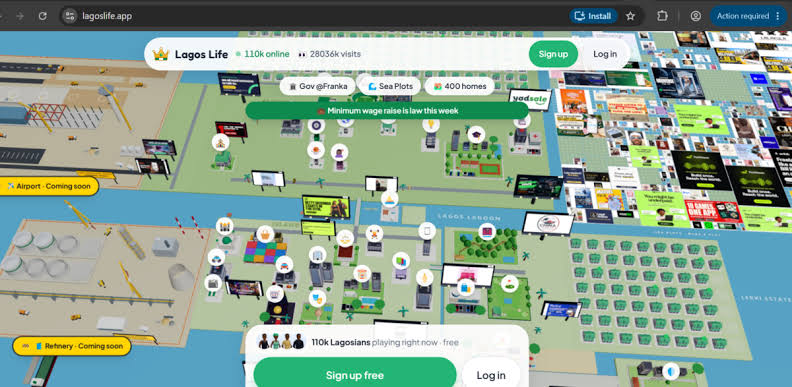
But “zero ads” needs qualification. The game did not rely on a conventional paid launch campaign, yet it began selling advertising space inside its virtual city. Businesses could rent billboards and plots, while the founder identified advertising, music promotion and corporate partnerships as revenue routes.
Techpoint Africa reported that brands including Salary Index, Leadway Lifestyle Fair, MyDecorTrade and ONErpm had bought placements or joined its commercial ecosystem. The game began turning attention into an advertising proposition while that attention was still growing.
Then came the funding. On October 9, Vatar, the company behind Lagos Life, announced a $500,000 angel round at a reported $10 million valuation, backed by technology entrepreneurs including Flutterwave CEO Olugbenga Agboola, Mono CEO Abdulhamid Hassan and Terra Industries CEO Nathan Nwachuku, alongside angel investor Oo Nwoye.
Days earlier, Rayhamen had dismissed a reported $100,000 offer to buy the game, saying she valued it at $1 billion. That was her stated ambition, not an established valuation; the funding round priced the company far lower.
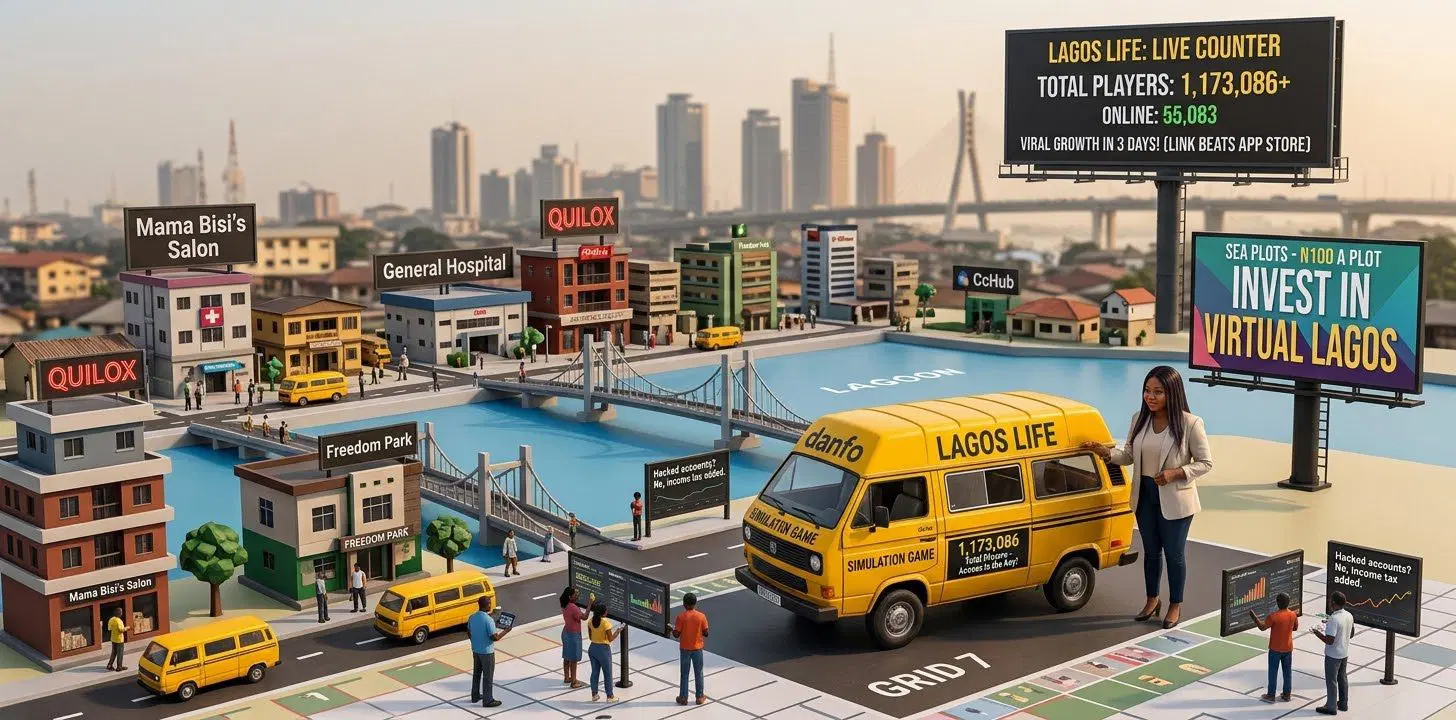
Still, a million players are not automatically a million units of economic value. A Netflix subscriber, for instance, paying monthly is not equivalent to a person who opens a free game, plays once, and leaves. Player counts measure reach; they do not prove retention, revenue or willingness to pay.

Lagos Life has reported commercial activity, but its sustainability will depend on what happens after the viral moment: whether players return, advertisers see results, partnerships endure, and costs stay manageable.
The game briefly went offline on October 2, a reminder that rapid growth brings infrastructure problems as well as applause.
Can Local Understanding Become a Global Business?
Some online reactions have framed the game as a psychological experiment, speculating that the developers are studying how Nigerians spend, save, or hoard money. The game certainly creates opportunities to observe player choices, and its economy has prompted discussions about inequality and spending. But speculation is not proof of a deliberate propaganda project or formal behavioural study.
The more grounded point is that people are revealing what they find funny, frustrating, desirable, and worth sharing through the way they play.
That is useful product feedback, provided it is treated responsibly. A virtual economy is not the real economy, and game behaviour cannot simply be presented as evidence of how Nigerians behave with actual money.
Lagos Life is not guaranteed to become a lasting business because it has gone viral. It will need to improve, manage its costs, protect its community and turn curiosity into repeat use. Yet its early success offers a compelling lesson to founders in Nigeria and elsewhere: building for a local audience does not mean thinking small. Sometimes, the route to a wider market begins with understanding one place unusually well.
The future may be global, but the first question for a builder is often much closer to home: what do people around you understand, need, or experience every day that existing products have failed to capture properly? Lagos Life found an answer in the ordinary business of trying to live in Lagos. The opportunity for other builders is to find theirs.