Defining Moments in African History Everyone Should Know
Read about defining moments in African history from Ancient Egypt to #EndSARS and understand the events that shaped the continent’s political, cultural, and global influence.
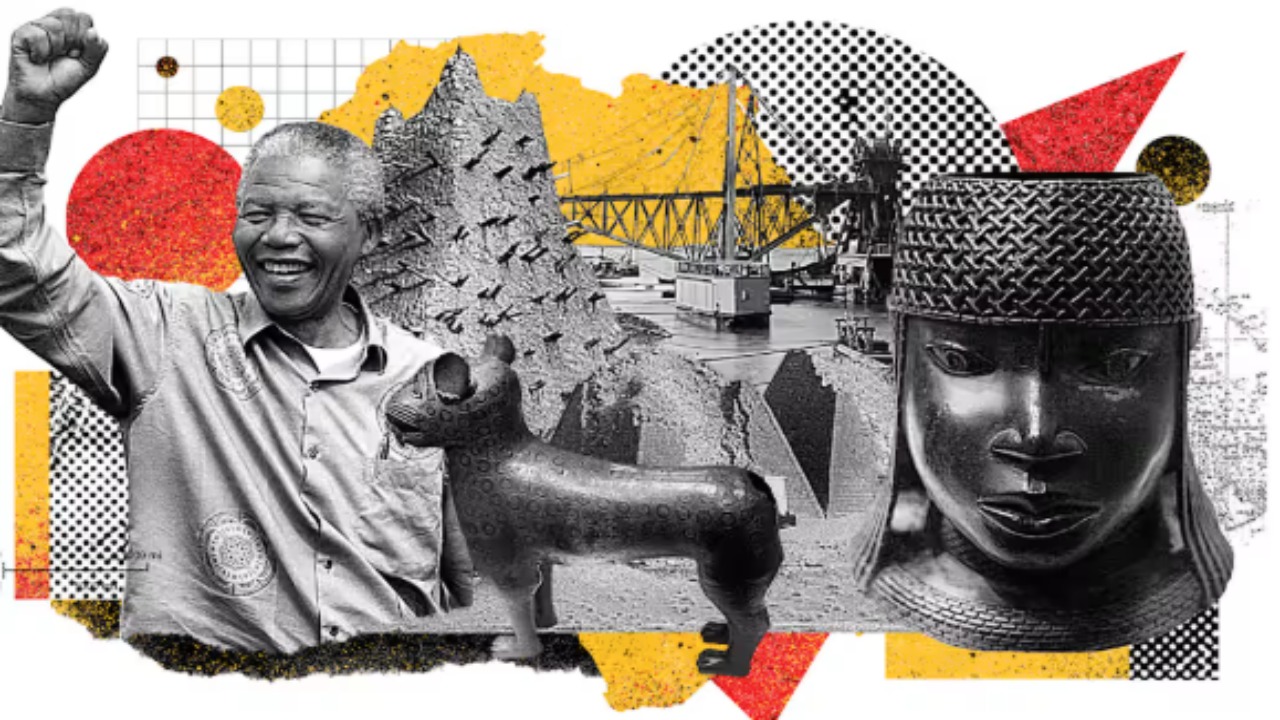
Africa’s history stretches across millennia, encompassing some of humanity’s earliest civilizations and some of the modern world’s most transformative struggles.
It is a history marked not only by endurance, but by innovation, resistance, adaptation, and renewal.
Too often, discussions about Africa’s past are compressed into narrow narratives, yet the continent has been central to global political, cultural, economic, and intellectual developments.
From ancient statecraft and architectural mastery to anti-colonial resistance and contemporary civic activism, Africa’s story is layered and complex.
Within this vast historical landscape, certain turning points stand out, moments that reshaped societies, redirected political trajectories, and influenced global affairs. These events did not occur in isolation.
They emerged from deeper forces and, in turn, created lasting consequences that continue to shape the present.
Understanding these milestones is essential not only for historical literacy, but for contextualizing Africa’s contemporary realities.
Key Defining Moments That Shaped the Continent
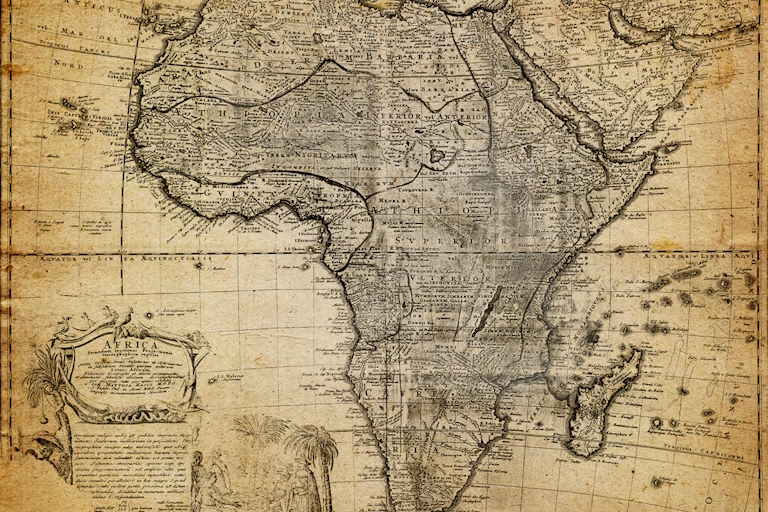
1. The Civilization of Ancient Egypt (c. 3100–30 BCE)
Among the earliest large-scale civilizations in world history, Ancient Egypt developed along the Nile River with sophisticated systems of governance, religion, and infrastructure.
Monumental structures such as the pyramids demonstrated architectural precision and centralized state organization. Hieroglyphics, one of the earliest writing systems, enabled record-keeping and cultural transmission.
Ancient Egypt’s contributions to mathematics, astronomy, medicine, and administration influenced neighboring societies and later Mediterranean civilizations. Its legacy affirms Africa’s foundational role in early human advancement.
2. The Berlin Conference (1884–1885)
Held in Berlin without African representation, this conference formalized the partition of Africa among European powers. Colonial borders were drawn with little regard for ethnic, linguistic, or cultural realities on the ground.
The consequences were profound; political fragmentation, economic extraction systems, and externally imposed governance structures altered the continent’s trajectory.
History
Rewind the Stories that Made Africa, Africa
A Journey Through Time, Narrated with Insight.
Many contemporary border disputes and internal tensions can be traced back to this period of arbitrary division.
The Berlin Conference represents not just colonization, but the systemic restructuring of African societies under external control.
3. Ethiopia’s Victory at the Battle of Adwa (1896)
At a time when much of Africa was under colonial domination, Ethiopia’s victory over Italy at the Battle of Adwa was extraordinary.

Under Emperor Menelik II, Ethiopian forces successfully defended the nation’s sovereignty.
The triumph had symbolic resonance across the continent and the African diaspora.
It demonstrated that colonial expansion was not inevitable and became a powerful emblem of resistance and self-determination.
4. The Sharpeville Massacre (1960)
On March 21, 1960, South African police opened fire on peaceful anti-apartheid demonstrators in Sharpeville, killing 69 people.
The event intensified domestic resistance and drew international condemnation.
The Sharpeville massacre marked a shift in the anti-apartheid movement, leading to increased mobilization and global sanctions against the South African regime. It revealed the human cost of institutionalized racial segregation.
History
Rewind the Stories that Made Africa, Africa
A Journey Through Time, Narrated with Insight.
5. The End of Apartheid and Nelson Mandela’s Presidency (1994)
The dismantling of apartheid and the election of Nelson Mandela as South Africa’s first Black president symbolized a transition from systemic exclusion to democratic governance. Mandela’s presidency emphasized reconciliation and institution-building rather than retribution.
This moment resonated globally as evidence that prolonged political struggle could culminate in negotiated transformation.
6. The Rwandan Genocide (1994)
In 100 days, more than 800,000 Tutsis and moderate Hutus were killed in one of the late twentieth century’s most devastating genocides.
The tragedy revealed the catastrophic consequences of ethnic polarization and political manipulation.
It also prompted renewed international debates about intervention, accountability, and post-conflict reconstruction.
Rwanda’s subsequent recovery efforts have become a subject of global study in governance and reconciliation.
7. The Arab Spring and the Fall of Muammar Gaddafi (2011)
Pro-democracy uprisings across North Africa reshaped political landscapes. In Libya, protests culminated in the fall of Muammar Gaddafi after decades of rule.
While the aftermath introduced complex governance challenges, the events reflected broader demands for political reform and accountability.
The Arab Spring illustrated the interconnected nature of modern movements and the role of civic mobilization in challenging entrenched systems.
History
Rewind the Stories that Made Africa, Africa
A Journey Through Time, Narrated with Insight.
8. The West African Ebola Outbreak (2014–2016)
The Ebola epidemic claimed over 11,000 lives, primarily in Guinea, Liberia, and Sierra Leone.
Beyond its tragic toll, the crisis exposed gaps in healthcare systems while prompting significant international cooperation.
Investments in disease surveillance, emergency response frameworks, and public health infrastructure strengthened regional preparedness. The outbreak underscored the global nature of health security.
9. The #EndSARS Movement in Nigeria (2020)
Originally a protest against police brutality linked to the Special Anti-Robbery Squad (SARS), the #EndSARS movement evolved into a broader call for accountability and institutional reform.
Youth-led and amplified through social media, the protests demonstrated the growing influence of digital activism.
The movement highlighted generational demands for governance transparency and human rights protections.
History as Foundation, Not Footnote
Africa’s history cannot be reduced to a single narrative of triumph or tragedy. It is a continuum of achievement, disruption, resistance, and renewal.
The defining moments outlined above reflect the continent’s agency in shaping its destiny, even under external pressures.
They also demonstrate Africa’s influence on global systems, from early civilization-building to contemporary political reform movements.
Studying these milestones provides perspective. It reveals how present-day challenges are often rooted in historical processes. It also illustrates resilience, the capacity to adapt, rebuild, and innovate.
History
Rewind the Stories that Made Africa, Africa
A Journey Through Time, Narrated with Insight.
History is not static memory, it is a foundation for informed citizenship and future planning.
Understanding Africa’s past equips societies to engage more thoughtfully with its present and to approach its future with greater clarity and context.