JAMB’s New Era: Can Professor Segun Aina Fix Nigeria’s Examination Trust Problem?
Professor Segun Aina is stepping into JAMB leadership at a critical time for Nigeria’s education system. Can the technology expert restore trust, strengthen examination integrity, and address growing concerns around admissions and CBT failures?
Nigeria’s education system does not merely suffer from a funding crisis or infrastructure deficit. Increasingly, it suffers from a trust problem.
Parents no longer trust admission processes fully. Students question whether examination systems are truly fair.
Universities complain about declining preparedness among candidates and every admission cycle now arrives with controversy attached to it; from cut-off mark debates to technical failures in CBT centres.
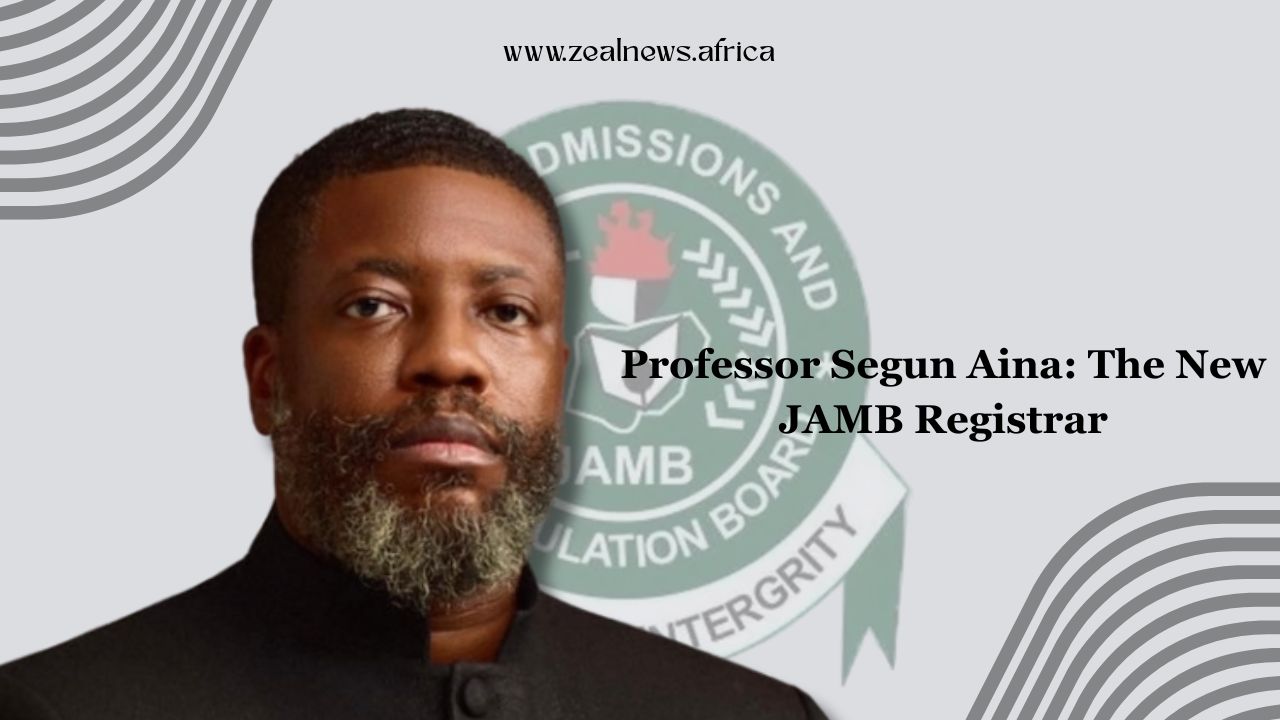
That is the environment Professor Segun Aina is stepping into as the new Registrar of the Joint Admissions and Matriculation Board (JAMB).
At 39, the Computer Engineering professor from Obafemi Awolowo University becomes the youngest person to ever head the examination body.
But beyond the symbolism of youth lies something potentially more significant: Nigeria may have handed one of its most sensitive educational institutions to a man whose career has largely revolved around digital systems, institutional reform, and examination technology.
And at this moment in JAMB’s history, that may matter more than anything else.
The Context Behind His Appointment

President Bola Tinubu announced Aina’s appointment ahead of the expiration of Professor Ishaq Oloyede’s tenure in July 2026.
The transition comes at a delicate period for JAMB.
For nearly a decade, Oloyede oversaw one of the most dramatic institutional transformations in Nigeria’s public sector.
Under his leadership, JAMB moved aggressively into computer-based testing, biometric verification, automated admissions systems, digital profiling, and tighter examination monitoring.
The board also became financially self-sustaining in ways that surprised many Nigerians. JAMB moved from being regularly associated with inefficiency and opaque finances to remitting billions of naira in surplus revenue to the federal government.
But institutional reform is rarely permanent, systems usually evolve and new vulnerabilities emerge. And the same digitisation that strengthened JAMB also exposed new weaknesses.
The 2026 Unified Tertiary Matriculation Examination (UTME) cycle revealed a layer of that.
Technical failures across several centres disrupted examinations and reignited national conversations about whether Nigeria’s digital examination infrastructure is truly prepared for the scale it now operates at.
For thousands of candidates, the issue was not theoretical policy failure. It was anxiety, uncertainty, and the fear that a single system malfunction could distort years of preparation.
That incident alone may define the urgency surrounding Aina’s appointment.
Because unlike many previous education administrators, Aina’s background sits directly inside the problem itself: technological infrastructure.
Beyond CBT: The Real Problems JAMB Must Solve

The future of JAMB is no longer just about conducting exams electronically. Nigeria has already crossed that threshold.

The deeper question now is whether the institution can create an examination ecosystem that Nigerians genuinely trust.
That challenge stretches far beyond software.
It includes unreliable electricity supply across CBT centres. Poor internet stability in some regions. Inconsistent hardware quality. Human manipulation within supposedly automated systems. Identity fraud. Result verification controversies.
And also, increasingly, concerns about whether admission standards themselves are weakening.
One of the most controversial moments in recent years happened recently during debates around the reduction of cut-off marks for universities and tertiary institutions.
Critics argued that lowering benchmarks reflected a deeper crisis in educational quality and risked normalising declining academic standards.
Supporters, however, pointed to a more complicated reality: widespread poor performance among candidates often mirrors the condition of Nigeria’s broader education system itself; underfunded secondary schools, teacher shortages, economic hardship, and uneven access to learning resources.
JAMB sits directly in the middle of that tension.
The institution is expected to maintain merit while simultaneously operating inside a struggling national education framework.
That balancing act will likely become one of the defining tests of Aina’s tenure.
What Nigerians Will Expect From Aina

For many Nigerians, the expectation is not necessarily dramatic reform overnight. It is competence, stability, and credibility.
Students want examination systems that function consistently. Parents want transparency.
Universities want admission processes that preserve standards while reducing manipulation and candidates want to believe that effort still matters within the system.
Aina’s expertise in digital infrastructure may position him well for some of these expectations.
His previous consulting work with examination bodies like NECO and NABTEB suggests familiarity with the operational realities of large-scale testing systems in Nigeria.
More importantly, his academic and technical background could help JAMB address one of its biggest vulnerabilities: the gap between ambitious digital reform and the fragile infrastructure supporting it.
Because technology alone does not create institutional trust, reliable execution does.
The real success of his tenure may not be measured by how many new digital features JAMB introduces, but by whether fewer candidates leave examination centres feeling failed by the system itself.
The Burden of Inheriting a Reformed Institution

There is also a different kind of pressure attached to succeeding someone like Ishaq Oloyede.
Transforming a struggling institution earns praise. Maintaining and improving a reformed institution is often harder.
Aina inherits a JAMB that is already far more digitised, visible, and scrutinised than it was a decade ago. Public expectations are now significantly higher.
Every technical failure trends nationally. Every admission policy sparks debate. Every cut-off mark becomes political conversation.
And in a country where education increasingly determines economic survival, those conversations are only becoming more intense.
Still, Aina’s appointment may represent something Nigeria’s public institutions rarely signal clearly enough: the possibility that technical expertise, rather than just administrative longevity, can shape leadership choices.
Now comes the harder part; proving that expertise can translate into systems Nigerians trust when it matters most.