Stereotypes Often Contain the Truth. That Is Why They Are So Powerful
Stereotypes sometimes carry statistical truth, and that's exactly what makes them dangerous. The real problem isn't where they come from. It's what happens when a group-level pattern gets applied to an individual person.
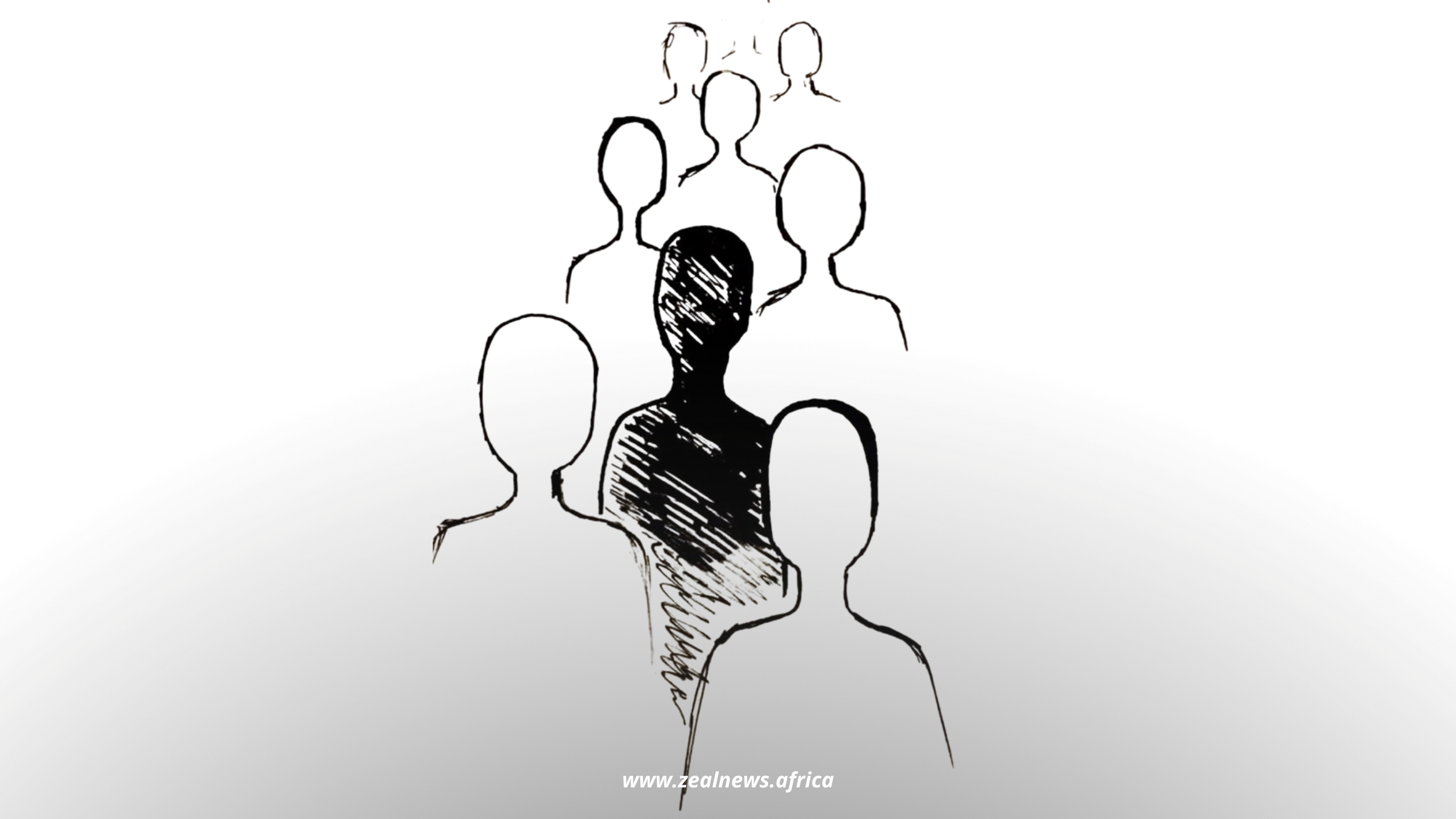
There is a reason stereotypes stick. They don't come from nowhere; they come from patterns, repeated observations, cultural memory, and sometimes, data.
The uncomfortable truth that social psychology has been dancing around for decades is this: stereotypes often carry a statistical kernel of truth, and that kernel is precisely what gives them their grip on the human mind.
But it gets complicated.
The "Kernel of Truth" Hypothesis Nobody Wants to Talk About
In 1932, psychologists Daniel Katz and Kenneth Braly ranone of the earliest studies on ethnic stereotypes, asking Princeton students to assign traits to different racial groups. What they found far more than bigotry. They found consistency in responses.
People across different backgrounds agreed on certain traits, suggesting stereotypes aren't random inventions. They are socially constructed summaries of observed patterns.
This is the foundation of what researchers call the "kernel of truth" hypothesis. This is the idea that many stereotypes contain a grain of statistical accuracy.
Work in stereotype accuracy, particularly by psychologist Lee Jussim, shows that group-level generalizations sometimes align with measurable real-world data, whether that is career distribution by gender, academic performance gaps, or cultural behavioral norms.
So yes. Stereotypes can be statistically accurate at a group level. The problem begins the moment you apply a group-level generalization to an individual human being.
Statistical Accuracy Is Not the Same as Justice
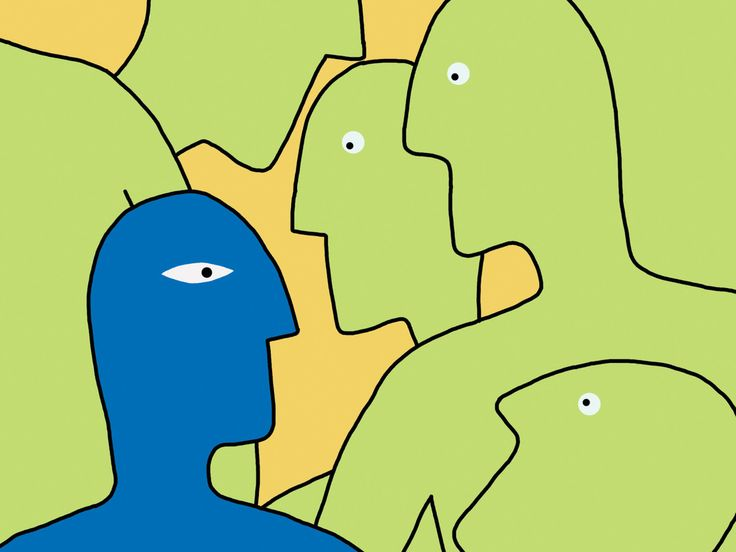
A pattern observed about a group does not become a personality verdict for every person within it. This is where stereotyping crosses from passive observation into active harm.
When a Black man is followed around a store, when a woman is assumed to be uninterested in STEM, when a Nigerian is presumed guilty of fraud before saying a word are assumptions may trace back to some aggregate statistic or cultural narrative. This time, they are being applied to a singular human being who had absolutely no say in producing that data.
Cognitive shortcuts, what psychologists call heuristics, are how the brain manages information overload. Stereotypes are, in many ways, the brain's lazy filing system: fast, familiar, and socially reinforced. This does not mean it is right.
Implicit bias research consistently shows that these mental shortcuts operate below conscious awareness, quietly influencing decisions about hiring, policing, healthcare, and education, often in ways the decision-maker would flatly deny if confronted.
The statistical accuracy of a stereotype does not justify its application at the individual level. That is the fundamental logic error inside every act of prejudice.
The Stereotype Threat Research That Should Be Required Reading
In 1995, psychologists Claude Steele and Joshua Aronson introduced the concept of stereotype threat. This is the psychological phenomenon where people underperform in situations where a negative stereotype about their group is salient.
Social Insight
Navigate the Rhythms of African Communities
Bold Conversations. Real Impact. True Narratives.
In their study, when Black students were told a test measured intellectual ability, they underperformed compared to when they were told it was a non-diagnostic task.
The mere awareness of the stereotype became a cognitive burden heavy enough to affect results.
This is why stereotypes aren't just individually unfair — they actively reshape outcomes. A young girl who has absorbed the cultural message that women aren't naturally gifted at math will carry that weight into every exam room.
A young African entrepreneur who has internalized global narratives about his continent will hesitate before pitching to international investors.
Stereotype threat actively rewires performance, ambition, and self-perception over time.
Why You Cannot Afford to Live Inside Someone Else's Pattern

If you belong to a stereotyped group, a specific kind of invisible pressure follows you into every room. The temptation, sometimes, is to lean into it, because resistance is exhausting and visibility is risky.
Remember, the stereotype was never built for you. It was built for a generalization. You are not a generalization.
Living inside someone else's pattern means your individual data points get absorbed into their narrative. Your choices, your failures, your wins will stop being yours. They become evidence for or against a group profile you never signed up for.
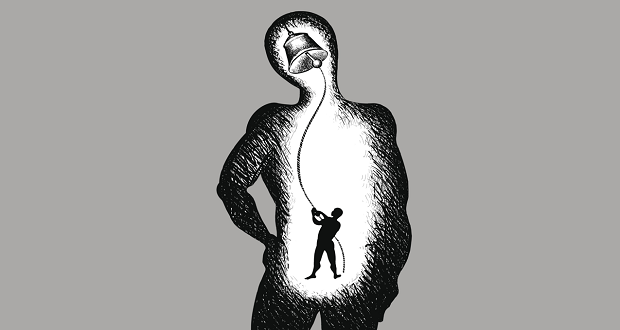
Robert Merton's research on self-fulfilling prophecies adds another layer. This is when people are treated according to a stereotype consistently enough, they sometimes begin to conform to it. Not because the stereotype was ever true of them, but because the social environment gradually shaped them toward it.
This is the most insidious quality of stereotypes — they can manufacture the very reality they claim to simply describe.
The More Nuanced Conversation We Need to Be Having
Acknowledging that stereotypes sometimes contain statistical truth is not a concession to prejudice. It is an invitation to a more sophisticated conversation, one that asks: even if a pattern exists at a group level, does it explain the specific person in front of me? And the answer, almost always, is no.
Patterns are not destinies. Generalizations are not identities. And the fact that a stereotype has roots in observed behaviour does not mean you are obligated to water it.