The World Owes $348 Trillion in Debt, But Who Exactly Is the World Owing?
Global debt has surged to a record $348 trillion, raising urgent questions about who owes the money, who is lending it, why the debt keeps growing, and what the rising global borrowing crisis could mean for economies worldwide.
The world owes $348 trillion in debt, and the figure is still rising. Is it Mars or Jupiter that the world is owing? Well, the answer is far more complicated and more interesting than either of those suggestions.
Alex came across the figure somewhere online, $348 trillion in total global debt, according to the Institute of International Finance. He sat with that number for a moment. Then he typed the question into his notes app because it felt too absurd to say out loud: who is the world owing? Like, the actual world.
All the countries and governments and corporations combined. If everyone on Earth is in debt, who is collecting the money then? Is there some cosmic creditor sitting somewhere waiting for a payment?
Is it Mars? Or some advanced civilization we have not discovered yet? The question sounds like a joke but the answer is not.
First, Let's Confirm the Number
According to the Institute of International Finance (IIF), global debt reached a record $348 trillion at the end of 2025. Nearly $29 trillion was added in that single year alone, making it the fastest annual increase since the pandemic surge of 2020 and 2021.
To put that in some perspective, global debt stood at roughly $215 trillion in 2016. It was $313 trillion in 2023. The trajectory is not a spike, it is a sustained climb that has barely slowed.
Who is borrowing? Everyone definitely and I know that you know that. Governments accounted for more than $10 trillion of the 2025 increase, with the United States, China, and the euro area responsible for roughly three-quarters of that jump, but governments are only one slice.
The $348 trillion total covers public debt, what governments owe, and private debt, which includes what corporations borrow through bonds and loans, and what households carry in mortgages, car loans, credit cards, and every other form of personal borrowing. All of it, added together, produces the number that makes Alex stare at his phone in disbelief.
So Who Is Actually Owed the Money?
This is where the real explanation lives because global debt is not a single transaction. It is millions of overlapping transactions, governments borrowing from banks and pension funds and individual investors, corporations issuing bonds that other corporations and asset managers buy, households borrowing from lenders who are themselves borrowing from somewhere else.
The money does not disappear into a void. Every dollar of debt has a creditor on the other side, someone or some institution that lent it and expects it back with or without interest.
When the United States government or any other National government issues a Treasury bond, which is how they borrow, they are selling that bond to pension funds, central banks of other countries, individual investors, and financial institutions.
China owns a significant portion of US debt, Japan owns even more and the US, meanwhile, holds debt issued by other governments and corporations.
Countries are, in large measure, owing each other, not equally, not symmetrically, but in a dense web of mutual obligation that wraps around the entire global financial system.
The obvious follow-up question is: if everyone owes everyone else, can it not just cancel out? The answer is no, and the reason is that debt does not work like a group bill that can be split and cleared.
Different debts are owed by different parties, in different currencies, under different legal agreements, at different interest rates, and maturing at different times.
You cannot take Japan's claim on US Treasury bonds and set it against some unrelated obligation in the opposite direction.
The contracts are not structured that way, and the parties involved are not the same. Netting it out is not a financial option, it is just a comforting thought that does not survive contact with how debt actually functions.
Beyond governments, private actors are major players on both sides of the ledger. Banks lend money they do not fully own, they borrow short-term from depositors and lend long-term to borrowers, a practice called maturity transformation that sits at the heart of modern banking.
Pension funds, insurance companies, sovereign wealth funds, and asset managers collectively hold trillions in bonds and loan assets, meaning the retirement savings of ordinary people in one country are often the mechanism through which governments in another country fund their spending.
Why This Much Debt Exists and Why It Keeps Growing
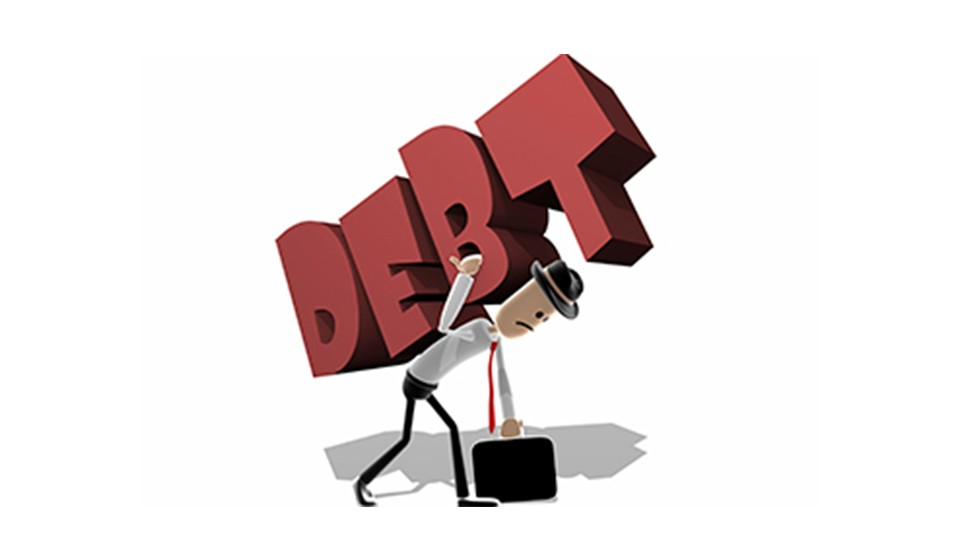

Debt, at the macroeconomic level, is not inherently a sign of crisis, it is a tool. Governments borrow to build infrastructure, fund social programmes, and respond to emergencies without waiting to collect enough taxes first.
Corporations borrow to invest in growth before the revenue from that growth arrives. Households borrow to buy homes, invest in family businesses and educate children.
The debt enables activity that would otherwise be deferred or impossible. When it is managed well, the economic output generated by the borrowed money more than covers the cost of repaying it.
The concern is not the existence of debt, it is the pace at which it is growing relative to the size of the global economy.
Global debt as a percentage of global GDP currently sits at roughly 308%. That means the world owes the equivalent of three times everything it produces in a year.
When that ratio climbs faster than economies grow, the cost of servicing the debt, paying the interest, consumes a larger share of income, leaving less for everything else.
Emerging markets are particularly exposed: their debt-to-GDP ratios hit a record above 235% in 2025, and they face more than $9 trillion in debt that needs to be refinanced in 2026 alone.
Back to Alex's Question
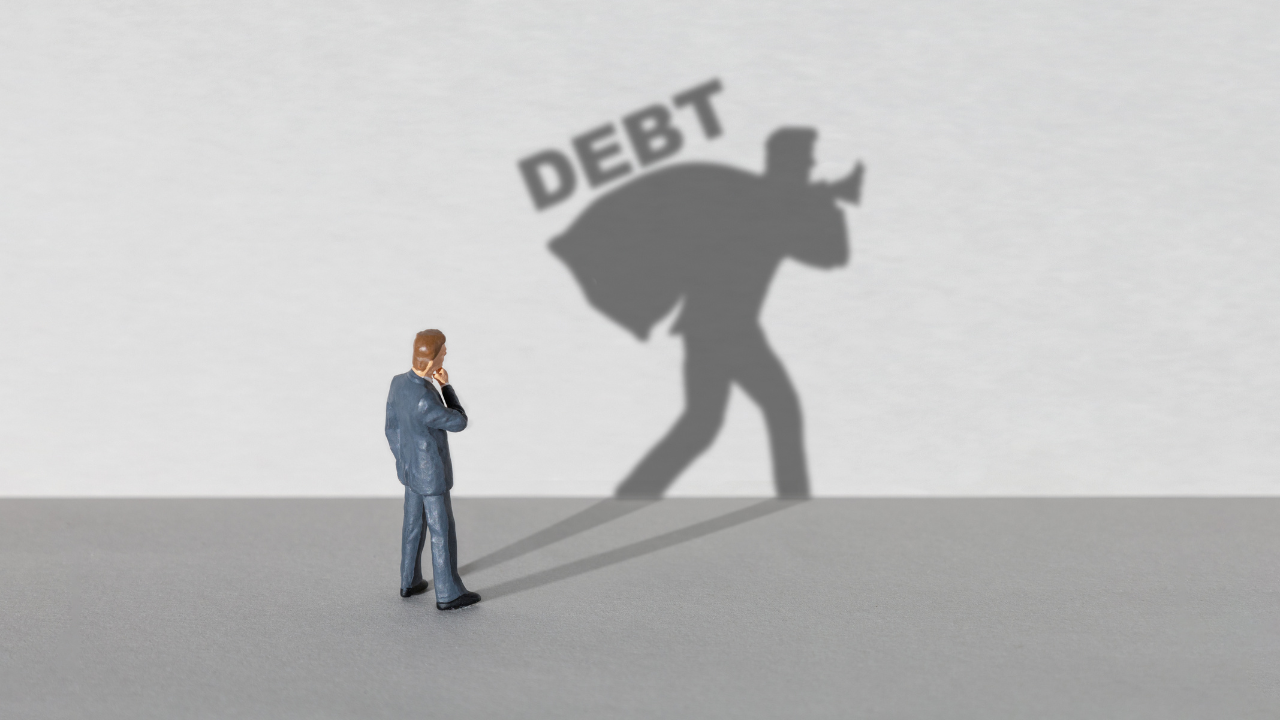
The world is not owing Mars or Jupiter. It is not owing some external force outside the human system or some imaginary civilization outside earth.
It is, mostly, owing itself, through a layered architecture of financial contracts that redistribute claims on future income across borders, institutions, and time.
The United States owes bondholders. Those bondholders include pension funds that owe retirees. Those retirees spent decades contributing wages that were themselves partly borrowed against. The chain is long and circular in ways that are genuinely hard to follow.
What is real, though, is the interest. Even when debt is owed within the same system, the cost of carrying it flows in specific directions, from borrowers who are often poorer or more vulnerable toward creditors who are often wealthier and more stable.
That is where the $348 trillion stops being an abstract number and starts being a description of how economic power is distributed globally.
Alex eventually closed his notes app after the all the heading racking exercise of trying to understand the concept of what it means for the work to be in debt.
He closed his notes app not because he had fully resolved the question, but because the real answer, is that the world is a debtor and a creditor simultaneously, and the tension between those two roles is what drives most of global economics, was both more mundane and more unsettling than an extraterrestrial creditor would have been.