Asia Devastated: Over 360 Dead, 1,400 Missing in Catastrophic Nepal and Tibet Floods
A devastating glacier collapse near the Nepal-China border unleashed deadly floods and mudslides, leaving hundreds dead and thousands missing, including many foreigners. Rescue efforts are ongoing amid widespread infrastructure damage, while the disaster highlights the increasing vulnerability of the Himalayan region to climate change impacts.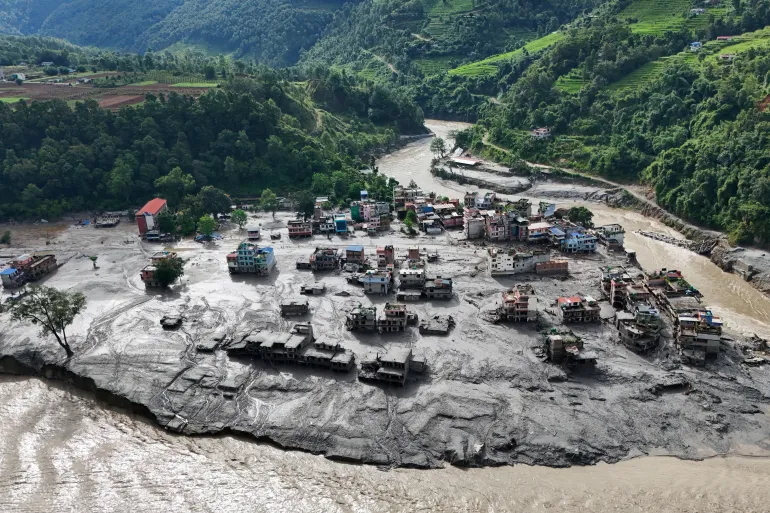
A catastrophic glacier collapse near the Nepal-China border on Wednesday, August 26, 2026, unleashed a deadly torrent of water and mud, several stories high, sweeping through communities and causing widespread devastation.
The disaster has led to hundreds of fatalities and left thousands missing across the Himalayan region, which is particularly susceptible to such events due to its steep slopes and melting glaciers exacerbated by human-caused climate change.
Initial reports from police indicated over 360 people were killed and more than 1,400 were missing, including numerous foreigners and pilgrims.
The scale of the calamity was later clarified, with at least 910 people reported missing in Nepal alone.
The authorities in Tibet, an autonomous region of China, confirmed at least three deaths and 558 missing individuals.
As hundreds of others have been displaced, their lives uprooted by the destructive floodwaters.
The impact of the disaster was visually striking and harrowing, and videos captured people desperately running before being engulfed by the raging floodwaters, which annihilated buildings and bridges.
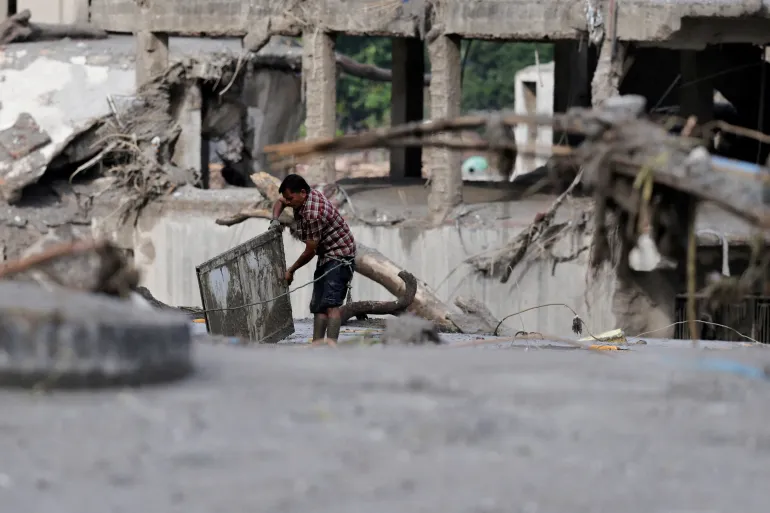
Images from Nepal’s hard-hit Nuwakot district showed the second floors of structures slathered in mud, while riverbanks and village streets were similarly choked with debris.
Vehicles were buried, and stunned survivors were often caked in mud.
On the Chinese side, state broadcaster China Central Television aired before-and-after images depicting a multistory building and numerous vehicles completely buried in mud in Tibet's Shigatse prefecture, where a two-lane road along a river valley was obliterated.
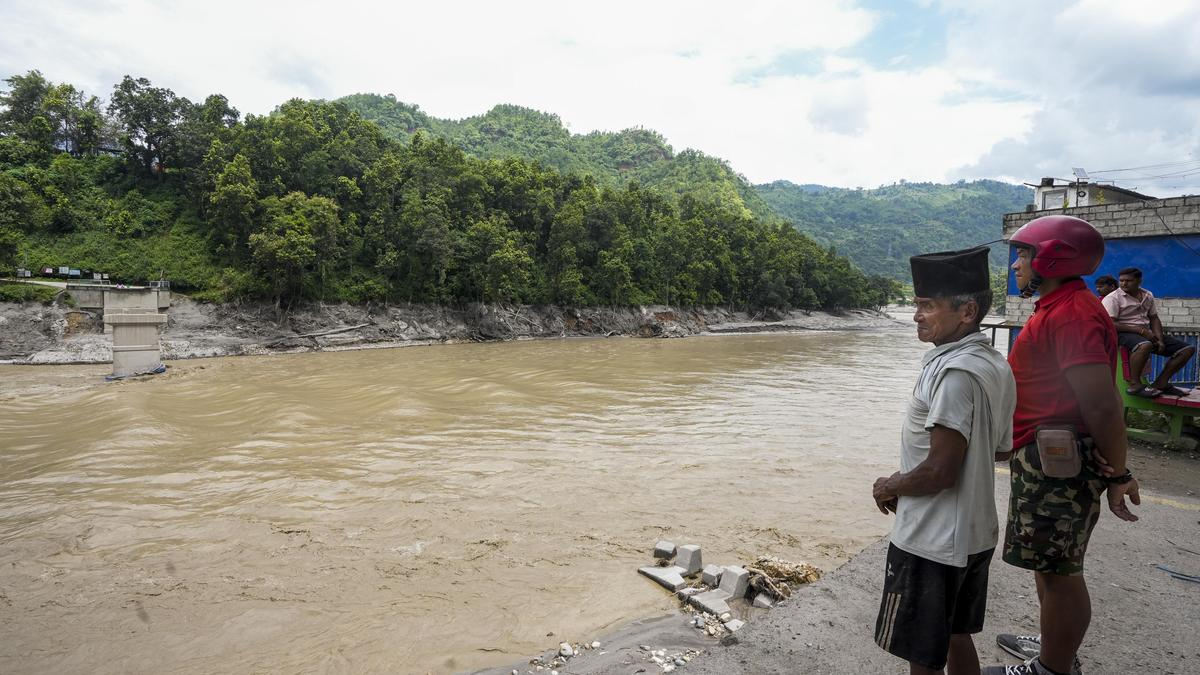
Aerial footage also revealed the formation and expansion of a new lake on the China-Nepal border.
Rescue operations were immediately launched, though significantly complicated by extensive infrastructure damage. Nepalese officials reported dozens of bridges destroyed and nearly 40 kilometers (25 miles) of roads damaged.
The Nepalese army deployed helicopters, successfully rescuing over 100 people and evacuating individuals trapped within facilities linked to the Trishuli hydropower project.
Dozens of injured were transported to Kathmandu for critical medical care. Bodies were tragically discovered hundreds of miles downstream in Chitwan district, underscoring the flood's reach.
The Nepal Red Cross Society, through its chairman Bishal Kumar Bhandari, shifted its focus from rescue to large-scale relief operations, noting approximately 1,200 people displaced from at least three villages.
In Tibet, a massive mudslide near the Gyirong Port land border crossing engulfed a multistory port building, leaving over five feet of mud on average in surrounding areas.
The China’s Premier Li Qiang arrived in Gyirong to personally direct rescue efforts, supported by 500 military and paramilitary personnel.
Military helicopters actively searched for survivors, assessed the damage, and mapped out potential rescue and evacuation routes.
Chinese authorities issued a stern warning about the newly formed lake at the confluence of the Tsogyal and Purupqiangzangbu rivers, which was overflowing and posed a significant risk of bursting, further threatening downstream communities.

The international community quickly responded to the crisis. The United Nations’ humanitarian chief, Tom Fletcher, ordered the release of $2 million from the U.N.’s Central Emergency Response Fund for medical care, shelter, and water, describing the floods as “horrifying.”
U.N. Secretary-General Antonio Guterres pledged support for national aid efforts. The U.S. State Department confirmed 90 Americans were unaccounted for in China and Nepal, though three had been rescued, with no known U.S. deaths.
India’s Ministry of External Affairs reported 288 Indian citizens missing, including power project workers. Chinese Ministry of Foreign Affairs spokesperson Lin Jian stated nearly 100 Chinese citizens were missing in Nepal and, according to preliminary information, 260 foreigners were missing in Tibet.
Many people endured agonizing waits for news of their loved ones. Nirajan Paudyal, a journalist from Kathmandu, expressed deep concern for his parents and relatives in Soley village.
Shova Shrestha, 33, spent over a day searching for her husband, Rajan Shrestha, constantly watching helicopters land in Bidur, the capital of Nuwakot district, in desperate hope.
Among the 517 foreigners reported missing by Nepal’s tourism board were 178 from India, over 60 from the U.S., and individuals from 30 other countries, including Ukraine, the U.K., South Africa, and Japan. Many were likely pilgrims heading to Mount Kailash in Tibet, a revered site.
Indian spiritual guru Sadhguru Jaggi Vasudev shared that a group of 77 pilgrims, including 22 Americans, were caught in the floods at the border immigration office, with no official information on their whereabouts.
The U.S. Geological Survey initially reported a magnitude 4.4 earthquake but later reclassified the seismic event as a magnitude 5.2 glacier collapse, which initiated the devastating debris flow.
Climate experts at the Kathmandu-based International Center for Integrated Mountain Development corroborated that an avalanche from a glacier likely triggered the flash flood, causing water levels on the Trishuli River to surge by an astonishing 27 feet in just half an hour.
This incident highlights the increasing instability of the Himalayan ice system, which poses growing threats to communities, infrastructure, and water supplies across one of the world’s most densely populated regions.
A similar glacial lake overflow in Tibet in August 2025, also attributed to high temperatures, killed nine people and damaged critical infrastructure, including a bridge connecting Nepal and China, underscoring the escalating risks in the area.