74% of Gen Z Nigerians Depend on One Income, Earn Under ₦100,000 — PiggyVest Report Reveals
PiggyVest report reveals 74% of Gen Z Nigerians rely on one income, with most earning below ₦100,000. Here’s what the data says about Nigeria’s growing savings crisis and financial vulnerability.
Nigeria’s youngest working generation is entering adulthood at one of the most economically fragile moments in recent history.
A new savings report by PiggyVest reveals that 74% of Gen Z Nigerians rely on a single income source, with the majority earning below ₦100,000 monthly, a financial reality that reveals a deeper structural challenge facing the country’s economy.
The 2025 PiggyVest Savings Report, which surveyed over 26,000 Nigerians across all six geopolitical zones, offers one of the most comprehensive snapshots of household financial health in Nigeria today.
Unlike earlier editions, this year’s report expanded into rural and peri-urban areas, making it one of the closest approximations of a nationally representative consumer financial survey currently available.
What emerges from the findings is not simply a decline in savings, but a widening financial vulnerability, particularly among young Nigerians.
Savings Are Falling And the Trend Is Worsening
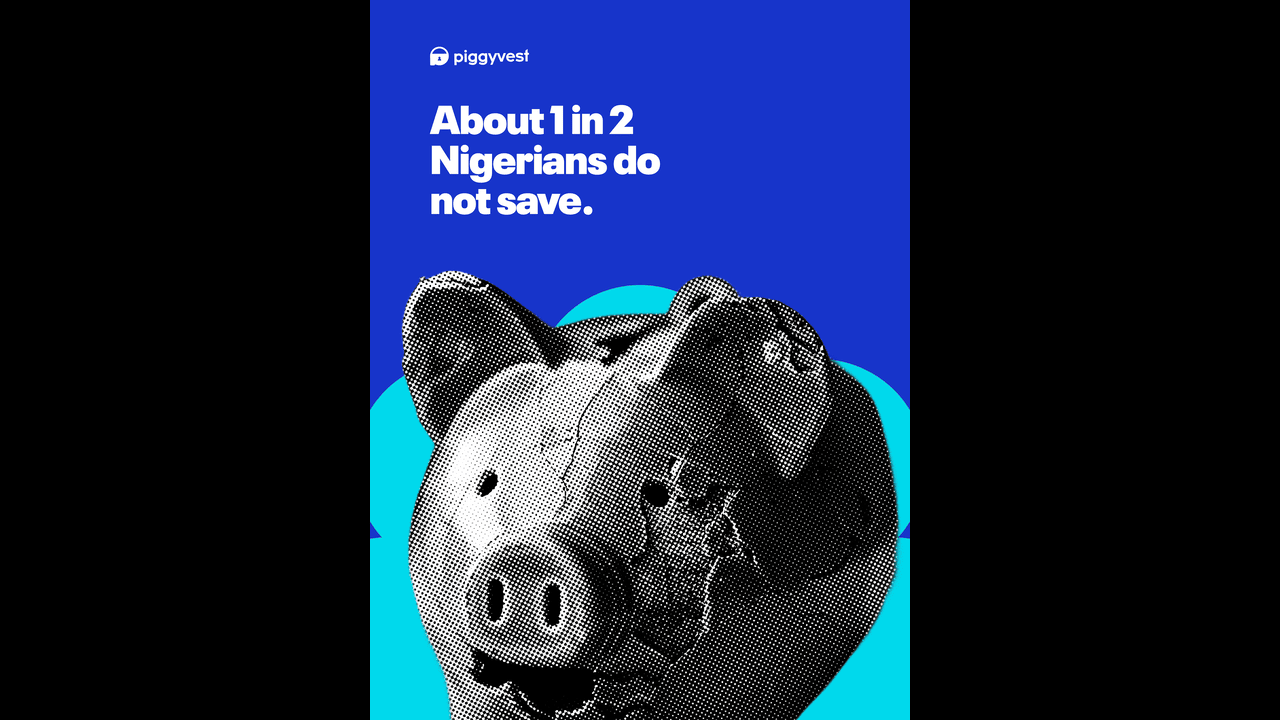
The report highlights a sharp decline in Nigerians’ ability to save over the past three years.
In 2023, 64% of respondents reported saving monthly. That number dropped to 47% in 2024 and fell further to just 40% in 2025.
At the same time, the share of Nigerians who do not save at all has surged significantly, rising from 21% in 2023 to 53% in 2025.
This means more than half of Nigerians surveyed across urban and rural areas now operate without any savings buffer.
The reasons behind this decline are largely income-driven. Among those who do not save, 60% say they simply do not earn enough.
Another 21% report a lack of interest in saving, while 19% say they do not know how to save.
But income constraints remain the dominant factor. Over 57% of non-savers reported having no monthly income at all, while 29% earn below ₦100,000 monthly, leaving little room for financial planning or emergency preparedness.
This aligns with broader financial inclusion research by EFInA, which found that while access to financial services has improved, financial resilience remains weak.
According to EFInA, only 9% of Nigerians use formal credit and just 3% have insurance coverage, meaning most households lack protection against economic shocks.
The result is a growing savings crisis, not driven by unwillingness, but by structural economic pressure.
Gen Z Is the Most Financially Vulnerable
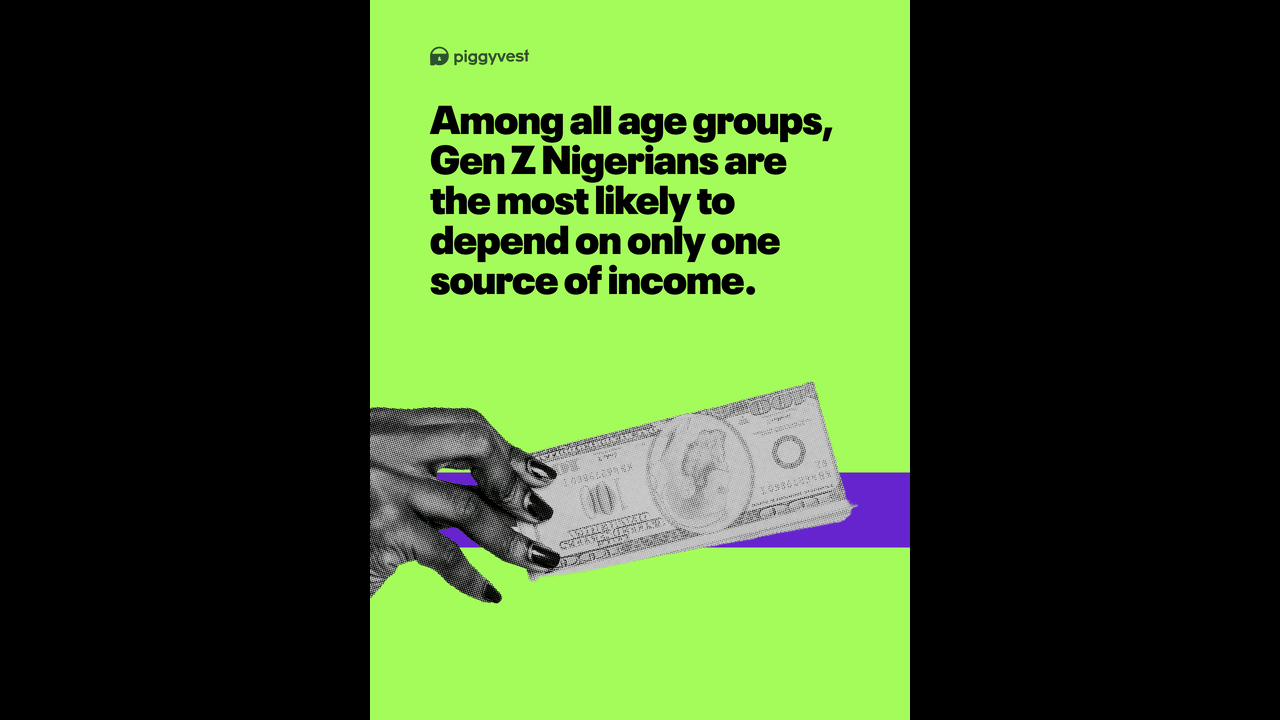
Among all age groups, Gen Z Nigerians, those between 18 and 28, appear the most financially exposed.
Only 31% of Gen Z respondents reported having emergency savings, compared to 52% among older Gen X respondents.
The generation is also the most dependent on a single income source, with 74% relying on just one stream of earnings.
Even more concerning is income distribution. A large share of Gen Z respondents either earn below ₦100,000 or report having no stable income at all.

These are individuals entering the workforce during a period marked by high inflation, rising living costs, and limited job opportunities.
PiggyVest COO Odun Eweniyi noted that inflation peaked above 33% in 2024, creating a situation where many Nigerians are earning more nominally but affording less in real terms.
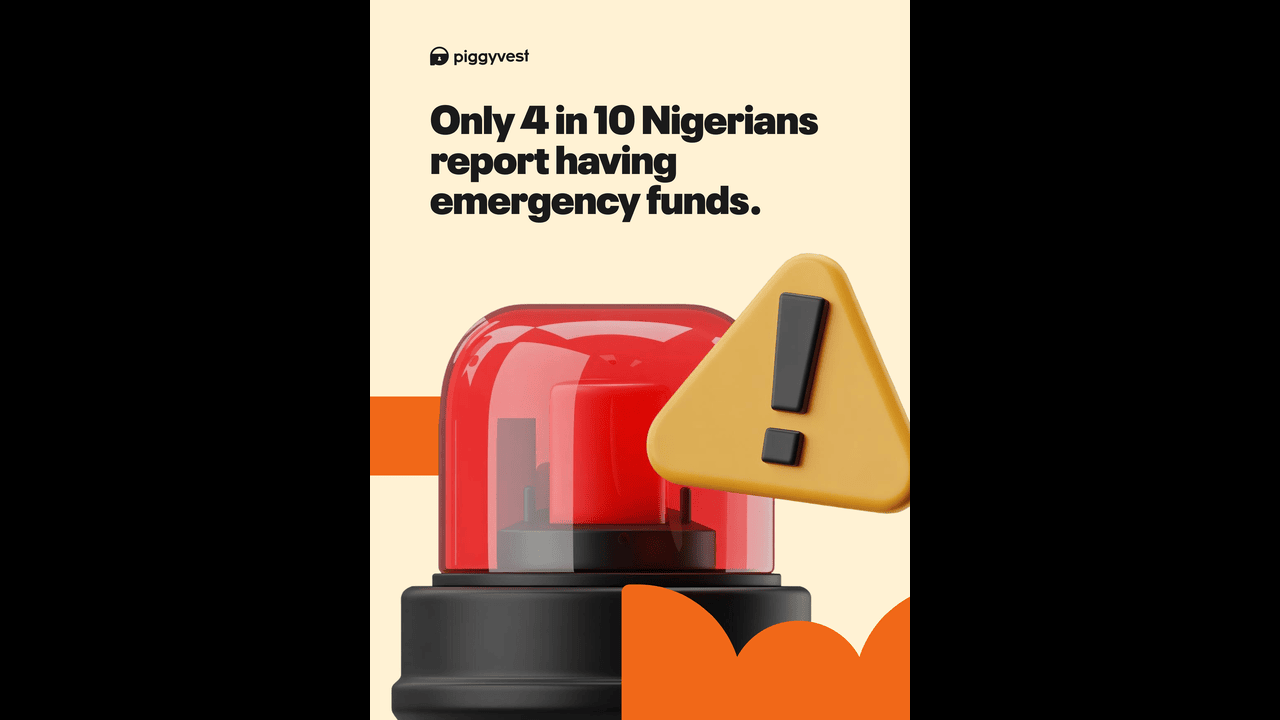
This financial vulnerability is reflected in emergency savings data. Six in ten Nigerians report having no emergency fund, while most of those who do can only cover one to three months of expenses.
Only 15% have enough savings to last six months, the minimum threshold typically recommended by financial planners.
For Gen Z, the implications are significant. Without savings, job loss, illness, or unexpected expenses can quickly push households into financial distress.
Financial Inclusion Is Rising, But Resilience Is Falling
Nigeria’s financial inclusion rate has improved in recent years, rising to 74% in 2023. More Nigerians now have bank accounts and access to digital financial tools than ever before.
However, the PiggyVest report highlights a critical disconnect: access does not automatically translate into financial security.
The World Bank has also acknowledged this gap, noting that macroeconomic gains in Nigeria have yet to translate into tangible improvements in household welfare, with poverty and food insecurity remaining high.
The expanded 2025 PiggyVest survey reinforces this reality. By extending data collection into rural and underserved communities, the report reveals that Nigeria’s savings crisis is not limited to urban areas, it is widespread, structural, and deepening.
More Nigerians may have accounts, but fewer are using them to build financial buffers. That distinction may define Nigeria’s economic resilience in the years ahead.