South Africa Is Moving Voter Registration Closer to WhatsApp. Can Nigeria Do the Same?
South Africa is expanding voter services through WhatsApp as it prepares for its 2026 local elections. With Nigeria's 2027 election approaching, could a similar digital approach make voter registration easier without compromising electoral integrity?

Adaeze had three tabs opened on her phone as she tried to quickly round up what she needed to clear out that Saturday evening. A lecture note due Monday. A family WhatsApp group arguing about who is hosting and cooking for Christmas. And INEC's Continuous Voter Registration portal, stuck on a loading screen for the fourth time this week.
She closed the tab after a few and went back to the group chat to watch the “drama” unfold, because she was definitely there for the “drama”.
She will try to log onto the INEC’s portal later, or maybe she will simply skip this cycle, like she did the last one.
Her frustration is not unusual, and it is not really about her. It is about a system that can turn something as basic as registering to vote into an errand that feels like a government queue with extra steps.
A few thousand kilometres south, South Africa's electoral commission is taking a different approach: if citizens already spend much of their digital lives on WhatsApp, why not bring voter services closer to where they already are?
A Chat Bubble Is Becoming Part of the Voting Process
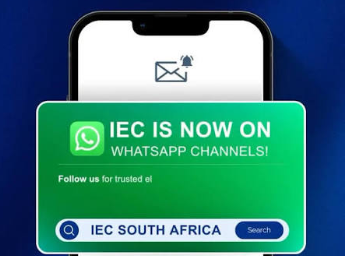
South Africa's Independent Electoral Commission has expanded its digital voter services around WhatsApp as the country prepares for its November 4, 2026 local government elections. The commission's WhatsApp chatbot allows citizens to access voter information and check registration details, while its online platform handles registration and updates.
The explanation matters because this is not simply a case of replacing the electoral process with a chat window. It is about removing some of the friction between citizens and the system.
South Africans can already register or update their details online, check their voting status through several channels and use WhatsApp to access electoral information without navigating the process entirely from scratch.
The idea is simple enough to understand. People are already on WhatsApp. They use it to talk to family, run businesses, receive information and organise their daily lives. Making an electoral service available through a familiar platform could therefore make registration feel less like an administrative task and more like something people can complete as part of their ordinary digital routine.
South Africa's experience is also a reminder that digital voter registration is not an entirely new experiment. Its IEC already allows online registration and updates, while WhatsApp operates as another access point within a broader digital system.
And that may be the more important lesson for other African democracies.
Convenience Is Useful. But Elections Need More Than Convenience
There is a temptation to see WhatsApp voter services as an obvious technological upgrade. It is convenient. It is familiar. It could potentially reach people who might never bother opening a dedicated government portal.
But convenience and electoral integrity are not the same thing. The moment an electoral body begins collecting or directing citizens through digital platforms, questions about identity, address verification, cybersecurity and data protection become unavoidable.
A messaging platform can make the front door easier to reach, but it cannot by itself solve the harder problem of determining whether the person behind the screen is who they claim to be or whether the address they provide is accurate.
South Africa's own system reflects that reality. Voters can register online, but the process still requires identification and accurate residential information because where a person lives determines the appropriate voting district.
There is another problem that is easy to underestimate: trust. WhatsApp may be familiar to millions of people, but that familiarity also makes it attractive to scammers and political actors. South Africa has already had fake election-related messages and fraudulent recruitment schemes circulating through WhatsApp during the current registration period.
So the lesson is not that electoral bodies should avoid messaging platforms. It is that digital convenience has to be accompanied by authentication, clear official channels, data protection and aggressive public education.
Otherwise, the same platform that makes registration easier can also make electoral misinformation easier to distribute.
Nigeria Has Already Started Digitising Its Elections. But Can It Go Further?
Nigeria's next presidential election is scheduled for January 16, 2027, putting the country roughly five months away from its next general election. That timeline makes a complete WhatsApp-based voter registration overhaul before the next election highly unlikely. But it does not make the underlying idea irrelevant.

INEC already operates an online Continuous Voter Registration system that allows prospective voters to begin the process digitally before completing the necessary physical biometric capture. That means Nigeria has already accepted the basic principle that voter registration does not have to begin with a physical queue.
A WhatsApp layer could potentially sit on top of that existing infrastructure. It could allow citizens to begin the process, check registration status, confirm polling-unit information, receive reminders, ask questions, and navigate directly to official INEC services without repeatedly searching for the correct portal.
Nigeria has already moved further into digital election management through systems such as BVAS and the IReV results portal. The 2023 election showed both the promise and the limitations of that transition. Technology can make an electoral process more transparent, but a digital system is only as credible as its implementation, reliability and the trust citizens place in it.
That is why the question for Nigeria should not be whether it can copy South Africa's model before 2027. It should be whether it can build the infrastructure that would make such a model useful in the elections after 2027.
The country could start small. Voter registration assistance through WhatsApp. Polling-unit verification. Registration reminders. Official election FAQs. Secure links to INEC services. Automated notifications about deadlines.
None of these would amount to digital voting, and perhaps that distinction is important. Nigeria does not necessarily need to jump from physical voting to fully digital elections in one dramatic step. It can digitise the parts of the electoral process where technology can reduce friction without compromising the parts where physical verification remains necessary.
The Future of Voting May Begin Before Election Day
The bigger lesson from South Africa is not really about WhatsApp. It is about how governments meet citizens. For years, governments have built digital services and expected citizens to find them. But the next phase of digital government may work differently. Instead of asking people to learn another system, governments may increasingly take essential services into platforms people already use.
Elections could be one of the biggest beneficiaries of that shift. But technology cannot repair distrust by itself. A voter who finds registration easier may still refuse to vote if they believe the process is manipulated.
A perfectly functioning portal cannot compensate for poor election administration, and a WhatsApp chatbot cannot make a result credible if citizens do not trust how that result was produced.
That is why South Africa's experiment matters to Nigeria and to the wider African electoral conversation. The continent is not short of people with smartphones or messaging apps. What it needs are electoral systems that are easier to access without becoming easier to manipulate.
Nigeria does not need to rush a WhatsApp solution simply because South Africa is moving in that direction. It needs to learn what works, understand what fails, and build the safeguards before scaling the convenience.
Because voting begins long before a ballot enters a box. It begins when a citizen decides that registering is worth the effort, and perhaps the real future of African elections is not about putting the ballot itself on a phone. It is about making sure fewer citizens have a reason to close the app, abandon the portal, and decide that participating is simply too difficult.