Political Showdown: NDC and Obi/Kwankwaso Movement Clash Over Campaign Structure and Policy
The Nigerian Democratic Congress (NDC) faces internal strife as its presidential and vice-presidential candidates, Peter Obi and Rabiu Kwankwaso, publicly diverge on key policies like fuel subsidy and state police. This comes amid a deepening rift with the Obi-Kwankwaso (OK) Movement over campaign structures, with the NDC leadership rejecting the movement's independent council. The OK Movement, however, asserts its distinct identity and grassroots strength while reaffirming its commitment to support NDC candidates.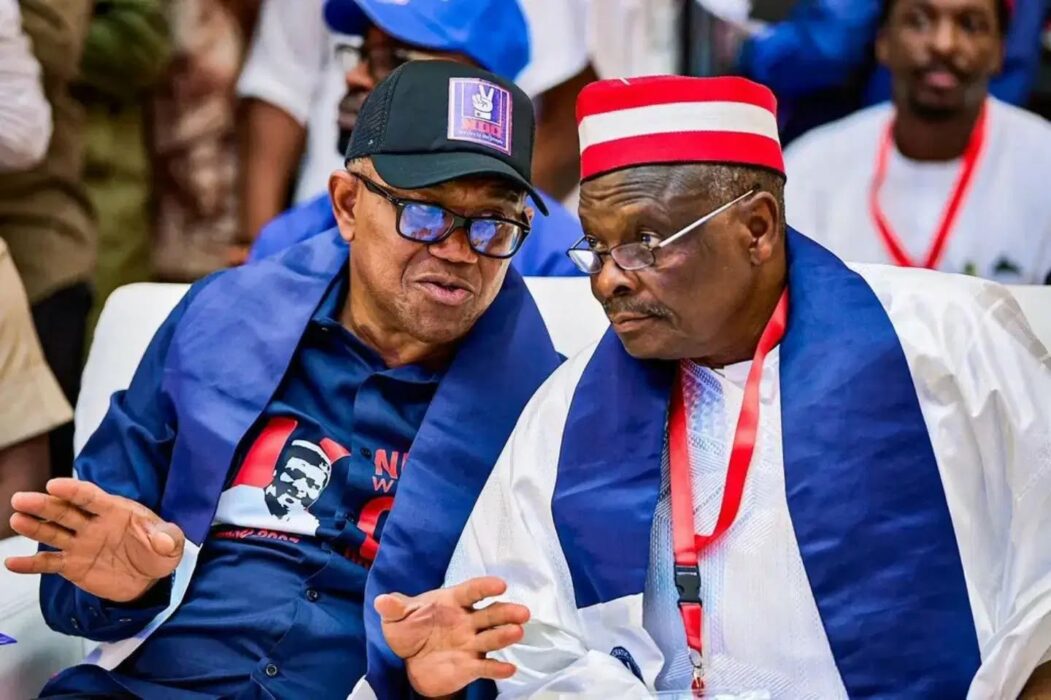
The Nigerian political landscape is currently marked by significant internal disagreements within the Nigerian Democratic Congress (NDC) and between the party's leadership and its key support alliance, the Obi-Kwankwaso (OK) Movement. These tensions are evident both in policy stances taken by the presidential and vice-presidential candidates, Peter Obi and Senator Rabiu Kwankwaso, and in the contentious issue of campaign structure ahead of the 2027 general elections.
Regarding crucial national policies, Peter Obi, the NDC presidential candidate, has maintained a firm stance against the reintroduction of fuel subsidy. Speaking at the Nigerian Bar Association conference, Obi reiterated his belief in subsidy removal, asserting that mismanagement of proceeds should not be a justification for its retention. He argued that trillions recovered from subsidy removal ought to have been transparently invested in critical sectors like healthcare, education, and agriculture, while also bolstering the country’s sovereign wealth fund. Concurrently, Obi expressed support for the State Police Bill, deeming its passage a significant legislative milestone, yet he cautioned about concerns regarding transparency and potential political abuse during its implementation, particularly given Nigeria's vast and diverse nature.
In stark contrast, his running mate, Senator Rabiu Kwankwaso, has advocated for the reintroduction of fuel subsidy, albeit in a modified form. In an interview, Kwankwaso suggested that an NDC administration would invest in refineries to boost domestic production, thereby making petrol accessible to Nigerians at a reasonable price. He emphasized that if individuals could build refineries, the government should also do so to meet minimum requirements. Furthermore, Kwankwaso has consistently opposed the establishment of state police, attributing the growing demand to the failures of Nigeria's federal security system. He argued that the proposal gained momentum because the Nigeria Police Force and other federal security agencies have struggled to adequately address insecurity.
Amidst these diverging policy positions from its top candidates, the NDC leadership has remained conspicuously silent. The party’s National Publicity Secretary, Osa Director, had not responded to inquiries regarding these matters, highlighting an apparent internal communication gap or a reluctance to address the public dissonance.
Further complicating the party's cohesion is a deepening rift between the NDC leadership and the Obi-Kwankwaso (OK) Movement, a popular alliance commonly known as the OK Movement, concerning campaign structures for the 2027 elections. The dispute escalated when the OK Movement established a 59-member Presidential Campaign Council. Senator Seriake Dickson, the NDC national leader, strongly criticized this move, labeling it