Political Firestorm: Ghana Leaders Condemn 'Dangerous' Attempted Arrest of MP Baffour Awuah!
An attempted arrest of Manhyia South MP Nana Agyei Baffour Awuah at the Accra High Court has ignited a fierce debate over parliamentary privileges and the conduct of state agencies. Former Majority Leader Osei Kyei-Mensah-Bonsu labels the incident unjustified, while EOCO maintains it was a lawful step to secure the MP's attendance after unhonored invitations, raising crucial questions about Ghana's democracy.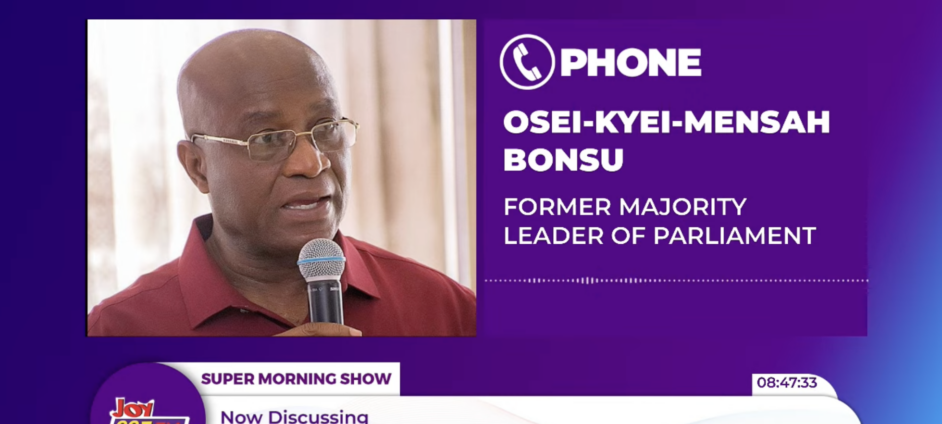
An attempted arrest of the Manhyia South Member of Parliament, Nana Agyei Baffour Awuah, at the Accra High Court on Wednesday, September 23, has sparked a significant debate regarding parliamentary privileges, the conduct of state investigative bodies, and the health of Ghana's democracy. The incident, which occurred while Mr Baffour Awuah was present as counsel for his client, Salomey Baffoe Awiti, has led to competing accounts from the MP's supporters and the Economic and Organised Crime Office (EOCO).
Former Majority Leader of Parliament, Osei Kyei-Mensah-Bonsu, has vehemently condemned the attempted arrest, describing it as unjustified, dangerous to Ghana’s democracy, unnecessary, and unfortunate. Speaking on the Joy Super Morning Show, Mr Kyei-Mensah-Bonsu stated that the initial invitation from EOCO was directed at the law firm where Mr Baffour Awuah serves as a senior partner, rather than at him personally. He explained that the firm was contacted as an entity, and its senior partner, who later became an MP, was asked to assist an investigation in his capacity as an officer of the firm. According to Kyei-Mensah-Bonsu, Mr Baffour Awuah consulted the Clerk of Parliament and was advised that another senior officer of the law firm could represent it. Consequently, a senior female officer of the firm appeared before investigators on three occasions and submitted a statement on the firm's behalf, which was entertained by EOCO. Kyei-Mensah-Bonsu questioned the rationale behind attempting to arrest the MP after the firm had, in his view, fully cooperated, stating, “So why out of the blue do they trace and track Baffour to the court premises and attempt an arrest?” He characterized the development as an "aftershock" lacking justification, expressing concerns about its implications for parliamentary privileges and inter-institutional relations.
In stark contrast, EOCO has disputed the narrative that the matter was resolved through the law firm’s cooperation. In a statement issued on Wednesday, September 23, EOCO asserted that Mr Baffour Awuah had been personally invited on two occasions in February to assist with an ongoing investigation, but these invitations were not honored. The Office maintained that the subsequent attempt to arrest the MP was part of lawful steps taken to secure his attendance. EOCO clarified that the arrest was not completed due to the situation escalating, with officers assessing that further action could endanger public safety. While recognizing and respecting the constitutional privileges and immunities of Members of Parliament, EOCO stressed that parliamentary membership does not exempt an individual from investigation or place them beyond the reach of the law. The agency confirmed that its investigation remains active and that it would review available video evidence and the circumstances before determining its next steps.
Adding to the chorus of concern, Akim Swedru Member of Parliament Kennedy Osei Nyarko urged President Mahama to scrutinize the conduct of security agencies. In a Facebook post, Mr Osei Nyarko questioned the decision to confront the lawmaker at the court premises rather than using formal invitation channels, such as contacting the MP directly or through the Office of the Speaker. He criticized what he termed a “Rambo style of arrest” of a sitting MP, arguing that if assistance was needed, official channels should have been utilized. He warned that security agencies under the President's watch were "gradually becoming rogues."
Osei Kyei-Mensah-Bonsu further highlighted constitutional protections for Members of Parliament, referencing Articles 117, 118(1) and (2), and 123. He stressed that while MPs are entitled to privileges, these do not place them above the law. He advocated for using "legal means to achieve legal ends" and called for state institutions to respect one another’s constitutional mandates to avoid confrontations that could undermine Parliament's authority. He also pointed out that Baffour Awuah, as a lawyer representing a client, was exercising his professional responsibilities at the court. The incident continues to generate questions about the appropriate limits of intelligence and investigative agencies when dealing with elected representatives, especially where parliamentary privilege and legal proceedings intersect, reinforcing the call for lawful and respectful engagement between state bodies.