Five African Governments Are Betting on AI in African Languages. The Bigger Race Has Already Begun.
Five African governments have launched ATLAS Umoja AI to develop open-source AI models in native African languages. Beyond artificial intelligence, the initiative raises bigger questions about digital sovereignty, language preservation and whether Africa can shape its own AI future before Silicon Valley does.
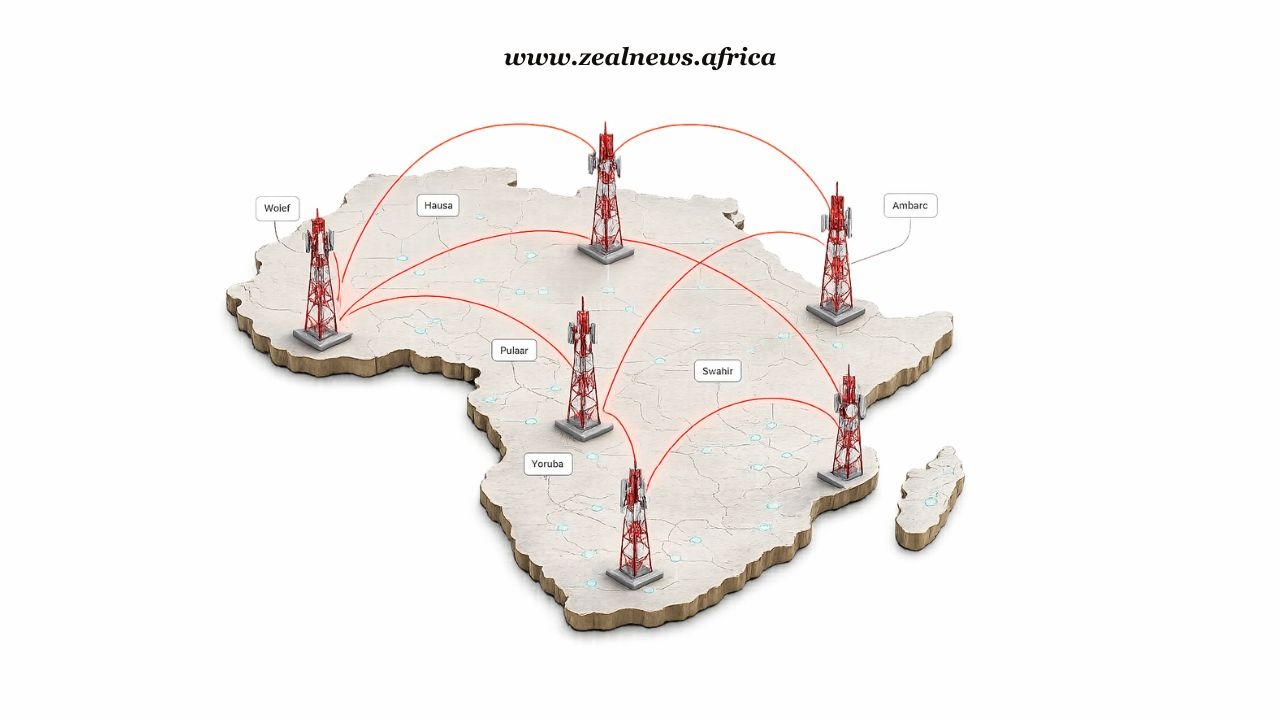
For decades, speaking an African language online has often meant speaking to a technology that barely understands you.
Ask a virtual assistant a question in Yoruba, Ewe, Oshiwambo or Kikuyu, and chances are it either misunderstands the request, responds awkwardly or switches back to English. It is not because those languages lack complexity or relevance. It is because the systems increasingly shaping the digital world were never properly taught to understand them.
Artificial intelligence is only as intelligent as the data it learns from. For years, that education has overwhelmingly favoured English, Mandarin, Spanish, French and other widely digitised languages, while thousands of African languages have remained largely invisible.
In the eyes of many global AI companies, they have simply been classified as "low-resource languages"—languages with too little digital data to justify significant investment.
That is beginning to change. In late July, five African governments announced a joint initiative that may prove more significant than the headlines it generated.
Nigeria, Kenya, Namibia, Togo and Benin have launched ATLAS Umoja AI, a Pan-African initiative backed by the GSMA and African technology firms including Awarri, Zindi, Pawa AI and Mozisha.
By pooling language datasets, computing resources and developer expertise, the project aims to build open-source AI models that understand African languages. It received modest attention when it was announced, but its long-term implications could extend far beyond technology.
Because whoever teaches artificial intelligence to understand African languages may ultimately shape how hundreds of millions of Africans interact with technology for decades to come.
This Isn't Really About AI. It's About Who Teaches AI to Understand Africa.
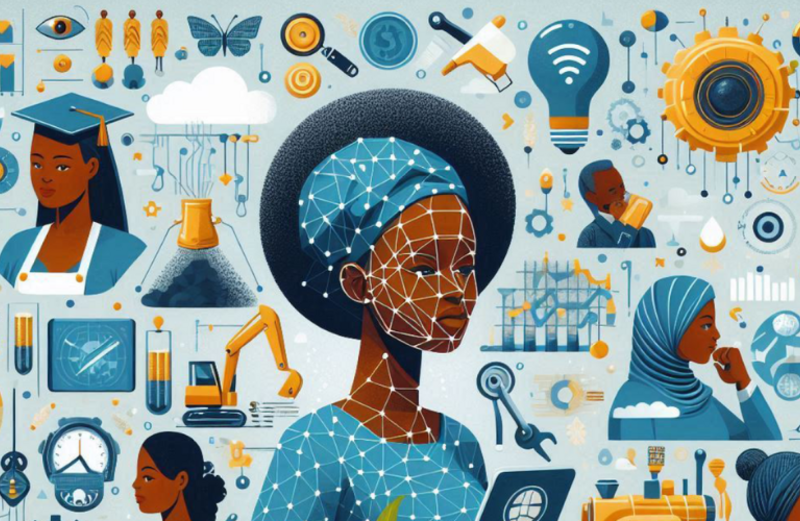
The conversation around artificial intelligence often focuses on who builds the smartest chatbot or the fastest model. But intelligence begins much earlier than that. It begins with language.
Large Language Models learn far more than vocabulary. They absorb context, humour, accents, history and the subtle ways people communicate. When those elements are missing, the AI can process language without ever truly understanding the people behind it.
That has been one of Africa's biggest digital disadvantages. Despite being home to more than 2,000 languages, fewer than two per cent currently receive meaningful AI support. Many remain almost completely absent from the datasets used to train today's most powerful language models.
That is precisely what ATLAS Umoja AI is attempting to change. Instead of waiting for Silicon Valley to eventually recognise African languages as commercially valuable, these governments are attempting to build that foundation themselves.
Because whoever owns the language data increasingly shapes the intelligence that follows and whoever shapes that intelligence influences the future of digital communication.
For the First Time, Governments Are Treating Language Like National Infrastructure
Governments have traditionally invested in roads, electricity and telecommunications because infrastructure drives economic growth. Artificial intelligence is expanding that definition.
In the AI era, language datasets are becoming infrastructure too. Every chatbot, voice assistant, translation engine and digital public service depends on enormous volumes of carefully organised linguistic data.
That explains why this initiative matters far beyond technology. The participating governments are effectively treating African languages not simply as cultural heritage worth preserving, but as critical economic infrastructure for the digital age.
Today, they are increasingly being viewed as strategic economic assets. In the age of artificial intelligence, language may become as valuable as natural resources once were.
The countries that control high-quality language datasets could eventually influence everything from digital education and healthcare to banking, agriculture and public administration.
The question is no longer whether artificial intelligence will transform society. It is whether Africa will help build that intelligence or simply consume what others build.
Silicon Valley Isn't the Competition. Time Is.


It is tempting to frame this initiative as Africa versus Silicon Valley. In reality, that may not be the right comparison.
Major AI companies will almost certainly expand support for African languages as the continent's digital economy grows. The real question is not whether they will arrive, but who establishes the underlying datasets first. In technology, the first movers often define the standards everyone else builds upon.
The first platforms to build robust language datasets usually attract researchers, developers, startups and businesses that continue improving those models. Once an ecosystem forms around a particular standard, catching up becomes significantly harder.
That is why timing matters so much. ATLAS Umoja AI is not simply trying to build another language model. It is trying to ensure that Africa's linguistic knowledge is organised, owned and developed before external platforms become the default custodians of that knowledge.
Nigeria's earlier N-ATLAS model demonstrated that African-led language AI is possible. ATLAS Umoja expands that idea by combining datasets, technical expertise and computing resources across multiple countries rather than leaving each nation to build alone.
The race, therefore, is not just technological. It is strategic. Because whoever builds the first widely adopted African language models may also shape the future standards for education platforms, voice assistants, financial services and public digital infrastructure across the continent.
The Hardest Part Isn't Building AI. It's Collecting Africa.

Building artificial intelligence is difficult. Building artificial intelligence that genuinely understands Africa may be even harder.
Africa's greatest challenge is not computing power but linguistic diversity. Thousands of languages, dialects and oral traditions remain only partially documented, while many communities communicate primarily through speech rather than text. Artificial intelligence cannot learn what has never been recorded.
Artificial intelligence cannot learn what has never been recorded. That makes data collection the real challenge. Every accurate voice recording, translated sentence, proverb, conversation and local expression becomes part of the intelligence future systems will rely on.
And unlike building roads or laying fibre-optic cables, language datasets are never truly finished. They evolve as societies evolve, requiring continuous contributions from ordinary speakers, researchers, universities and local communities.
Perhaps the biggest obstacle facing ATLAS Umoja AI is not technology. It is whether millions of Africans can collectively document themselves before someone else attempts to do it for them.
The Biggest Opportunity May Not Be AI. It May Be Everything Built On Top Of It.
Most discussions about artificial intelligence focus on chatbots. That may prove to be the smallest part of this story. If African language models become reliable enough, they could reshape how millions of people interact with essential services.
Imagine a farmer receiving agricultural advice in Tiv instead of English. A trader completing financial transactions in Yoruba without navigating unfamiliar interfaces. Or a student learning mathematics through explanations delivered naturally in Hausa.
For decades, Africans have adapted themselves to technology. ATLAS Umoja AI reverses that relationship by asking what happens when technology finally learns Africans instead.
That shift could dramatically expand digital inclusion across sectors ranging from fintech and education to healthcare, public administration and e-commerce. Voice-first services become more accessible. Digital literacy barriers begin to fall.
Millions who rarely interact comfortably with English-language interfaces suddenly become active participants in the digital economy without first needing to translate themselves.
That may ultimately become the initiative's greatest contribution, not simply building African AI but building an internet that finally sounds like Africa.
Africa Isn't Just Trying to Join the AI Race. It Is Trying to Shape It.
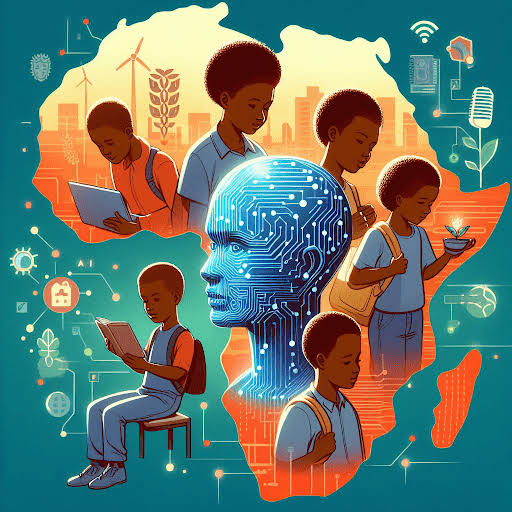
For decades, Africa has largely consumed technology designed elsewhere. Search engines. Social media platforms. Operating systems. Cloud infrastructure. Even artificial intelligence itself.
ATLAS Umoja AI suggests a subtle shift in thinking. Rather than waiting for global technology companies to determine when African languages deserve attention, a handful of governments are trying to shape that future themselves.
Whether the initiative ultimately succeeds will depend on funding, political continuity, technical execution and sustained collaboration across borders. Building open-source language models for one of the world's most linguistically diverse continents is an ambitious undertaking, and success is far from guaranteed.
The announcement itself is only the beginning. Its real significance lies elsewhere. It signals that Africa is beginning to see language not merely as culture worth preserving, but as strategic infrastructure worth owning.
Because artificial intelligence will increasingly shape how people learn, bank, work, receive healthcare and interact with the government. The question is no longer whether AI will understand Africa.
The real question is not whether artificial intelligence will eventually understand Africa. It is who teaches it first, and whose interests that intelligence ultimately reflects. . For once, five African governments have decided they would rather answer that question themselves than wait for Silicon Valley to answer it for them and in the age of artificial intelligence, that decision may prove just as important as the technology itself.