Zambian Cabinet Reshuffle: Hichilema Directs New Ministers to Reform Laws, Deliver Accountability
President Hakainde Hichilema has completed his cabinet, delivering stern directives to newly appointed ministers emphasizing accountability, equitable service, and national interest over personal gain. New appointments like Hon. Tambatamba for Mines and Hon. Sialubalo for Local Government are tasked with advancing key development agendas, while the opposition stresses the importance of ministerial competence and public scrutiny.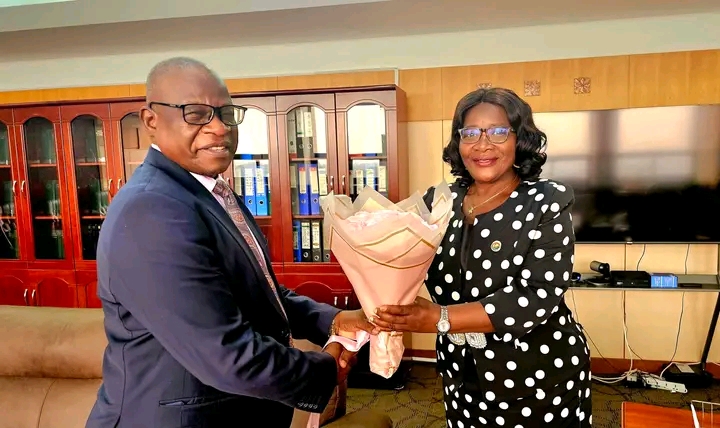
President Hakainde Hichilema recently completed his full cabinet by swearing in 24 cabinet ministers and 10 provincial ministers in Lusaka. During the ceremony, President Hichilema issued a strong call to his newly appointed team, urging them to prioritize national interests above personal gain and to share economic privileges and opportunities with ordinary citizens, rather than restricting them to an inner circle. He admonished against what he termed "primitive acquisition," where ministers might attempt to monopolize benefits, forgetting the people they serve. The Head of State reaffirmed his commitment to the Zambian people, emphasizing that despite past perceptions of him being a stooge of foreign interests, he is, in fact, a "stooge of the people of Zambia."
The President laid out critical expectations for his ministers, stressing the paramount importance of upholding constitutionalism and the rule of law. He advised that if laws posed an impediment, ministers should work to amend them through legislative processes, rather than breaking them. He also called for civilized debate on national matters, extending this expectation to Members of Parliament and ordinary Zambians. Furthermore, President Hichilema expressed concern over ministers who adopt changed attitudes towards ordinary citizens after appointment and highlighted existing discrimination in the distribution of key government programmes such as Social Cash Transfer and the Farmer Input Support Programme (FISP). He demanded equitable service delivery across all regions, ensuring that eligible citizens receive their rightful support.
Specific appointments and their mandates underscore the government's ambitious agenda. Hon. Tambatamba, appointed to the Ministry of Mines and Minerals Development, brings nearly a decade of experience as a Sustainability Manager at Barrick Lumwana Mining Company. Having previously served as Minister of Labour and Social Security, she is now tasked with overseeing Zambia's ambitious target of increasing annual copper production to three million metric tonnes by 2031. This appointment is crucial as Zambia seeks to expand mineral production, attract investment, and strengthen the mining sector's contribution to national economic development.
In the realm of local governance and rural development, Hon. Gift Sialubalo, reappointed as Minister, pledged to strengthen local governance, accelerate rural development, and improve public service delivery. He underscored the critical role of his ministry in translating national development priorities into tangible improvements in people’s lives, particularly through the Constituency Development Fund (CDF). Sialubalo highlighted CDF as a key instrument for local development, enabling investments in community infrastructure, education, healthcare, and empowering youth and women. He committed to collaborative efforts with local authorities, traditional leaders, and community structures to ensure public resources deliver meaningful results, emphasizing that "every kwacha allocated to community development must translate into tangible progress."
Dr. Clement Andeleki, appointed to the Ministry of Home Affairs and Internal Security, is expected to leverage his diverse background as a former police officer, Registrar of Societies, and an Advocate of the High Court with a PhD in Law. His mandate includes strengthening internal security, enhancing effective law enforcement, improving institutional performance, and protecting citizens' rights. Similarly, Hon. Mwiimbu, taking on a ministerial portfolio focused on justice, expressed commitment to constitutionalism, access to justice, and the protection of fundamental rights and freedoms. He recognized the justice system's vital link to economic growth, pledging to support reforms that improve its efficiency and credibility, aligning with the "Grow Zambia Agenda." Meanwhile, Hon. Sing’ombe, a provincial minister for Southern Province, reaffirmed his unwavering commitment to working towards advancing development and improving community lives in his region. President Hichilema also challenged other key appointees, including Hon. Peter Kapala for Electricity to deliver 10,000 megawatts and invest in alternative energy sources, and Hon. Moses Moyo for Agriculture.
Amidst these appointments, Democratic Progressive Party (DPP) leader Antonio Mwanza weighed in on the importance of accountability, stating that constitutional authority must not be an excuse to avoid scrutiny. Mwanza affirmed that while cabinet appointments are the President's prerogative, ministers must demonstrate competence, integrity, and diligence, and be prepared to account for their performance and use of public resources. He stressed the opposition's role in scrutinizing government decisions, exposing failures, and holding the administration accountable. Mwanza concluded that the success of the cabinet would ultimately be measured by its ability to improve the lives of ordinary Zambians, create opportunities, strengthen the economy, and ensure responsible use of public resources, encapsulating the principle: "The President appoints, the ministers perform, and the people hold the government accountable."