You Hate Networking Events, But You Might Be Better at This Than You Think
Introverts have long been told professional networking is an extrovert's game but research says otherwise. Stop performing and start building professional relationships in a way that actually works for you.

Okay, real talk.
Someone mentions a networking event and something in you immediately deflates, because you already picture the room to be loud and crowded, full of people who seem to know exactly what to say and who to say it to.
If this is you, there is a good chance you are an introvert navigating a professional world that was largely designed by extroverts, for extroverts.
And for a long time, the advice aimed at people like you has essentially boiled down to: try harder to be more like them.
That advice is wrong, and the research backs it up.
The Problem Was Never You
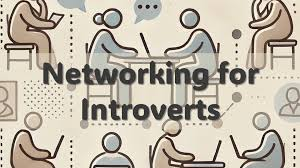
Introversion is not shyness, social anxiety neither is it lack of confidence hiding behind a quiet personality.
Introversion is simply about how you process energy specifically, that social interaction uses it rather than replenishes it.
Extroverts leave a packed room feeling charged. Introverts leave the same room feeling hollowed out.
Neither response is a character flaw. It is just biology.
The real problem is how networking has been defined and celebrated in professional culture. Loud. Fast. Visible.
Social Insight
Navigate the Rhythms of African Communities
Bold Conversations. Real Impact. True Narratives.
The ability to work a room, collect contacts like trading cards and deliver a polished thirty-second pitch to a stranger without flinching.
This version of networking does not just disadvantage introverts, it actively misses the point of what building professional relationships is actually for.
Research shows that introverts do not struggle to build strong professional networks. They struggle to build them in environments that were not designed with them in mind.
That is a design problem, not a personality problem.
Networking at its core is about genuine connection — learning from people, building trust over time, creating relationships.

When you strip away the performance of it, introverts are often doing this better than anyone.
How to Actually Work With Your Wiring
The single most useful shift an introvert can make is to stop trying to compete on extrovert terms and start leveraging what already comes naturally.

Preparation is the first tool.
Introverts tend to be deep thinkers and should use that before walking into any professional setting. Know why you are attending, identify one or two people you genuinely want to meet rather than targeting the whole room.
Have a few natural conversation openers ready, tied to the topic of the event or shared professional interests.
This is not scripting yourself into a performance, it is removing the cognitive load of having to figure everything out in real time while also managing the overstimulation of a busy room.
Social Insight
Navigate the Rhythms of African Communities
Bold Conversations. Real Impact. True Narratives.
The environment matters more than most people admit. Not every setting suits every temperament and choosing accordingly is strategy, not avoidance.
Roundtables, smaller workshops, one-to-one coffee chats, breakfast meetings with a clear structure are spaces where introverts consistently thrive because the depth of conversation is built into the format.
A single meaningful exchange in a quiet corner will outlast twenty rushed introductions in a crowded hall.
Energy management is non-negotiable. Feeling drained after a networking event is not a weakness, it is your nervous system doing exactly what it is supposed to do.
Planning recovery time before and after events, limiting how many you take on in a given week and giving yourself genuine permission to rest are not luxuries. They are the infrastructure that makes any of this sustainable long term.
And then there is the follow-up, which is quietly where introverts do their best work.
A thoughtful, personalised message after a conversation.
A specific reference to what was discussed.
A genuine invitation to continue exchanging ideas.
This deliberate, reflective style of nurturing professional relationships is something introverts do more naturally than they realise, and it is often what transforms a single conversation into something that actually lasts.
Depth Is the Advantage

Professional culture has spent a long time celebrating the loudest voice in the room.
But long-term professional relationships. the ones that lead to opportunities, collaborations, referrals and genuine support are not built on volume.
Social Insight
Navigate the Rhythms of African Communities
Bold Conversations. Real Impact. True Narratives.
They are built on listening, on curiosity, on being the person who made someone feel genuinely heard in a world full of people waiting for their turn to speak.
Those are introverted strengths.
Not consolation prizes, actual competitive advantages in the long game of building a career.
You do not need to dominate a room. You do not need to collect fifty business cards or force yourself through small talk until you feel like a shell of a person.
You need one or two real conversations, a thoughtful follow-up and the confidence to stop apologising for the way your brain works.
The quiet person in the room is not always the least connected.
Sometimes they are just the most deliberate and in the long run, deliberate wins.