Wontumi's Legal Battle Rages: Appeal Looms Amidst Claims of Injustice in Illegal Mining Conviction
Samuel Atta Akyea, Chairman Wontumi's lead counsel, has fiercely criticized the judicial handling of high-profile cases, labeling it an "ambulance justice system" driven by political interests. Following Wontumi's 20-year sentence for illegal mining, Atta Akyea plans an appeal challenging the conviction's basis and severity, while legal experts debate the "political prisoner" label applied by the NPP.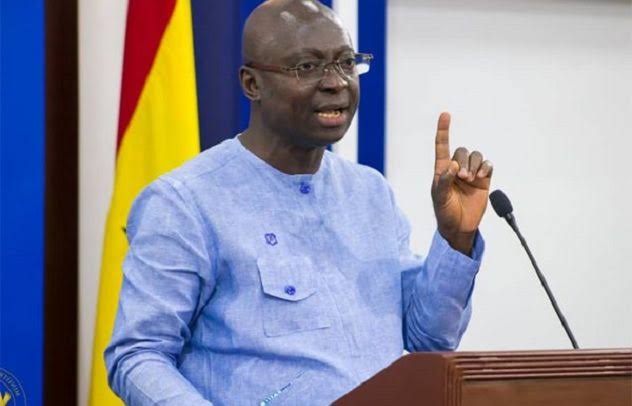
Samuel Atta Akyea, lead defense counsel for Bernard Antwi Boasiako, popularly known as Chairman Wontumi and the New Patriotic Party (NPP) Ashanti Regional Chairman, has vehemently criticized what he terms an "ambulance justice system" in handling high-profile criminal cases. Speaking on JoyNews Newsfile on Saturday, July 25, Atta Akyea emphasized that justice should not be rushed to satisfy political interests, nor should it be unduly delayed. He insisted that court proceedings must be guided by legal principles rather than political timelines, asserting that "justice hasn’t got a political term of four years."
Mr. Atta Akyea's comments follow the Accra High Court's sentencing of his client, Chairman Wontumi, to 20 years’ imprisonment for his involvement in illegal mining activities on the Samreboi concession in the Western Region. This conviction, delivered by Justice Audrey Kocuvie-Tay of the Criminal Division of the High Court on Monday, July 20, also includes a fine of 10,000 penalty units, equivalent to GH¢120,000, with a default sentence of three years’ imprisonment if the fine is unpaid. Prosecutors argued that Akonta Mining Limited, linked to Wontumi, allowed illegal mining without the requisite ministerial approval.
The lead counsel further defended his decision to seek the Supreme Court's interpretation of constitutional matters arising from the case, stating that such fundamental issues require proper determination and should not be treated as ordinary. He argued that a trial judge has the discretion either to refer such matters to the Supreme Court or reject the request, and a sensible lawyer must prepare for both scenarios. Atta Akyea also expressed concern that some cases involving political figures are being hurried due to political expectations, warning that if judges are in an "ambulance mood" to appease the government, the law is fundamentally undermined. He urged the judiciary to protect its independence and administer justice without fear or favour, preventing the judicial process from being "subordinated to political pleasures and appetites."
In response to the conviction, Mr. Atta Akyea announced that his legal team would file an appeal against the conviction next week and immediately seek bail pending appeal, expressing confidence that the appellate court would apply the law and allow Chairman Wontumi to remain out of custody while the appeal is heard. He questioned the severity of the 20-year sentence, describing it as excessively harsh and arguing that deterrence alone cannot justify such a lengthy custodial term. He stated, "You cannot use Wontumi as a sacrificial lamb to address a larger problem," suggesting that severe sentences on individuals do not necessarily deter widespread crime.
Furthermore, Atta Akyea challenged the High Court's assessment of the evidence, arguing that the trial judge drew unsupported conclusions. He contended that the presence of earth-moving equipment on the concession, which the court interpreted as proof of illegal mining, could equally be consistent with land reclamation activities, a process he noted could have significant commercial value, such as for coconut cultivation. He also raised doubts about the credibility of key prosecution witnesses, who he claimed were initially arrested as suspects before being converted into witnesses by the Attorney-General, suggesting their evidence should have been treated with greater caution. He highlighted that the court's interpretation of the legal concept of 'assignment' in mining law would be a principal ground for appeal, arguing that ownership rights remained with Akonta Mining Limited despite workers on site.
The conviction has sparked a debate over whether Chairman Wontumi can be considered a "political prisoner." The NPP itself described him as such, accusing the governing National Democratic Congress (NDC) of selective prosecution and using Wontumi's conviction as a "trophy." However, this assertion was strongly rejected by Professor of International Law Kwadwo Appiagyei Atua of the University of Ghana and former Tamale Central MP Inusah Fuseini. Both legal experts stated that Wontumi is not a political prisoner but a "common convict" serving a sentence for breaching the country's laws, rather than being persecuted for expressing political views or challenging power. Prof. Atua, having reviewed portions of the judgment, concluded that the trial was fairly conducted and based on evidence, commending the judge for her careful evaluation. Mr. Fuseini emphasized that the conviction had nothing to do with Wontumi's political affiliation or beliefs and urged the public to uphold the rule of law instead of mischaracterizing criminal convictions for political purposes.
Atta Akyea also noted a concerning disparity in the pace of adjudicating criminal cases compared to civil matters, suggesting this imbalance "does not augur well for the justice delivery system." He concluded that measuring the effectiveness of the justice system by the number of convictions or prison sentences undermines the rule of law, reinforcing his initial caution against a justice system driven by political expediency or a desire to demonstrate political significance.