What Happens When AI Finally Starts Speaking Africa’s Languages Properly?
What happens when AI finally understands Africa properly? Mansa is starting with 30 languages, but its founder wants to push that number all the way to 1,000.
You can ask ChatGPT a complicated question in English and get a surprisingly useful answer.
Switch to Yoruba, Twi, Hausa, or another African language, and the intelligence can suddenly feel a little less intelligent.
The words may technically be correct, but the meaning can sound strange. A translation may miss the joke, misunderstand the context, or produce a sentence that no native speaker would naturally say.
That is the problem Sheriff Issaka has spent years trying to solve.
Africa has more than 2,000 languages, yet only a small fraction have enough digital text, recorded speech, and organised language data for modern AI systems to understand them properly.
For many languages, the information AI needs simply does not exist at the scale available for English, French or Chinese.
So in 2020, Issaka founded African Languages Lab.
Instead of waiting for African languages to somehow appear inside the datasets powering artificial intelligence, his company decided to start building the data itself.
Today, African Languages Lab says its collection covers more than 70 languages, including Yoruba, Hausa, Igbo, Twi, Amharic and Zulu. It says it has gathered more than 100 billion curated text tokens and over 19,000 hours of speech recordings reviewed by language experts.
Now it wants to turn that library into something people can actually use.
The result is Mansa.
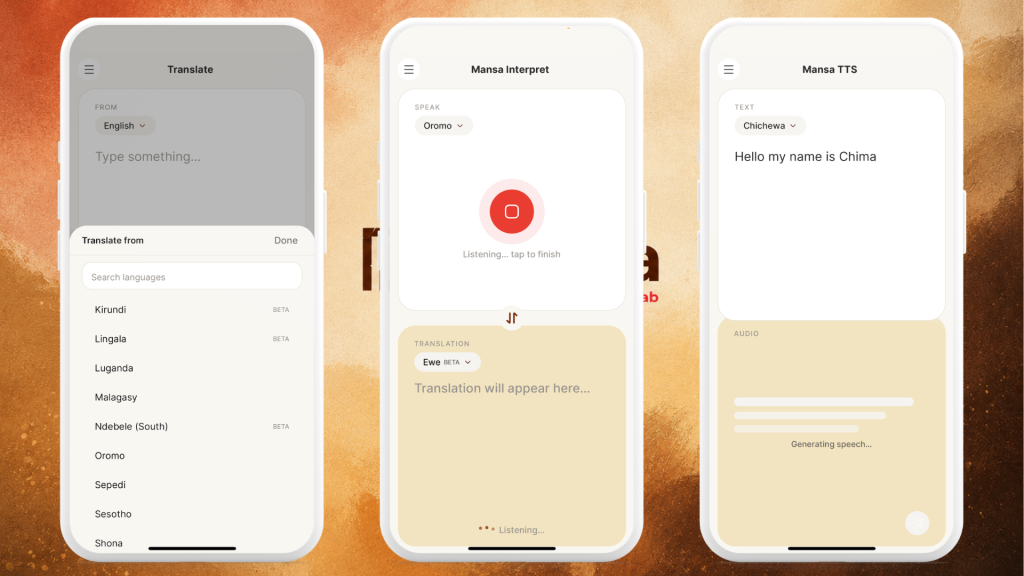
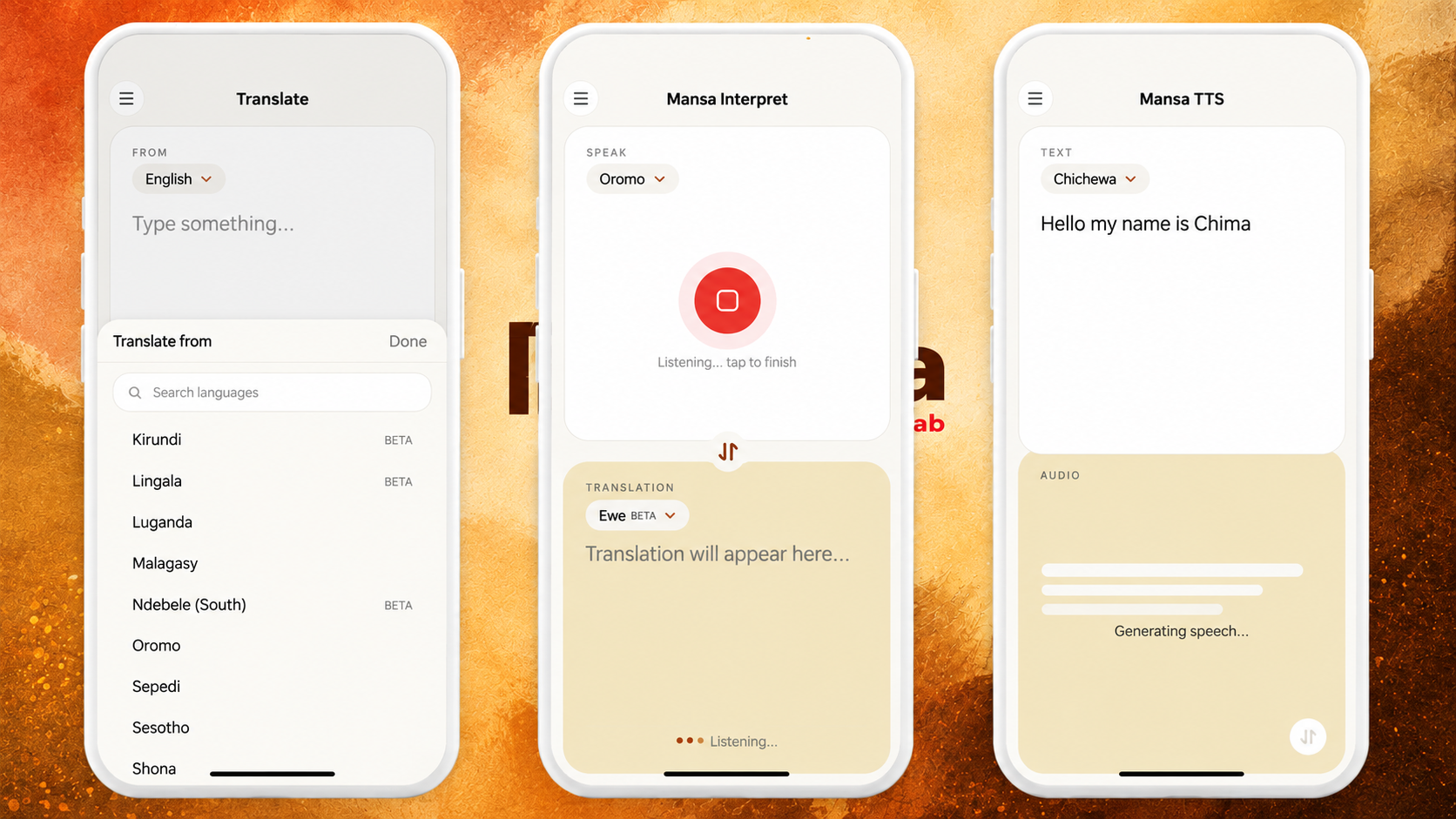
African Languages Lab expanded Mansa into a broader AI platform in September, bringing roughly 30 African languages into production across web, mobile and developer tools.
But 30 is not the number Sheriff is really chasing.
He wants Mansa to eventually work across 1,000 African languages.
Why Is AI Still So Bad At Speaking African Languages?
The problem starts with something very simple.
AI learns from what it can see.
English exists everywhere online. There are books, websites, subtitles, government documents, academic papers, social media posts and decades of digital conversations for machines to learn from.
Many African languages have nothing close to that volume.
Some are spoken by millions of people but barely used online. Others have several dialects or spelling systems. In some communities, a language is far more important in everyday speech than it is in written communication.

That makes teaching a machine considerably harder.
There is another problem hidden underneath the words themselves.
AI systems break text into smaller units called tokens before processing it. Some African languages can require more tokens to express the same idea than English, which can make them more expensive for AI systems to process.
So someone using an African language can end up in a strange position.
The technology may understand them less accurately while requiring more computing power to do it.
And bad translation is not the only consequence.
AI safety systems are also heavily dependent on language. A model may recognise that a request is dangerous when it is written in English but struggle to recognise the same intention when the request is written in an underrepresented language.
That turns Africa's language gap into something bigger than whether an AI can correctly translate a WhatsApp message.
It affects who gets the full benefits of the technology.
How Do You Teach AI A Language That Barely Exists Online?
African Languages Lab's answer is to go directly to the people who speak it.
The company uses existing public and licensed datasets, but it also collects new information from communities, working with speakers who can record, translate and validate language material.
That sounds straightforward until you consider how African languages actually interact.
Imagine trying to translate something from Twi into Yoruba.
A typical system might first convert the Twi sentence into English and then translate the English version into Yoruba. Every extra step creates another opportunity for meaning to disappear.
African Languages Lab built a platform called All Voices partly to reduce that dependence on English.
Contributors can work directly between African languages, allowing information to move from one language to another without English automatically becoming the bridge between them.
That is quite important because language is not simply a dictionary of words.
Accents and expressions change. The same word can mean something slightly different from one country or community to another.
Speech makes everything even harder.
African Languages Lab has collected thousands of hours of recordings, but building a system that reliably understands different accents, speaking speeds and regional variations remains one of the company's biggest challenges.
And then there is the question underneath almost every modern AI project.
Who benefits from the data?
Sheriff does not want African communities to simply become suppliers of raw language material while companies elsewhere capture most of the value created from it.
Contributors can be paid in some data-collection projects, and the company says people are informed about how their contributions will be used.
The bigger idea is that African languages should not become valuable to artificial intelligence while the people who actually speak them remain outside the business built around that value.
Mansa Is Not Trying To Rebuild ChatGPT From Scratch
African Languages Lab is also making a practical choice about how much technology it needs to build itself.
Mansa uses technology from Chinese AI company MiniMax as part of its foundation, then adapts existing models with African language data, tools and specialised systems.
That approach saves the company from trying to recreate every expensive piece of modern AI infrastructure from zero.
African Languages Lab's real advantage is not simply having another large AI model. It is trying to build the language layer those models are missing.
The company still develops some of its own models and components, particularly around speech, translation and African-language performance.
For users, Mansa is designed to do more than translate sentences.
People can use text and voice, translate and transcribe content, generate speech and interact across different languages. The company is also building tools that allow developers and businesses to connect those capabilities to their own products.
A bank, for example, could communicate with customers in several local languages without building its own translation system.
A healthcare service could make information easier to understand for people who are more comfortable speaking a local language than English.
A media company could translate or transcribe content without starting its own language-data project.
That is why Issaka talks about Mansa less like a chatbot and more like infrastructure.
Can 30 African Languages Really Become 1,000?
This is where the ambition becomes much harder.
Mansa currently has about 30 African languages in production, even though African Languages Lab says its wider technology covers more than 70.
That difference is intentional.
The company does not want to add a language simply because it has collected some data for it. Issaka says the languages released publicly are the ones the team believes it can support well enough to stand behind.
Getting from there to 1,000 means moving into languages with even fewer resources.
Some may have very little written material. Others may lack large collections of recorded speech. Dialects can shift dramatically between communities, and the number of people available to help collect and verify data gets smaller.
African Languages Lab is also not working alone.
Google, Intron, Spitch, Masakhane and other organisations are building African-language speech, translation and AI tools.
That is good news for African users because the real competition should not be about who can put the largest language number on a website.
It should be about who can make those languages actually work.
For years, the AI race has focused on making machines smarter in the languages already dominating the internet.
African Languages Lab is making a different bet.
What if the next big challenge is not making AI more intelligent, but making sure millions of Africans do not have to speak to intelligent machines through somebody else's language?
Mansa has started with around 30, but Sheriff wants the next number to eventually be 1,000. Let’s see what wonders will happen.