When the Desert Was a Paradise: The Sahara's Green Secret
The Sahara wasn't always a desert. Discover how Africa’s largest desert was once a green, vibrant land full of lakes, life, and human civilization—and why it changed.
.jpeg)
Imagine standing in the middle of the Sahara Desert, the sun scorching your back, sand stretching in every direction, and someone tells you, “This used to be a lush, green paradise.” You’d laugh.
But science and history insist: the Sahara wasn’t always a desert. It was once alive, with rivers, rainforests, crocodiles, hippos, and even human civilizations. This is the story of how the world’s largest hot desert used to bloom—and how it may bloom again.
The Sahara Desert Was Once a Green, Lush Region
Multiple lines of scientific evidence—including sediment cores, pollen records, and archaeological finds—show that what is now theworld’s largest hot desert was, during several periods in the past, covered by grasslands, savannas, lakes, rivers, and even forests,6,7). This phenomenon is referred to as the “Green Sahara” or the African Humid Period (AHP).
Today, the Sahara spans over 9.2 million square kilometers, cutting through countries like Algeria, Libya, Egypt, Mali, Niger, Sudan, and Chad.It’s the very image of dryness and death. But between 10,000 and 5,000 years ago, it was a drastically different world.

Photo Credit: Pinterest
Timing: It Wasn't a One-Time Event
The most recentGreen Sahara occurred between about 11,000 and 5,000 years ago, but such green phases have happened repeatedly—about every 21,000 years over the past eight million years. These periods were driven by changes in the Earth’s orbit—known as Milankovitch cycles—that affect monsoon patterns and rainfall in North Africa.
This cyclical wobble, known as axial precession, changes the orientation of the planet’s axis roughly every 26,000 years. When the Northern Hemisphere tilts more directly toward the sun, solar radiation increases, strengthening the African monsoon system. The result: rainfall sweeps into North Africa, greening the desert and supporting life.
Vegetation: From Sand to Savannah
During thesehumid periods, the Sahara supported wooded savannah ecosystems—grasslands mixed with shrubs and trees. The landscape hosted numerous lakes and rivers, feeding plant life and creating microclimates of biodiversity.
A feedback loop helped amplify this: the more vegetation and water present, the more moisture was held in the soil and air, which encouraged further rainfall.
"During the African humid period, lakes, rivers, wetlands, and vegetation, including grass and trees, covered the Sahara and Sahel, creating a 'Green Sahara' with a land cover that has no modern analogues." —Wikipedia, 2024
History
Rewind the Stories that Made Africa, Africa
A Journey Through Time, Narrated with Insight.
Fauna and Human Life: Life Among the Dunes
The Green Sahara teemed with wildlife.Fossil evidence reveals the presence of animals that would struggle to survive in today’s desert climate: elephants, giraffes, crocodiles, antelopes, and hippos.
The water bodies sustained fish and freshwater species, while dense vegetation provided cover for large land animals.
The region also supported human life. Prehistoric people lived, hunted, and farmed in this thriving ecosystem. Archaeologists have discovered rock art, pottery, tools, and burial sites in locations now uninhabitable.


Photo Credit: National Geographic
In Tassili n’Ajjer (Algeria), ancient cave paintings depict humans swimming, herding cattle, and engaging with wild animals, suggesting a vibrant culture and ecosystem around 8,000 years ago.
One of the most significant finds is the Gobero site in Niger, a 9,000-year-old cemetery where humans were buried alongside fish, crocodile bones, and aquatic plants. These people were fishing communities, not desert dwellers.
Ancient Lakes and Rivers
One of the most fascinating geological remnants is the proposed Mega Lake Chad, which may have covered up to 400,000 square kilometers, larger than today’s Caspian Sea. Satellite imaging has also revealed ancient river channels beneath the sand, including one called Tamanrasset, a now-dry mega-river that may have once flowed from the Atlas Mountains to the Atlantic Ocean.

Photo Credit: Pinterest
These massive water systems not only shaped ecology but also migration and trade routes that would later be utilized by trans-Saharan cultures.
The People of the Green Sahara
The people who lived in the Green Sahara were Neolithic farmers and herders, often referred to as pastoralists. They domesticated cattle, cultivated cereals, and likely formed early social hierarchies. As rainfall declined and grasslands vanished, these populations migrated southward, contributing to the rise of Sahelian and West African civilizations.
History
Rewind the Stories that Made Africa, Africa
A Journey Through Time, Narrated with Insight.
Thus, the Sahara was not an empty place before it dried—it was a cultural cradle whose legacy lives in today’s Fulani, Tuareg, and Nilotic peoples.
What Turned It Back to a Desert?
Another orbital shift caused the end of theGreen Sahara. As the Earth’s tilt changed, solar radiation dropped, the monsoons weakened, and the region entered a phase of rapid drying around 5,000 years ago.
Within a few centuries, the ecosystem collapsed. The lakes dried up, the vegetation died off, and dunes returned.
Some scientists argue that human activity—such as overgrazing, deforestation, and the use of fire—may have accelerated this desertification. However, the primary driver remains natural orbital variation.
Modern Implications: Climate, Migration, and Reversal?
The Green Sahara teaches us three major lessons:
1. Climate Change Can Be Rapid and Nonlinear
The transition from green to desert happened fast. It reminds us that climate tipping points are real and can affect entire ecosystems in under a century.
2. Migration is a Natural Climate Response
As the Sahara dried, humans adapted by moving. These ancient climate migrants weren’t exceptions—they were precursors. Today, we face similar displacements due to sea-level rise, desertification, and drought across Africa and beyond.
3. Could It Become Green Again?
The Earth’s orbit will eventually favour another African Humid Period in the next 10,000 to 15,000 years. But human-driven climate change may override these natural cycles.
In the meantime, modern efforts like theGreat Green Wall—a continent-wide initiative to plant trees across the Sahel—seek to reclaim degraded land and restore ecological balance.
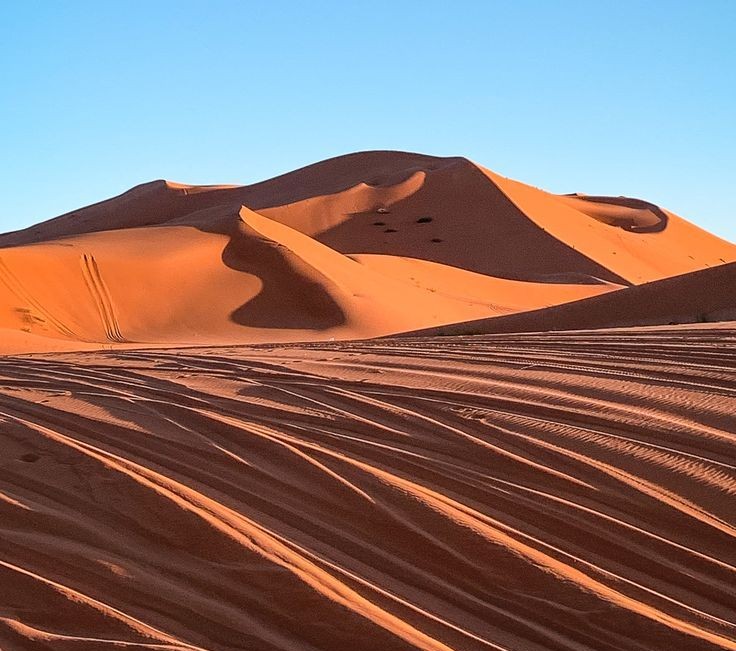
Photo Credit: Pinterest
History
Rewind the Stories that Made Africa, Africa
A Journey Through Time, Narrated with Insight.
Conclusion: A Desert Full of Secrets
The Sahara’s story is not one of eternal emptiness. It is a book of eras, written in sand, water, and bone. The Green Sahara reminds us that landscapes can transform, civilizations can rise and fall, and climate isn’t static.
Beneath those dunes lie hippo skulls, ancient pottery, and memories of rain. The Sahara may look lifeless today, but it once held gardens, people, and promise—and perhaps, one day, it will again.
History isn’t always behind us. Sometimes, it’s just buried beneath the sand.