When a Football Match Started a War: The Tragic Story of the 1969 Football War
A football match sparked a deadly war in 1969 between El Salvador and Honduras. Discover how sport ignited a crisis rooted in land, migration, and identity.
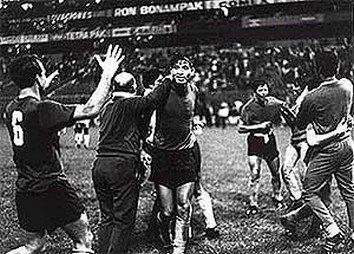
In July 1969, the world watched in disbelief as two Central American nations—El Salvador and Honduras—plunged into war. The spark? A series of World Cup qualifying matches. The war lasted only 100 hours, but in that short time, it claimed the lives of over 2,000 people, injured thousands more, and left an indelible scar on both nations.
But to reduce it to “a football war” is to miss the deeper truth. Football was merely the matchstick. What burned beneath was a raging fire of inequality, land disputes, migration crises, and bitter nationalism.
Two Countries, One Bitter History
To understand how a game of football led to real bloodshed, we must step back—decades back.
Honduras, by 1969, was five times larger than its neighbor El Salvador, yet had roughly half the population. That made El Salvador the most densely populated country in the Western Hemisphere at the time. With land scarce and poverty widespread, many Salvadorans fled to Honduras in search of farmland and work.
By the late 1960s, over 300,000 Salvadorans—about 20% of El Salvador’s adult male population—had migrated into Honduras. They settled in rural areas, bought or rented land, and established new lives. But their growing presence stirred resentment.
For ordinary Hondurans, many of whom were also poor and landless, the Salvadoran migrants began to symbolize everything that was wrong—outsiders taking their land and jobs.
This unease came to a head in 1962, when Honduras passed land reform laws aimed at redistributing property. And in 1967, the Honduran National Agrarian Institute began expropriating land—including land owned or rented by Salvadoran immigrants—and reallocating it to native-born citizens.
Tensions skyrocketed. Evictions turned violent. Migrants fled. El Salvador protested.
But nothing could prepare either country for what would come next.
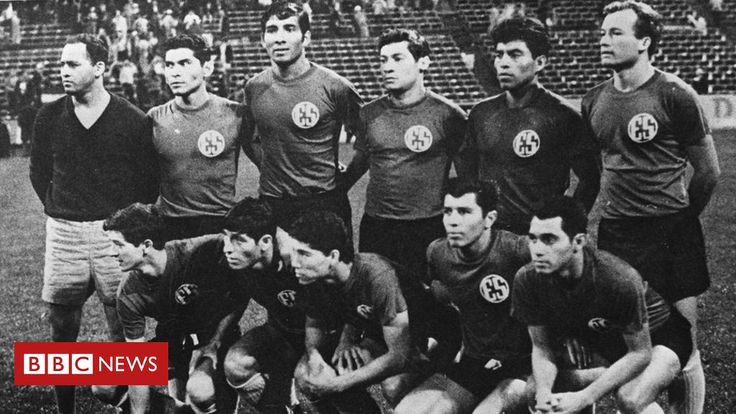
Photo Credit: Pinterest (BBC)
The Beautiful Game Turns Ugly
In 1969, the two nations were drawn against each other in the qualifying rounds for the 1970 FIFA World Cup in Mexico. The timing could not have been worse.
The first leg took place on June 8, 1969, in the Honduran capital, Tegucigalpa. El Salvador’s team was harassed throughout the night by noisy crowds stationed outside their hotel. The next day, Honduras won 1–0.
History
Rewind the Stories that Made Africa, Africa
A Journey Through Time, Narrated with Insight.
But what followed was heartbreaking: in El Salvador,a young girl named Amelia Bolaños—devastated by her country’s loss—allegedly took her own life. Salvadoran newspapers called her a “martyr.” Her death became a symbol. The air was charged.
A week later, the second leg was held in San Salvador. Honduran players faced retaliation—eggs, rocks, and dead rats were thrown at their hotel. Their flag was burned. Their anthem was drowned out with insults. El Salvador won 3–0, but violence erupted across the city.
Hundreds of Salvadorans in Honduras were attacked. Homes were set on fire. Reports of rape and lynching emerged. Panic swept through migrant communities. Fleeing refugees returned to El Salvador by the truckload—many carrying only what they could hold.
On June 27, El Salvador took the extraordinary step of cutting all diplomatic ties with Honduras, accusing it of genocide and failing to protect Salvadoran nationals.
The third and final playoff match was scheduled for June 26 in Mexico City. El Salvador won again, 3–2, securing a place in the World Cup. But by then, nobody was celebrating.

The 100-Hour War Begins
The diplomatic rupture was just the beginning. By mid-July, the Salvadoran government—led by President Fidel Sánchez Hernández—began mobilizing troops. Their stated goal? To defend Salvadorans being expelled from Honduras.
On July 14, 1969, without a formal declaration of war, El Salvador launched a surprise attack.
Air Force planes dropped bombs on Honduran airports and infrastructure. Ground troops surged across the border in three columns. For a moment, it looked like Honduras would collapse entirely.
But Honduras, under General Oswaldo López Arellano, responded swiftly. Its air force struck oil refineries and fuel depots in El Salvador, aiming to cripple its military mobility.
The conflict quickly escalated, with intense fighting across towns and villages near the border. Civilians were caught in the crossfire. Crops were burned, homes were destroyed, and thousands more fled as refugees.
By July 18, after four days of brutal combat, the Organization of American States (OAS) intervened. Under intense international pressure, a ceasefire was signed. Salvadoran troops began withdrawing on August 2, under the condition that Honduras would guarantee the safety of Salvadoran citizens still living there.
The war had lasted just 100 hours. But the destruction was immense.
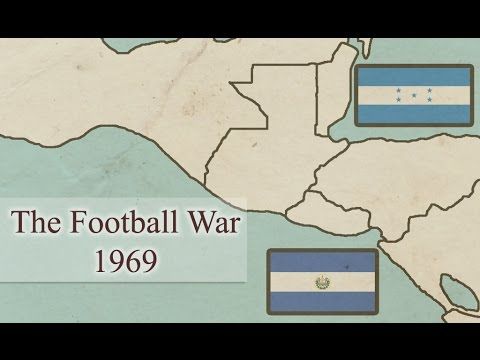
Photo Credit: Pinterest
War’s Aftermath and Legacy
History
Rewind the Stories that Made Africa, Africa
A Journey Through Time, Narrated with Insight.
When the guns fell silent, both countries were left to pick up the pieces. The cost was staggering:
Over 2,000 people were killed
More than 100,000 Salvadoran immigrants were displaced
Thousands of homes were destroyed
Trade between the two countries collapsed
Worse still, the war failed to resolve the core issues that caused it. Border disputes remained. Anti-immigrant sentiment lingered. And diplomatic relations were only restored over a decade later, in 1980.
The war even delayed the formation of the Central American Common Market, a regional economic alliance that could have boosted development and cooperation.
And for the ordinary people—especially the refugees—the trauma lived on.
Why It Still Matters
The Football War wasn’t really about football. It was about poverty, inequality, land, and identity. The matches simply gave both governments—and their people—a reason to act on years of bottled-up hostility.
Football didn’t cause the war. It exposed the cracks.
Even today, the story of the 1969 Football War serves as a cautionary tale of what happens when deep social tensions are ignored, and nationalism is stoked for political gain.
It reminds us that even the most beloved cultural symbols—like football—can become weapons in the wrong hands.
Final Whistle
Fifty-five years later, El Salvador and Honduras now play as rivals, not enemies. Their matches are fierce, but the war has become history. A strange, tragic chapter when the roar of a stadium morphed into the roar of warplanes.
History
Rewind the Stories that Made Africa, Africa
A Journey Through Time, Narrated with Insight.
In the end, the 1969 Football War is a chilling reminder:
Sometimes, a game isn’t just a game.