US Policy Rift Over Ukraine: Rubio Warns Against Donbas Concessions, Eyes Iran Arms Shift
Secretary of State Marco Rubio has publicly refuted Ukrainian President Volodymyr Zelenskyy's claims regarding US demands for territorial concessions, while also indicating a potential diversion of US aid from Ukraine to support the war on Iran. This comes amidst controversy surrounding Russian Foreign Minister Lavrov's interview in France and Ukraine's call for continued US pressure on Russia, highlighting escalating geopolitical tensions.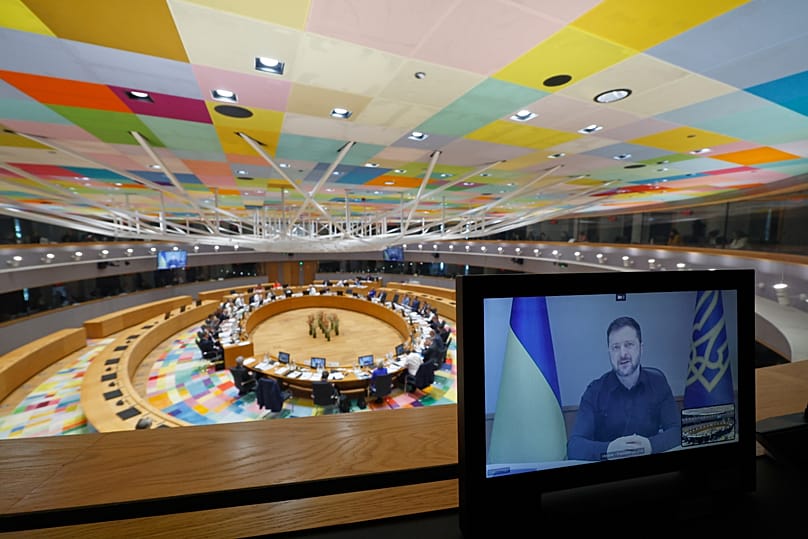
Secretary of State Marco Rubio vehemently denied Ukrainian President Volodymyr Zelenskyy's claims that the United States was pressuring Ukraine to surrender the eastern Donbas region to Russia in exchange for post-war security guarantees. Speaking in Paris after discussions with the Group of Seven industrialized nations, Rubio labeled Zelenskyy's assertion a "lie," stating, "I saw him say that and it's unfortunate he would say that, because he knows that's not true." Rubio clarified that the understanding communicated to Zelenskyy was that security guarantees would only be implemented once the war concluded, not as a precondition for territorial concessions, explicitly refuting any linkage to ceding territory.
Rubio's strong criticism of Zelenskyy was particularly notable given his past hawkish support for Ukraine, distinguishing him from some other figures within President Donald Trump's inner circle. This incident follows previous reports of tension, including a viral moment from February of the previous year where Rubio was reportedly present when Trump and Vice President JD Vance admonished Zelenskyy for perceived ungratefulness regarding US assistance. More recently, Trump himself has reiterated criticisms of Zelenskyy, advocating for compromises and drawing unfavorable comparisons with Russian President Vladimir Putin.
Adding another layer of complexity, Rubio expressed the United States' openness to reallocating weapons designated for Kyiv to support the war on Iran, following a US-Israeli attack on the Middle Eastern nation. While asserting that "Nothing yet has been diverted, but it could," and emphasizing an "America first" policy, Rubio confirmed that there had been no immediate changes to the Prioritised Ukraine Requirements List (PURL). The PURL is a NATO initiative, established after Trump's return, designed for European allies to fund Ukrainian-requested weapons purchased from the United States.
Meanwhile, Russian Foreign Minister Sergei Lavrov's prime-time interview on French public television channel France 2 sparked considerable controversy. Aired during its Thursday evening news, the interview faced severe criticism for giving a platform to Lavrov, especially more than four years into Russia’s full-scale invasion of Ukraine. During the interview, Lavrov claimed Moscow was defending "international law" and argued that US-Israeli strikes on Iran had breached these rules. He unequivocally rejected any notion of Russia violating international law in Ukraine, insisting that Russian forces never targeted "exclusively civilian" objectives.
Reactions to Lavrov's appearance were swift and condemnatory. Ukraine’s ambassador to France, Vadym Omelchenko, questioned on social media why French television would feature "a war criminal." French Foreign Minister Jean-Noel Barrot also responded sharply, stating that Russia's actions in Ukraine and Iran clearly demonstrated its disregard for international law. Barrot remarked from the G7 meeting sidelines, "Mr Lavrov was able to calmly spread his propaganda last night on a French television channel... You do not defend international law by launching a war of aggression." Separately, Moscow denied earlier reports that Vladimir Putin had requested Russian oligarchs to donate funds for the Ukraine war, with Kremlin spokesperson Dmitry Peskov clarifying that a businessman at a closed-door meeting had proposed a donation, which Putin welcomed.
Ukraine's Foreign Minister Andrii Sybiha underscored the United States' vital role in bringing an end to the conflict with Russia, stating that he had met with Rubio on the sidelines of the G7 meeting. Sybiha posted on social media, "Ukraine's proposals are realistic and doable. Pressure on Russia is key to make Moscow end the war." He also addressed the evolving situation in the Middle East, asserting Ukraine's belief that the regimes in Moscow and Tehran are collaborating to prolong the conflict. There are growing concerns that the US-Israeli involvement in the war on Iran could divert crucial international attention away from efforts to achieve peace in Ukraine.