Travel Alert: Mali engulfed in fresh clashes with armed groups
Mali's army confirmed widespread clashes with unidentified armed fighters attacking barracks in Bamako and other regions, amidst ongoing jihadist turmoil. This comes as the military government aligns more closely with Russia, leading to significant internal political shifts and a crackdown on dissent.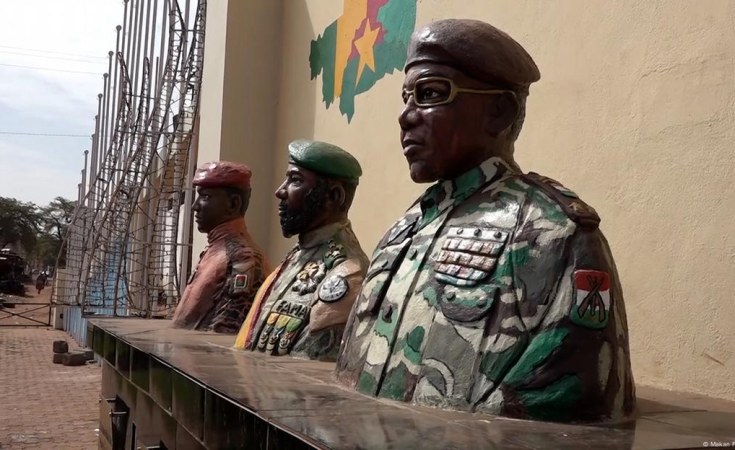
Mali's army confirmed on Saturday its involvement in clashes with unidentified armed fighters who launched attacks on army barracks in the capital Bamako and other regions across the country. A statement from the military indicated that "Terrorist groups, not yet identified, targeted certain points and barracks in the capital and the interior." Witnesses reported gunfire resounding across several districts of Bamako, including Kati, which is notably the residence of military ruler General Assimi Goita. Further fighting was also documented in the northern cities of Gao and Kidal, as well as Sevare in the central part of Mali. No group immediately claimed responsibility for these coordinated attacks.
These recent incidents unfold against a backdrop of protracted jihadist turmoil. Since 2012, jihadist groups affiliated with global entities like Al-Qaeda and the Islamic State group have been engaged in conflict with Malian security services. The volatile situation has been further exacerbated by community-based criminal organizations and separatist movements. It is not the first time the capital has been targeted; last year, jihadists made an attempt to cripple Bamako by disrupting its fuel supply.
Politically, Mali's military government, alongside its counterparts in neighboring Niger and Burkina Faso, has notably severed ties with its former colonial ruler, France, and several other Western countries. This shift reflects a deliberate move towards strengthening political and military alliances with Russia. Concurrently, the administration of former American President Donald Trump has sought to re-establish contacts with Mali, Niger, and Burkina Faso. Togo has also attempted to play an intermediary role between Western nations and these three countries, which have collaboratively formed their own Alliance of Sahel States.
The persistent violence and instability have had a devastating humanitarian impact. Thousands of lives have been lost in attacks across Mali since the jihadist crisis erupted, and tens of thousands of Malians have been forced to seek refuge in neighboring countries, including Mauritania, in recent years.
In terms of external military support, Russia's Wagner Group, which had been actively fighting alongside Malian forces against jihadists since 2021, announced the conclusion of its mission in June 2025. This group has since transitioned into the Africa Corps, an organization now operating under the direct control of the Russian defense ministry.
Domestically, Malian authorities have intensified their crackdown on critics and have proceeded to dissolve political parties. In November, Mali's media regulator, the HAC, notably suspended French broadcasters LCI and TF1. The regulator cited allegations of the broadcasters using "unverified statements and falsehoods" concerning jihadists and condemned their reporting as "a blatant violation of the journalist's code of ethics in Mali, which requires adherence to the truth."
The military rulers, who initially seized power through coups in 2020 and 2021, had previously pledged to transfer authority to civilian governance by March 2024. However, in a significant reversal, they granted General Assimi Goita a five-year presidential term in July 2025, which is renewable "as many times as necessary" and notably without the requirement of an election.
Recent specific jihadist actions include attacks by the Group for the Support of Islam and Muslims (JNIM), an Al-Qaeda affiliate, which has been targeting fuel tanker convoys since September. These attacks brought Bamako to a standstill at the height of the crisis in October, further illustrating the ongoing challenges faced by the Malian authorities.