Mali Rocked by Coordinated Armed Group Attacks Across Multiple Cities, Including Capital Bamako
Mali has been hit by a series of coordinated attacks, with explosions and gunfire reported across the country, including near the main military base at Kati and in the capital, Bamako. These assaults, attributed to separatist and jihadist groups, have been described as the largest coordinated attacks in years, highlighting the ongoing instability and drawing international condemnation. The events raise concerns about the military junta's ability to maintain control amidst a persistent insurgency.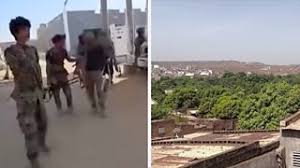
Mali has been rocked by a series of coordinated attacks, with loud explosions and sustained gunfire reported shortly before 6 AM near the country’s main military base at Kati, just outside Bamako. Similar incidents, including explosions and gunfire, were also reported in the capital, Bamako, with soldiers deployed to block off roads and establish checkpoints, including those leading to the airport. The Malian military confirmed that "fighting is ongoing" and that its "defence and security forces are currently engaged in repelling the attackers" against "unidentified terrorist groups".
These widespread attacks indicate a significant escalation in Mali's ongoing security crisis, with fighting reported in several areas across the country including Sevare in central Mali, and Gao and Kidal in the north. Political commentator Adama Gaye described the situation as "a failure of the junta," stating that the military government has "not been able to control the military" and that "uncertainty is still prevailing," indicating a lack of stability. He added that the attacks demonstrate that the forces fighting the junta are "strong enough to intervene in many areas at the same time."
Reports suggest that the assaults were orchestrated by different groups. The separatist Azawad Liberation Front (FLA), which seeks a breakaway ethnic Tuareg state, primarily focused its efforts on northern cities. Mohamed Elmaouloud Ramadane, a spokesperson for the FLA, claimed that their forces had taken control of Kidal and were expanding their presence in the center of Gao, posting footage purporting to show militants occupying a camp previously held by the Malian army and Russian mercenaries in Kidal, and a military helicopter reportedly shot down near Gao. These claims, however, could not be independently verified. Simultaneously, the jihadist group Jama'at Nusrat al-Islam wal-Muslimin (JNIM) reportedly staged attacks on multiple locations across the country.
The scale of the events led Ulf Laessing, head of the Sahel programme at the Konrad Adenauer Foundation in Mali, to describe it as the "largest coordinated jihadist attack on Mali for years." The attacks have caused significant disruption, with all flights into Bamako International Airport temporarily cancelled, according to a resident returning from Ethiopia. The UK Foreign Office has since advised against all travel to Mali, and the US Embassy urged its citizens to shelter in place.
Mali is currently governed by a military junta led by Gen Assimi Goïta, who seized power in 2020. The junta initially garnered popular support by promising to address the country's long-running security crisis, which began with a Tuareg rebellion in the north and was subsequently exploited by Islamist militants. Following the junta's takeover, UN peacekeepers and French forces withdrew, and the military government engaged Russian mercenaries to bolster security. Despite these measures, the jihadist insurgency persists, leaving large areas of the north and east outside government control.
International bodies have condemned the violence. Mahmoud Ali Youssouf, chair of the African Union Commission, expressed "deep concern" and "strongly condemn[ed] these acts which risk exposing civilian populations to significant harm." The US State Department's Africa bureau echoed this condemnation, extending "deepest condolences to the victims, their families, and all those affected," and affirming solidarity with the Malian people and government.