The CBN Just Forced Every PoS Agent to Choose Sides, and Not Everyone Will Survive the Choice
The CBN is forcing PoS agents to operate with a single provider, but with unsolved downtime and smaller fintechs threatened, this policy may protect the system while punishing the people who kept it running. A sharp look at what this really means.

There is a particular kind of stress that belongs to individuals who operate in the financial system and seems exclusively peculiar to the Nigerian PoS agent.
It lives in the gap between a customer standing at your table, card in hand, and the moment your network decides it simply will not cooperate today.
That gap, sometimes seconds, sometimes an agonising eternity, has historically been managed by running multiple terminals.
One fails, you switch immediately, business continues, and your livelihood is protected.
The Central Bank of Nigeria has just closed that gap permanently.
Under sweeping new agent banking rules, PoS operators must now choose a single financial institution provider, operate from registered locations with approved devices, maintain dedicated accounts, and comply with strict transaction limits.
The era of the multi-terminal agent, where a trader runs OPay beside Moniepoint and has a PalmPay terminal as a backup plan, like hedges against a volatile network, is officially over.
On paper, the logic is sound, and it makes absolute sense. Nigeria's PoS ecosystem exploded in size but not always in quality. Failed transactions, fraud risks, inconsistent service, and the near impossibility of tracing accountability across multiple providers created a system that was growing faster than it could be governed.
The CBN is attempting to impose order, and that intention deserves acknowledgment.
But Order for Whom? POS Operators Or Institution

Here is where the core issue about the CBN directive actually begins.
The agents being forced to choose a single provider are not OPay executives or Moniepoint investors. They are market traders, roadside kiosk operators, shop owners in semi-urban areas, and retired civil servants who invested their savings into terminals as a source of income.
Many of them operate on margins that leave no room for error; a day of downtime is a day of lost income that does not come back.
The downtime problem is not hypothetical. Every Nigerian who has stood at a PoS terminal and watched an agent try three different machines before succeeding has lived this story.
That problem existed before the new policy; it has not been solved. And now, agents who once distributed that risk across multiple providers must concentrate it entirely within one.
If that provider goes down and Nigerian fintech infrastructure has a well-documented history of going down, the agent has no backup, no alternative, and no way to serve the customer in front of them.
The CBN has mandated the problem without mandating the solution.
The POS Economy: Survival of the Biggest

The competitive implications of this policy deserve more scrutiny than they are receiving. When agents are forced to choose one provider, they will logically choose the most reliable, the most widely trusted, and the one with the strongest infrastructure.
Those points, almost inevitably, point toward the larger ones, who have the scale to guarantee uptime and the brand recognition to inspire confidence.
Smaller fintechs that have been quietly building agent networks in underserved communities now face a structural disadvantage that has nothing to do with the quality of their product.

The policy, designed to regulate the market, may end up concentrating it. What will begin as a compliance exercise could be completed as a consolidation exercise, with fewer providers, larger market shares, and reduced pressure to compete on service quality because the alternatives have been regulated out of practical reach.
This is not just a theoretical concern. It is the predictable consequence of forcing choice in a market where size already determines trust. And for agents holding multiple terminals from smaller providers, the question is not just which platform to choose, it is whether their chosen platform will survive the consolidation wave their choosing helps trigger.
The Angle Nobody Is Naming And The Underlying Issues
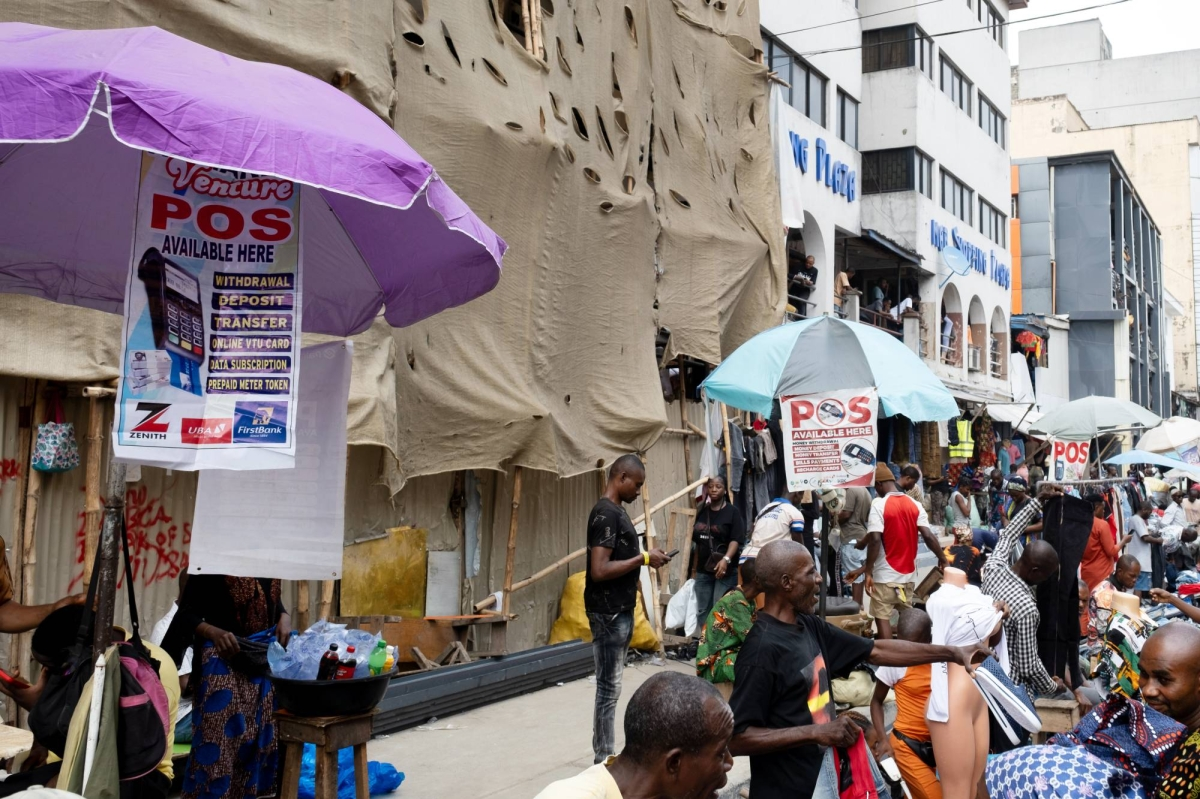
Connect this to a point made in a previous conversation on this page: Nigeria's economy is growing without growing for the people in it. The agent banking sector is one of the few spaces where ordinary Nigerians built an informal economic infrastructure that genuinely served communities that traditional banks ignored.
RECOMMENDED READ: Nigeria's Economy Is Growing, But Not for the People Who Live in It
PoS agents filled the gap that most traditional banks did not, reaching the hinterlands of Nigeria. Now the same regulatory architecture that failed to protect those communities from predatory informal finance is being used to regulate the informal solution they built for themselves.
The agents with multiple terminals, the ones who invested more capital, took more risk, and built more resilience into their operations, are now being told that their hedge against failure is non-compliant. The very behaviour that made them effective is the behaviour being eliminated.
A regulation that punishes adaptability in a market where adaptability was necessary for survival is not cleaning up the system. It is penalising the people who figured out how to survive inside a broken one.
The CBN means well, and the policy may yet produce the transparency and fraud reduction it promises. But until the downtime problem is solved, until Nigerian fintech infrastructure is stable enough that a single provider is a reasonable risk rather than a dangerous one, this rule transfers the cost of the system's unreliability from the industry onto the agent.
And the agent, as always, has no one else to pass it on to.