Ethiopia Just Listed Ethio Telecom On ESX. The IPO Missed Its Target By 90%, And Nobody Is Leading With That
Ethio Telecom is listed on the Ethiopian Securities Exchange, but the IPO raised only 10% of its target, and that gap is the most important thing about this moment for the Ethiopian government, the ESX, and Africa's capital market ambitions.

Ethio Telecom is now listed on the Ethiopian Securities Exchange (ESX), and the reaction across the continent has been predictably warm. Analysts are calling it historic, and commentators are framing it as a coming-of-age moment for Ethiopia's capital markets.
And in a sense, they are right, a state-owned enterprise with 78 million subscribers, a mobile money platform processing billions in transactions, and over 94% market share just opened its ownership to ordinary citizens, that is not just a mean feat.
But strip away the ceremony and sit with the actual data for a moment. The IPO targeted 30 billion birr, and it raised 3.2 billion. That is 10.7% of the stated goal. The government's crown jewel, one of the Big-5 state-owned corporations in Ethiopia, went to market and got roughly ten cents on every dollar it was expecting, and nobody is leading with that.
When 'Historic' and 'Undersubscribed' Occupy the Same Sentence

The optics of a listing are different from the substance of one. Ethio Telecom's formal debut on the ESX is a real milestone. Ethiopia went from being the only one of Africa's major economies without a structured securities exchange to hosting what is rapidly becoming a serious capital market.
The ESX launched in January 2025, and by June of that same year, it had executed its first inter-broker trades. By the time Ethio Telecom joined the main trading board, government treasury bills were also live on the platform. The infrastructure was moving fast.
But infrastructure and investor appetite are two different conversations. The IPO restricted participation exclusively to Ethiopian citizens living within the country. Diasporas? No. Foreign investors? No. High-net-worth individuals who might have snapped up larger stakes? Capped at 3,333 shares maximum.
The structure essentially guaranteed a narrow investor pool and a modest haul. The government was simultaneously trying to democratize ownership and protect control, and it ended up doing neither particularly well.
That said, 47,377 Ethiopians did participate, for a country where IPOs were an entirely foreign concept until very recently, that number carries real weight. The question is whether their participation signals genuine market confidence or whether many of them bought in because they were told it was their patriotic opportunity to own a piece of their national telecom; both things can be true, and only one statement can also be true.
The Government's Problem Is Not the Listing. It Is What Comes After
Ethiopian Investment Holdings (EIH), the sovereign wealth fund managing over 27 state-owned enterprises, including all five Big-5 corporations, controls assets worth roughly $38 billion, about 34% of Ethiopia's GDP.
Ethio Telecom's IPO proceeds went to EIH, not to the telecom company itself. The company raised no fresh capital for expansion. The government used its most valuable commercial asset to test public appetite and generate liquidity for its investment arm.
That is a significant distinction; companies usually go public to raise capital for growth. Governments that list SOEs are usually doing something different; they are either genuinely reforming ownership structures, generating budget revenue, or signalling to international markets that the country is open for business. Ethiopia is doing all three, but unevenly.
EIH's CEO, Brook Taye, has been explicit: the strategy is reform, not full privatisation. The framing is that Ethiopia watched rushed sell-offs across Africa and Eastern Europe go badly, underperforming companies sold at depressed valuations, and strategic assets transferred to foreign interests before adequate regulatory frameworks existed.
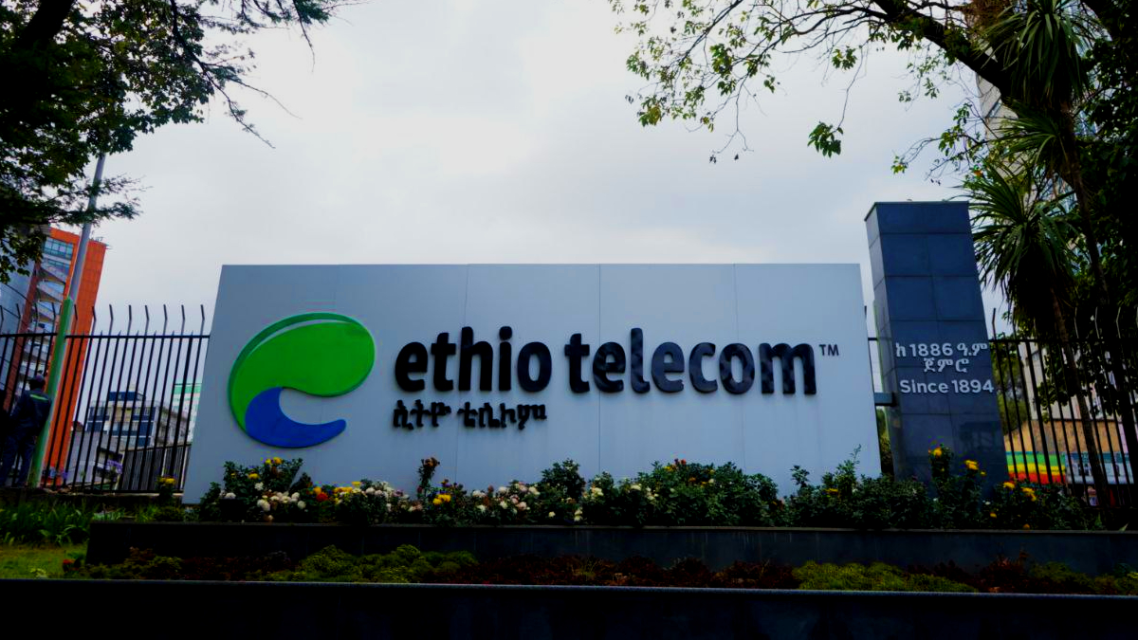
The counter-argument is that Ethiopia's caution created its own risk. Ethio Telecom holds over 94% of the telecom market in a country of 130 million people. That near-monopoly is propped up by state protection, not efficiency.
Research has consistently shown that it operates below the performance benchmarks of comparable operators in liberalised markets. Partial listing does not fix that.
Meanwhile, the government still plans to offer an additional 45% stake, eventually to foreign investors too. That offering has already been delayed once. The listing on the ESX now creates a price discovery mechanism that will make any future offering either easier or harder to execute, depending on how secondary market trading performs.
If Ethio Telecom's shares trade weakly, the government's ambitions for a larger foreign capital raise become complicated.
What the ESX Needs Ethio Telecom to Do That Ethio Telecom Has Never Had to Do
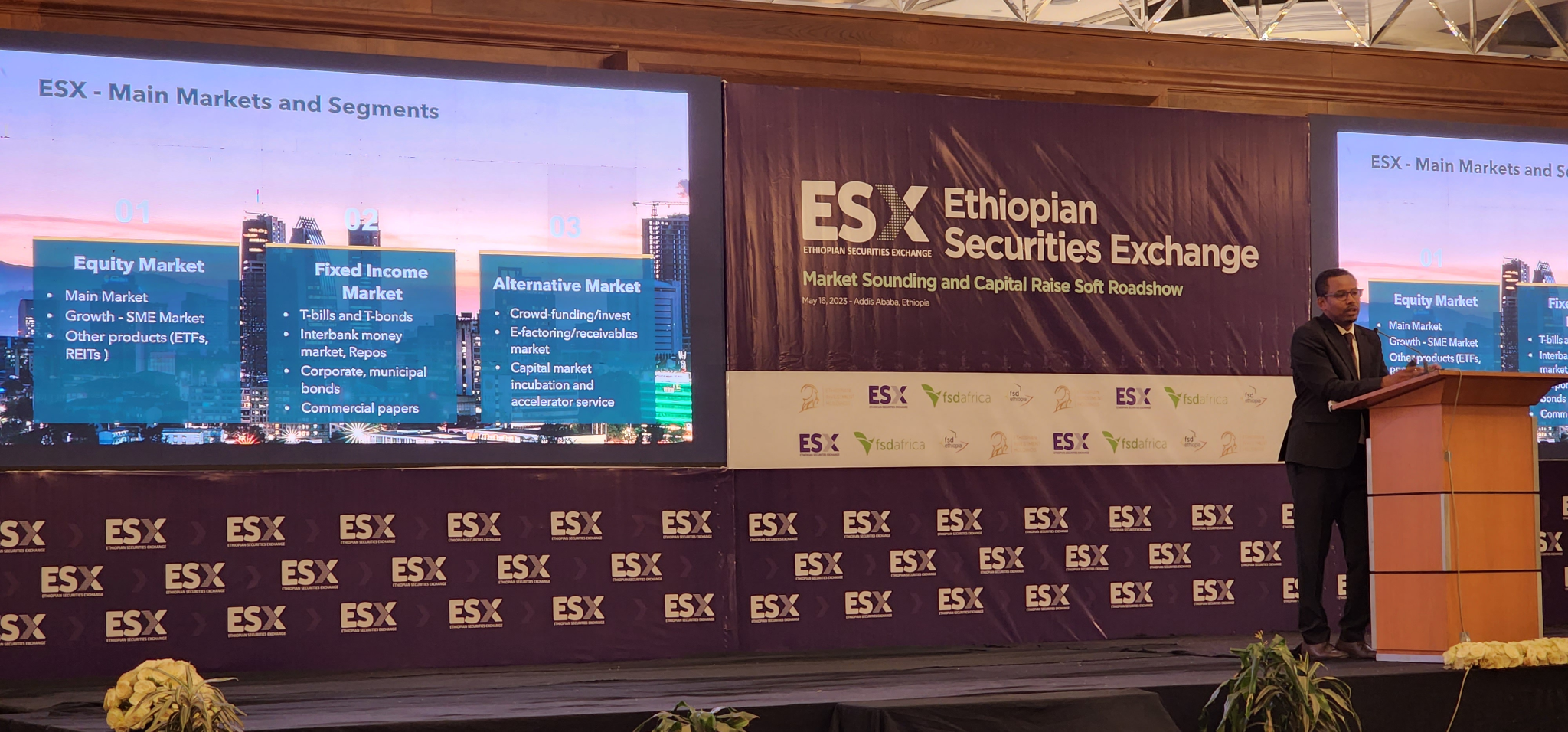
A stock exchange survives on liquidity, liquidity requires active trading. Active trading requires shareholders who believe the price will move, and move in a direction worth chasing.
Ethio Telecom entering the ESX with 10.7 million listed shares and 45,000 shareholders is a starting point, but the secondary market is where the real story begins.
For most of its existence, Ethio Telecom has operated without competitive pressure. It had no share price to defend, no quarterly expectations to manage, no institutional investors pushing for margin improvements.

Now it has all of that, at least nominally. The prospectus, which was flagged by analysts for containing what one publication described as 'sketchy figures,' revealed that EIH retains enough voting power to control all significant corporate decisions regardless of public shareholder sentiment.
The majority shareholder governs the board, approves transactions, and essentially sets the strategic agenda. Public shareholders, in practical terms, own a financial instrument tied to Ethio Telecom's performance, not governance influence over it.
Whether those shareholders are comfortable with that arrangement will shape trading behaviour on the ESX for years. It also raises a question about what Ethiopia's capital market actually is at this stage, a genuine mechanism for corporate accountability, or a revenue tool for a government that has learned to dress up state financing in market clothes.
The honest answer is probably both, and that is not automatically a problem, most emerging markets sit somewhere on that spectrum. But the ESX's ambition is to list 50 companies within five years and 90 within a decade.
If those listings are largely SOEs operating under the same governance structure as Ethio Telecom, the exchange will grow in size without necessarily maturing in function.
The Continent Is Watching. It Should Be
Africa's capital markets conversation has accelerated significantly in the past five years. The Nairobi Securities Exchange, the Nigerian Exchange Group, and the Johannesburg Stock Exchange each of them has wrestled with the same fundamental challenge: how do you build a retail investor culture in economies where formal financial participation has historically been an elite exercise?
Ethiopia's answer so far is to use telebirr, its own mobile money platform, as the distribution infrastructure for share purchases, which is genuinely clever. Fifty million active telebirr users as the access point for an IPO is a model the rest of the continent should study, even if the IPO itself raised a fraction of its target. The mechanism matters more than the round-one results.
What matters next is whether Ethiopia can sustain investor trust through transparency, deliver on the secondary market trading experience it has promised, and eventually open the door wider to the diaspora, to institutional African investors, and to foreign capital that has been circling Ethiopia's growth story without a viable entry point.
The Ethio Telecom listing is not the end of a long reform journey. It is not even the beginning of the end. It is, at best, the end of the beginning, and only if the government resists the temptation to use its ESX listings as fiscal furniture rather than genuine market architecture.
The price of getting this wrong is not just a disappointing exchange. It is another decade of Africa's second most populous country sitting outside the capital market ecosystem that could actually fund its growth.