Supreme Court Backs Trump's Voter Database Revamp Amidst Legal Scrutiny
The Supreme Court has lifted restrictions on the federal SAVE voter database, allowing states to use the tool to verify voter eligibility before November's elections. This temporary win for President Trump's campaign against noncitizen voting has sparked dissent from liberal justices over privacy concerns and the risk of disenfranchising lawful voters.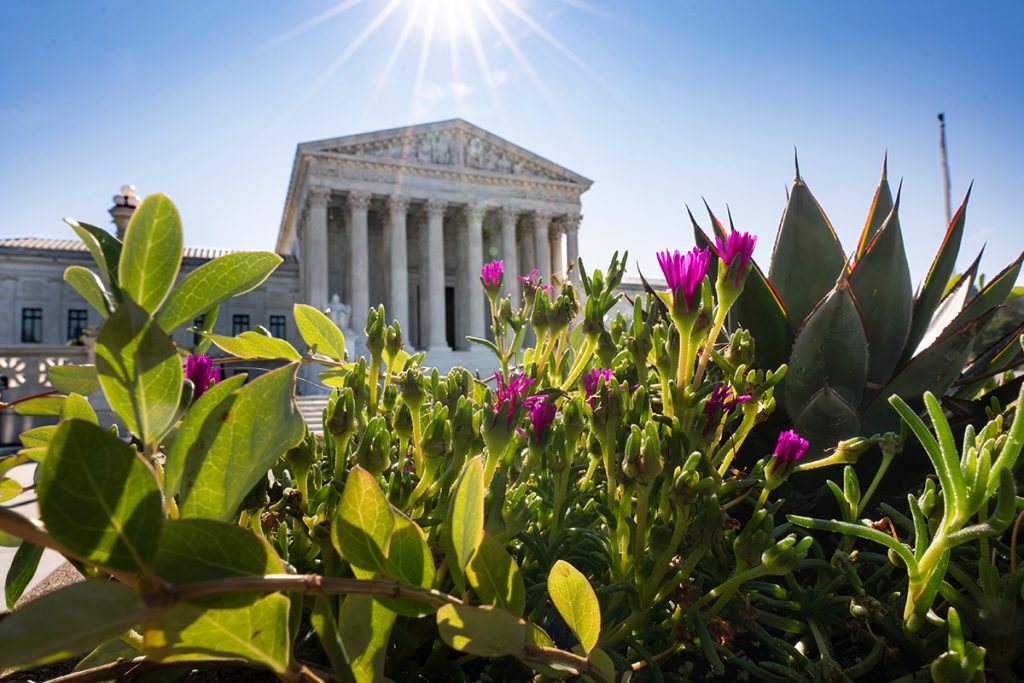
The U.S. Supreme Court on Friday issued an emergency order that lifted restrictions on a controversial federal voter database, granting President Donald Trump a temporary victory in his ongoing campaign against noncitizen voting ahead of November’s elections. This decision allows states, for the time being, to utilize the Department of Homeland Security (DHS) program, known as Systematic Alien Verification for Entitlements, or SAVE, as part of their efforts to verify the eligibility of voters on their rolls. While the use of the SAVE program by states remains voluntary, the ruling has significant implications for election integrity discussions.
Three of the court’s liberal-leaning justices—Ketanji Brown Jackson, Elena Kagan, and Sonia Sotomayor—publicly dissented from the majority decision. The immediate impact on the upcoming midterms is anticipated to be limited due to existing laws that prevent most states from systematically purging voters from their rolls within 90 days of an election. David Becker, an election law expert and head of the Center for Election Innovation and Research, noted that because the program is voluntary and DHS itself acknowledges its data is not perfect, states might find it a useful tool when combined with other methods to maintain up-to-date voter lists.
The Supreme Court’s order effectively put on hold a federal judge’s June ruling that had declared the Republican administration’s recently revamped version of the SAVE program illegal. U.S. District Court Judge Sparkle L. Sooknanan had previously blocked the tool’s use, asserting that it infringed upon Americans’ privacy rights and carried the risk of legitimate voters being erroneously removed from the rolls. This order was upheld by a federal appeals court.
However, the Supreme Court majority concluded that a 1996 law explicitly authorizes DHS to obtain information regarding citizenship and immigration from other federal agencies. Furthermore, they stated that the federal government bears “an obligation to respond” to states seeking to verify citizenship. The unsigned majority order argued that the lower court’s ruling prevented the federal government from employing what it considered the most suitable program for the task.
Justice Ketanji Brown Jackson, in her dissenting opinion joined by Justices Kagan and Sotomayor, contended that the database has historically been considered subject to federal privacy laws. She emphasized the genuine risks that valid voter registrations could be mistakenly revoked, stating, “The harm caused by burdening or disenfranchising even a few lawful voters outweighs the nonexistent harm that the Government experiences when it is prevented from taking an action that it likely lacks the authority to take.”
The plaintiffs and their legal counsel in the case expressed profound disappointment with the ruling, warning that it places “millions of Americans at risk of being unlawfully targeted by the administration’s unreliable voter purge database” just before the midterms. They affirmed that the case is not concluded and pledged to exhaust all efforts to protect Americans’ voting and privacy rights by striving to ensure the district court’s original decision stands. The White House did not immediately comment on the ruling.
The SAVE program was originally established under an immigration law to mandate DHS assistance to federal, state, and local agencies in preventing government benefits from being disbursed to noncitizens. The Trump administration initiated a significant expansion of its search capabilities last year. Since this expansion, at least 67 million registrations have been scanned through the program, raising concerns among critics about the potential for purging valid voters. Instances of registrants being wrongly flagged have already occurred; for example, officials in Travis County, Texas, reported investigating 97 voters flagged by SAVE as apparent noncitizens and found that at least 10%—and potentially up to 21%—were U.S. citizens. Travis County had urged the Supreme Court to reject the administration’s appeal, while the state of Texas defended the database.
Even during the months when SAVE program use was blocked, the administration confirmed in court filings that DHS officials continued to use Social Security Administration data in specific cases to verify information and investigate potential illegal voting. A federal whistleblower statement indicated that DHS launched its own investigation into noncitizen voters on state rolls in August, describing the effort as rushed, error-prone, and potentially in violation of state laws. DHS has maintained that its investigation is being conducted “diligently and professionally.”
The push to create a national voter list is one of several actions President Trump has taken during his second term to reform election administration. Most of these initiatives have been thwarted by various courts, primarily because the Constitution grants states and Congress the authority to establish election rules, not the president. Notably, in mid-September, the Supreme Court also rejected a separate attempt by Trump to impose restrictions on mail ballot procedures before the midterms. Research consistently shows that noncitizen voting, which is already illegal and carries severe penalties including potential felony charges and deportation, is an exceedingly rare occurrence. Despite this, Trump has remained steadfast in his belief that substantial numbers of noncitizens are voting in U.S. elections.