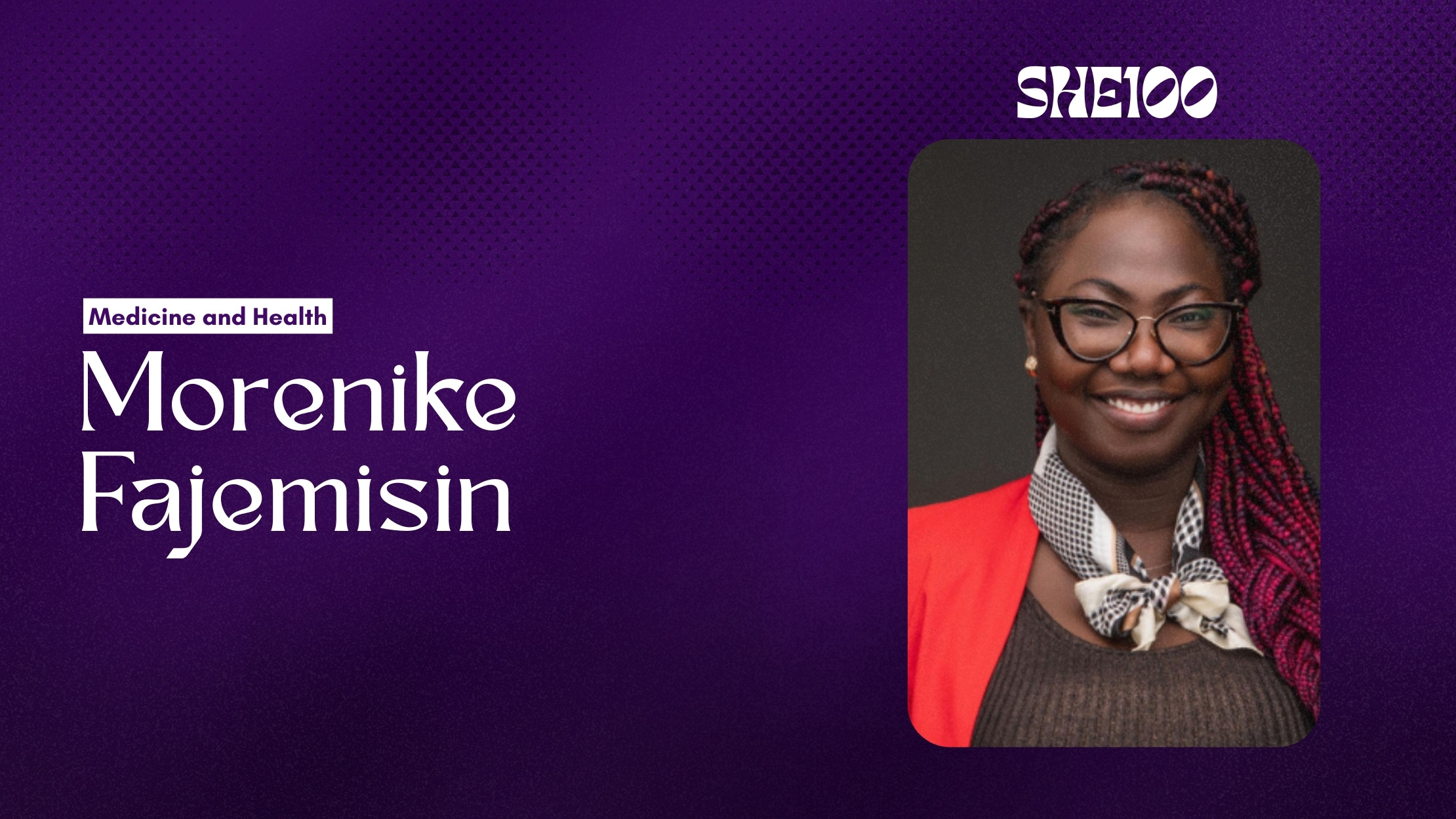
She100: Morenike Fajemisin — Designing Care for People Who Would Rather Stay Silent
Morenike Fajemisin is reshaping access to sexual and reproductive healthcare through Whispa, a platform built to eliminate stigma, protect privacy, and serve young Nigerians who would rather stay silent than be judged.
There is a very specific kind of shame that lives in Nigerian healthcare spaces. It is the kind that makes a young woman Google her symptoms at 2am instead of calling a doctor.
The kind that makes someone buy paracetamol at a roadside kiosk rather than walk into a pharmacy for the thing they actually need.
The kind that sits in the silence between a patient and a healthcare provider who is already judging them before they finish their sentence.
Morenike Fajemisin grew up watching that silence do damage. Then she built an app to dismantle it.

The Pharmacist Who Saw the Gap
Morenike studied pharmacy at Obafemi Awolowo University in Ile-Ife and came out knowing exactly what the Nigerian health system looked like from the inside.
She spent years working in the public health sector and eventually joined DKT International, one of the world's largest providers of sexual and reproductive health products, as Director of Regulatory Affairs and Marketing.
There, she was instrumental in building DKT's Nigeria operations from scratch, turning it into the country's largest distributor of contraceptives.
She introduced over twenty products into the Nigerian pharmaceutical supply chain and oversaw more than $6 million in sales.
She knew where everything was. She knew which products existed, which services were available, which hospitals were equipped to help. Most young Nigerians did not.
That information gap was not accidental. It was the direct product of a culture that treats sex as a secret, treats contraceptives as shameful and trains healthcare providers to be gatekeepers rather than helpers.
Morenike watched young people, especially young women, navigate this minefield daily and come out worse for it.

What the Numbers Said
The statistics backing her instinct were not subtle. Only about 15% of women in Nigeria use modern contraceptive methods, despite the country recording nearly two million unintended pregnancies annually.
Adolescent birth rates remained stubbornly high for years, with girls between 15 and 19 accounting for some of the highest numbers on the continent.
HIV infection rates among young people stayed elevated not because the information or tools were unavailable, but because accessing them leads to the being stigmatised by family, community, and sometimes by the very healthcare workers who were supposed to help.
The system was not just failing young people. It was actively discouraging them from seeking care. Morenike had an idea about what to do with that.
Building Whispa
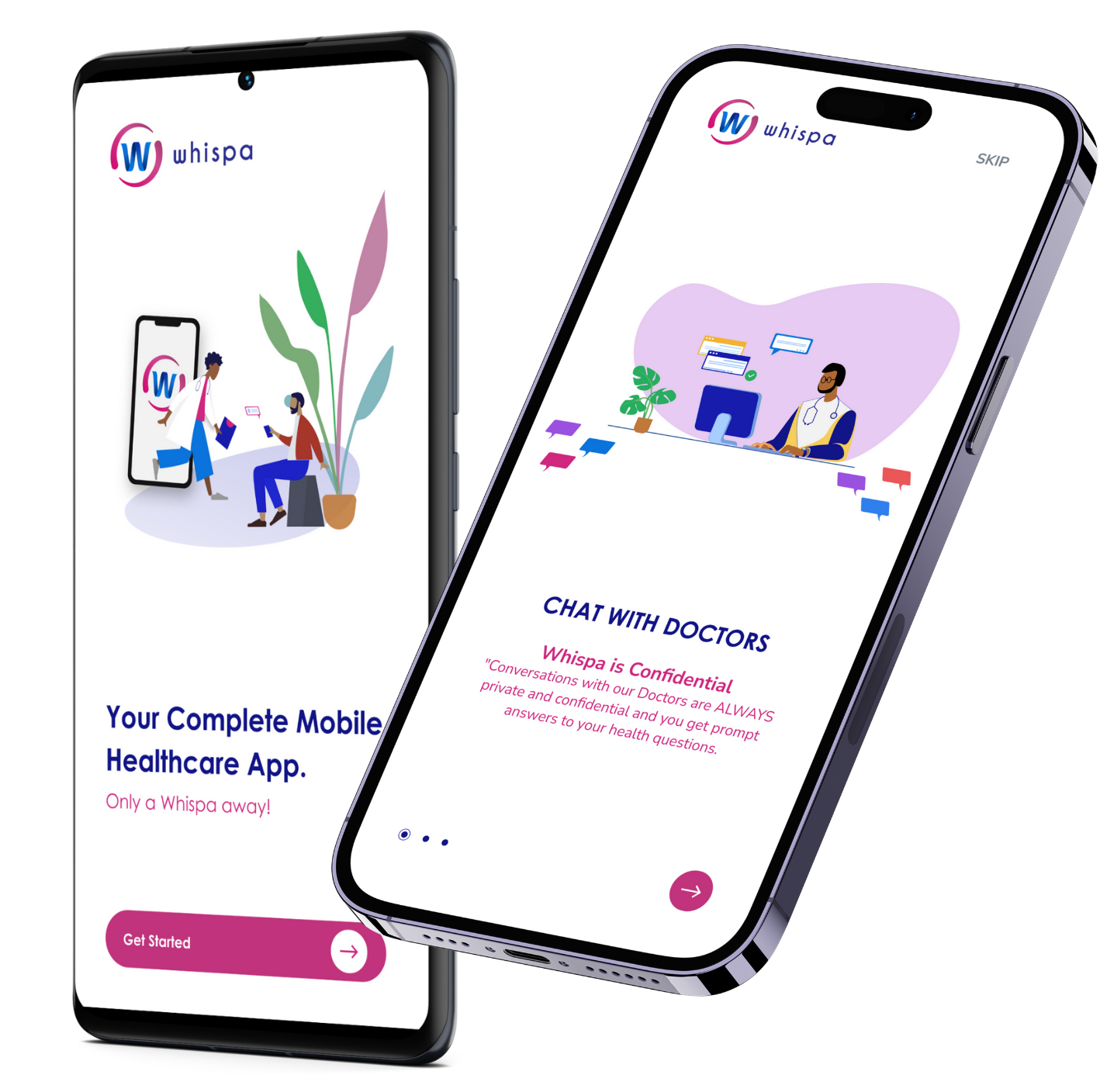
She conceived the idea for Whispain 2016, but the app did not officially launch until 2020, a year that, perhaps not coincidentally, made the concept of remote, private healthcare feel urgently necessary to the whole world.

Whispa is a mobile platform that allows users to consult with certified doctors privately and, if they prefer, anonymously.
There are no waiting rooms, judgements or healthcare providers eyeing you with barely concealed disapproval while you ask about contraception.
You open the app, you ask your question and a qualified professional answers it.
Beyond consultations, Whispa also lets users order sexual health products— condoms, HIV self-test kits, lubricants, contraceptives — delivered to their door in plain, unmarked packaging.
It lets them book appointments for cervical cancer screening, HPV vaccines, STI tests and general health check-ups.
It is, in short, the infrastructure for healthcare that Nigerian young people were already trying to cobble together themselves through late-night Googling and group chat recommendations.
Who Is Actually Using It
Between 60 and 65% of Whispa's user base is female. They are, on the whole, very young, mostly undergraduates or recent school leavers stepping into an adult world with almost no formal sexual health education behind them.
This was by design; Morenike deliberately centred young women as the primary audience because the system's failures hit them hardest.
But the platform serves everyone and the message is consistent regardless of who is logging on: you do not have to be ashamed of your health.
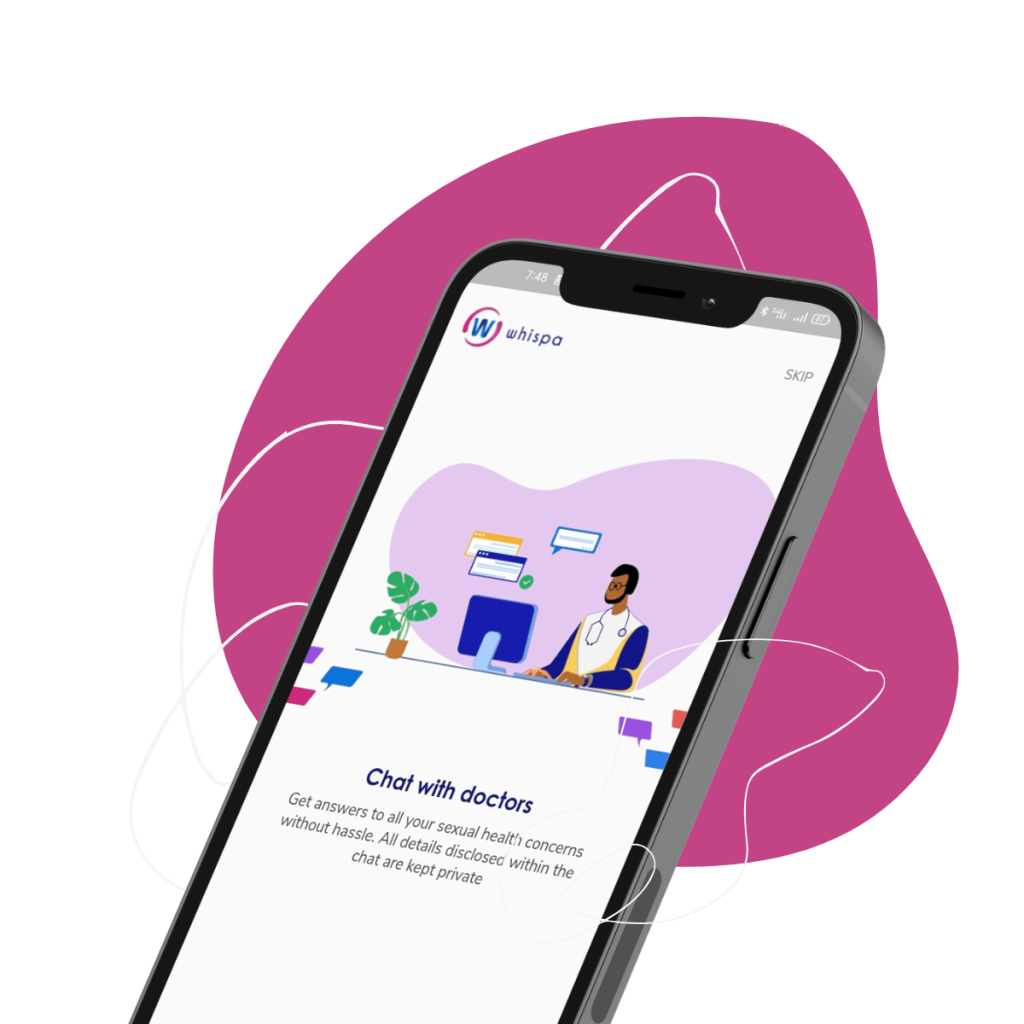
The platform has reached over 30,000 people since launch, facilitating consultations, connecting users to contraceptives, facilitating cervical cancer screenings and in many cases running STI tests for people who had never been screened at all.
What Winning Looks Like
Morenike has collected a substantial award shelf over the years, each one confirming what practitioners on the ground already knew.
She won the Bill & Melinda Gates Foundation/Bayer 120 Under 40 Award in 2016 and the Ingenuity Fund grant in 2019.
That same year, the World Health Organisation Africa named Whispa one of the Top 30 Health Innovations to watch across the continent.

In 2021, she won boththe Bayer Foundation Women Empowerment Award and Google's Black Founders Africa Award.
In the same 2021, Whispa was also selected as one of seven winners of the $2 million Jua Fund, providing a significant injection of growth capital.
Health Tech World has listed her among the most impactful women leading health technology companies globally.
She holds a certificate in Global Health Leadership from Johns Hopkins School of Public Healthand is an Associate Fellow of the Royal Commonwealth Society.
The credentials are real. But what drives the recognition is simpler than any of them; she built something that works for people who had been told, implicitly, that they were not worth building for.

Conclusion
Every young Nigerian who has ever sat with a health worry they were too embarrassed to voice, who has self-medicated rather than explained themselves to a dismissive doctor, who has bought a pregnancy test from three different shops to avoid being recognised is the target demographic.
Morenike Fajemisin looked at a system that required young people to earn their healthcare by surviving the humiliation of accessing it, and she decided that was not a feature; it was a bug. Whispa is the fix.