Shakira Lights Up Rio: 2 Million Fans Witness Landmark Beach Concert
Shakira delivered a historic free concert on Rio de Janeiro's Copacabana Beach, drawing 2 million fans and reinforcing Brazil's deep ties to Latin American culture. The event, part of the "Todo Mundo no Rio" project, featured an electrifying performance with surprise appearances by Brazilian music legends and generated significant economic benefits for the city. It underscored Shakira's long-standing bond with Brazil and the powerful unity of the Latino community.
Colombian superstar Shakira delivered the biggest show of her career on Saturday, May 2, captivating approximately 2 million spectators in a free performance on Rio de Janeiro's iconic Copacabana Beach.
The monumental concert served as a powerful testament to Brazil's deep-rooted connection with Latin American cultural identity, a bond often overshadowed by the country's continental scale and distinct language. As part of the "Todo Mundo no Rio" project, the event perfectly showcased that "Latin blood also runs strong in their veins," as one observer noted, demonstrating a generosity and greatness that transcended borders.
Anticipation for the concert, the third installment of the "Todo Mundo no Rio" series that previously hosted Madonna and Lady Gaga, built throughout the day. By late afternoon, Copacabana Beach had turned into the world's largest concert venue, with fans, affectionately known as the "wolfpack," gradually overtaking the streets. Outside the Copacabana Palace, where Shakira was staying, thousands kept a tireless vigil. Just hours before the show, a swarm of synchronized drones delighted fans by forming the shape of a She-Wolf’s head and spelling out "Te Amo Brasil" in the sky.
At 11:05 p.m. over an hour after schedule Shakira finally took the stage in a vibrant green and yellow outfit, opening with “La Fuerte.”
She quickly turned Copacabana Beach into a celebration of Latin culture, with the crowd dancing to salsa, cumbia, and reggaetón. Her set included major hits like “Hips Don’t Lie,” “La Tortura,” “Estoy Aquí,” and “La Bicicleta,” alongside empowerment tracks such as “TQG” and “Don’t Bother.”
The show also featured a softer moment with “Acróstico,” incorporating recordings of her children, as well as pop-rock ballads like “Inevitable” and “Empire,” and her recent hit “BZRP Music Sessions #53.”
Surprise appearances from major Brazilian artists elevated the concert. Caetano Veloso opened with “Leãozinho,” followed by Maria Bethânia, who joined Shakira and the Unidos da Tijuca drum section for a samba performance of “O que é o que é.”
Anitta later surprised the crowd with “Choka Choka,” while Ivete Sangalo joined for “País Tropical.”
The night closed with high-energy global hits like “Whenever, Wherever” and “Waka Waka,” keeping the audience energized until around 1:05 a.m.
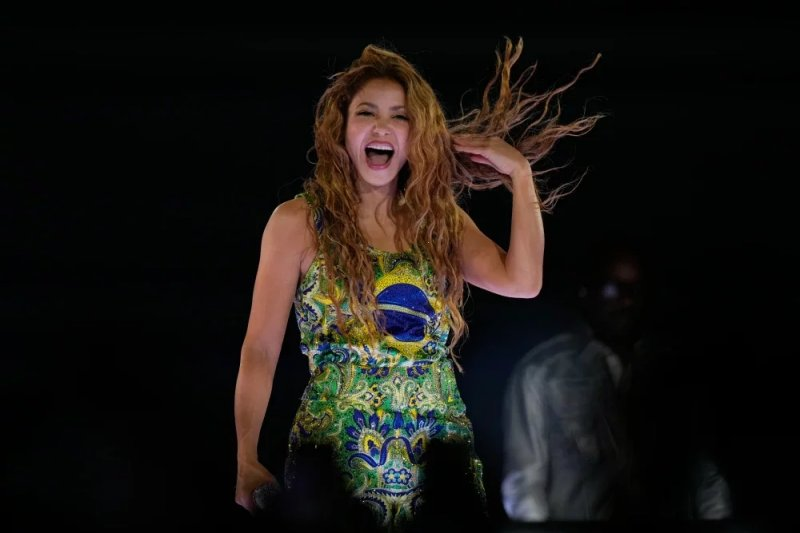
Shakira’s connection with Brazil is long-standing and central to her global success. Brazil was one of the first non-Spanish-speaking markets to embrace her music, helping her gain early international traction.
She has engaged with Brazilian audiences since the 1990s and even speaks Portuguese during performances. Reflecting on her journey, she recalled arriving at 18 and dreaming of singing for Brazilian fans, calling the experience “magical.”
Experts note that her popularity is strengthened by cultural similarities between Colombia and Brazil, with her recent performance seen as a milestone in that relationship. She also began her “Las Mujeres Ya No Lloran World Tour” in Brazil in early 2025 at Nilton Santos Stadium.
The “Todo Mundo no Rio” project and Shakira’s concert in particular—delivered a major economic boost for Rio de Janeiro.
Mayor Eduardo Cavaliere described major events as “serious business,” citing their impact on jobs, income, and tourism. He estimated up to a 40x
The concert’s cultural impact was strongly felt among fans who traveled from across Brazil and abroad, including Mati Bish and architect Wanderson Andrade, who got a wolf tattoo in tribute to Shakira.

Fans described the event as a celebration of Latin identity and unity, with many highlighting its symbolic meaning for the wider region. The atmosphere was highly emotional and festive, filled with costumes, tributes, and playful moments that reflected a shared cultural pride.