Paystack’s Acquisition of Ladder and the Bigger Play Behind It
Paystack is acquiring ladder microfinance bank and is restructuring its mode of operation under The Stack Group. This is an in-depth look at Paystack’s 10-year journey, its restructuring into The Stack Group, and the lessons African startups can learn about growth, discipline, and long-term vision.
For many African startups and even the public in general, when firms, startup and growing companies are mentioned in the digital space—growth is often measured in funding rounds, dopamine intriguing headlines, or flashy expansions.
For Paystack, growth for them has taken a slower and more deliberate shape over the past decade—their growth from the standpoint of an average observer can be said to be built on consistency, regulatory patience, and long-term clarity.
And after a decade of setting out with a simple mission to help African businesses get paid, Paystack is entering a new phase of its journey as a fintech based startup, one that goes beyond payments and into the broader infrastructure powering African ambition.
This transition is marked by a major restructuring, the creation of The Stack Group (TSG), and a vision that is being planned to stretch progressively into the next decade.
But for you and I to truly understand what this moment truly represents, it is important to look at where Paystack started, how it grew, and why this evolution matters, not just for Paystack, but for Africa’s startup ecosystem as a whole.
From Payments Startup to an Infrastructure Builder: What Paystack Really Is

Paystack was founded in 2015 by Shola Akinlade and Ezra Olubi with a focused goal and that was to make it easy for African businesses to accept payments.
This was at a time when digital payments were fragmented, unreliable, and difficult to integrate, Paystack built the tools through its payment solutions that were simple, developer-friendly, and tailored to African realities.
Over the years, the company expanded beyond Nigeria into Ghana, South Africa, Kenya, and Côte d’Ivoire, with regulatory approvals underway in Egypt and Rwanda, markets that together account for roughly 46% of Africa’s GDP.
This expansion was a series of growth, solution driven and fitting into the African reality. It followed licenses, compliance, and a deep understanding of each market’s financial systems.
Paystack was accepted into Y Combinator’s startup accelerator in 2016, where it received early-stage funding in Silicon Valley. Later that year, Paystack publicly launched.

In 2020, Paystack was acquired by the global payment giant Stripe in a landmark $200 million deal. Making it the largest startup acquisition to date from Nigeria and Stripe’s biggest acquisition at the time.
Since that acquisition, Paystack’s total payment volume has grown more than twelvefold, and as of its tenth anniversary, the company has reached group-level profitability, a milestone many startups never attain.
What makes this new phase different is Paystack’s shift from being primarily a payments processor to becoming a builder of broader financial and technological infrastructure.
This includes the recent acquisition of Ladder Microfinance Bank, which is being rebranded to become the Paystack Microfinance Bank, allowing the company to offer regulated banking services in Nigeria.
At the very basis of this shift is that Paystack today is no longer just a tool for transactions. It is positioning itself as a foundation upon which African businesses can build, scale, and operate more efficiently.
The Stack Group, Stripe, and a Restructure for the Next Decade
At the start of 2026 in commemoration of its ten years anniversary, Paystack announced a major structural evolution: the creation of The Stack Group (TSG) as its new parent and holding company.
This move reflects a strategic understanding that the problems African businesses face are no longer limited to payments alone.
Although agreements on establishing TSG as the parent holding company were signed in October 2025 and are still subject to regulatory approvals, it signals a new era for Paystack and its future.
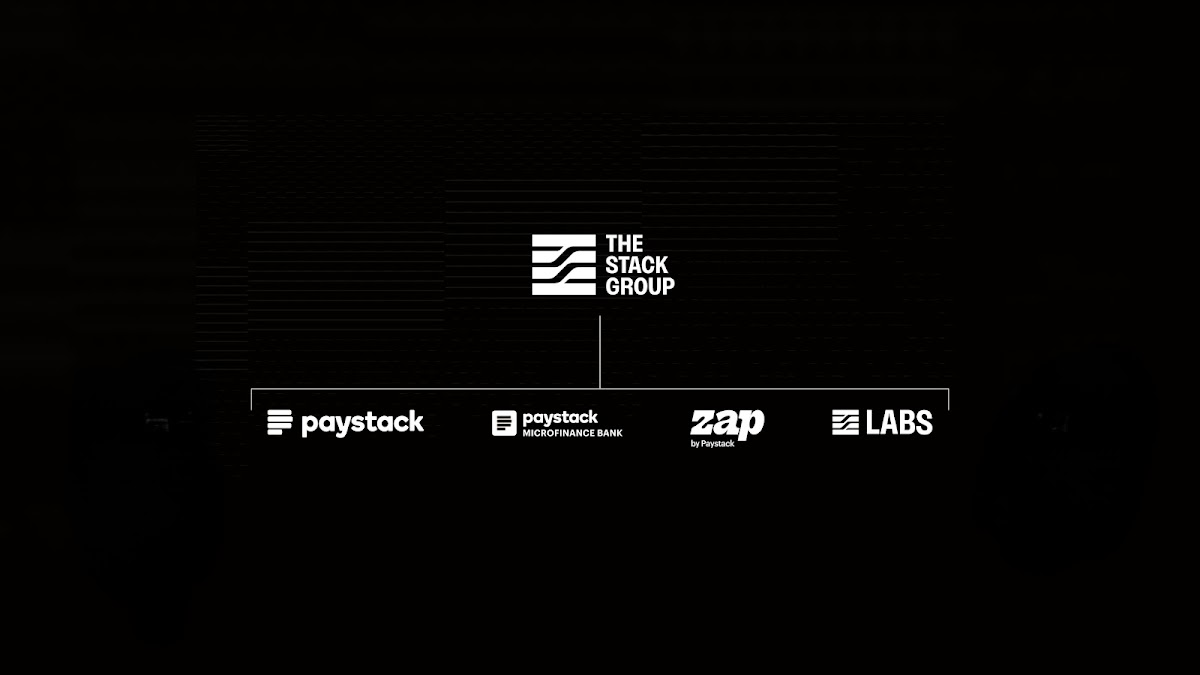
Under TSG, Paystack is being planned to now operates alongside a family of independent but complementary businesses:
Paystack, focused on merchant payments
Paystack Microfinance Bank, innovating within the banking sector.
Zap, a consumer payments product
TSG Labs, a venture studio focused on emerging technologies, including AI
TSG’s founding shareholders include Stripe, Shola Akinlade, and Paystack employees, with Stripe remaining a significant shareholder, signaling its continued long-term commitment to Paystack’s growth.
The structure allows each business to innovate independently while benefiting from shared strategy, capital discipline, and vision.
One of the most important elements of this restructuring is TSG Labs, which operates separately from regulated financial entities. This separation allows Paystack to experiment with AI-led and emerging technology products without exposing its core financial businesses to regulatory risk, a move that shows maturity in both governance and ambition.
According to Paystack’s own reflections on the next decade, three themes shaped their direction on the reason for expansion and restructuring as they continue to grow.
The accelerating pace of technology in this present era.
Acquiring licenses that unlock end-to-end financial solutions and are finalizing a stablecoin license in a key market, pending regulatory approvals.
The realization that African businesses need support far beyond payments alone.
This is surely not a pivot born out of pressure but a restructuring plan born out of readiness.
What Paystack’s Journey Teaches Founders, Startups, and the Ecosystem
Paystack’s ten-year journey offers lessons that go beyond fintech. The first thing to note is that it reinforces a truth that is often overlooked in startup culture: that growth and planning do not happen overnight. Paystack took a decade to reach this point, guided by discipline, regulatory patience, and clarity in decision-making.
Also, restructuring is not a sign of failure or confusion—it can be a sign of depth and expansion for immense growth. By reorganizing into TSG, Paystack is acknowledging complexity and choosing structure over chaos. This is a model African startups can learn from as they scale across markets with different laws, users, and financial systems.
Also, Paystack’s story highlights the importance of building infrastructure, not just products. Payments were the entry point, but the long-term value lies in solving layered problems—banking, consumer payments, AI-powered tools, and financial operations.
Finally, Paystack’s evolution shows that African startups can think globally while building locally. With Stripe’s backing, African leadership, and regional understanding, Paystack demonstrates that sustainable growth comes from aligning ambition with context.
As Paystack prepares for its second decade, the message is clear and loud that the future of African tech will belong to companies and startups that are patient enough to build, disciplined enough to restructure, and bold enough to imagine beyond their original problem.