SHE100: The Story Of Aisha Yesufu—The Woman Who Would Not Just Back Off
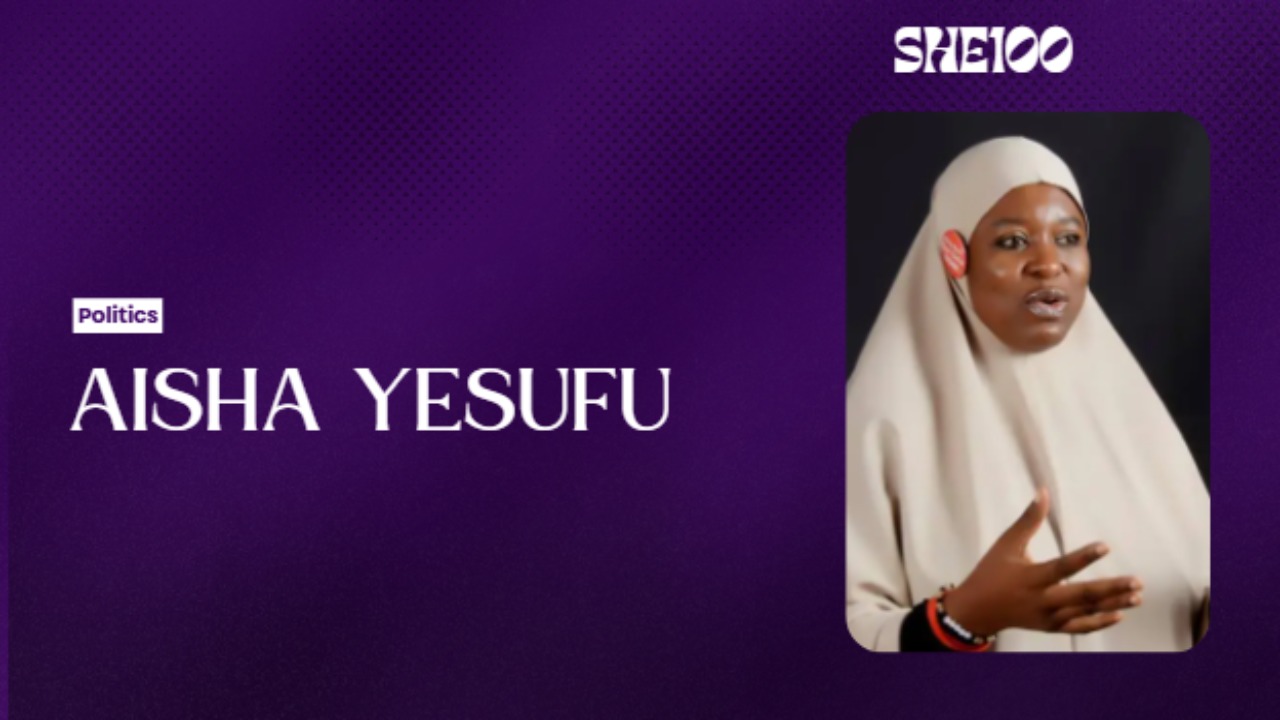
From the streets of Kano to the global stage, Aisha Yesufu has spent decades refusing to be silent. This is the story of Nigeria's most fearless activist, the woman behind #BringBackOurGirls, #EndSARS, and that iconic raised fist that stopped a nation in its tracks.
There is a photograph that Nigeria will never forget, not too soon and if you have forgotten, you might have come across this particular photo.
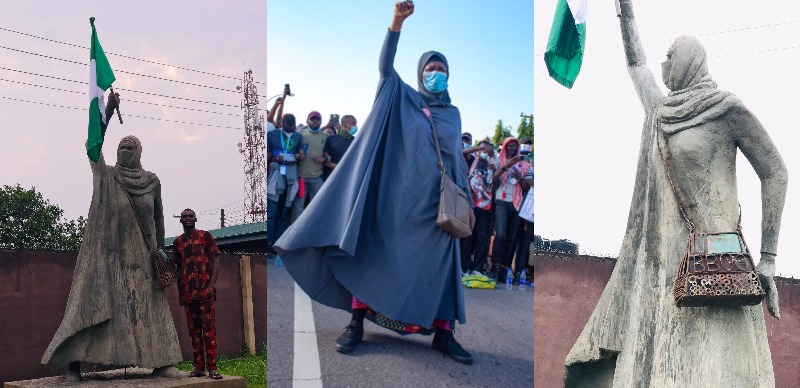
This photo was taken on October 10, 2020, in the middle of the #EndSARS protests in Abuja.
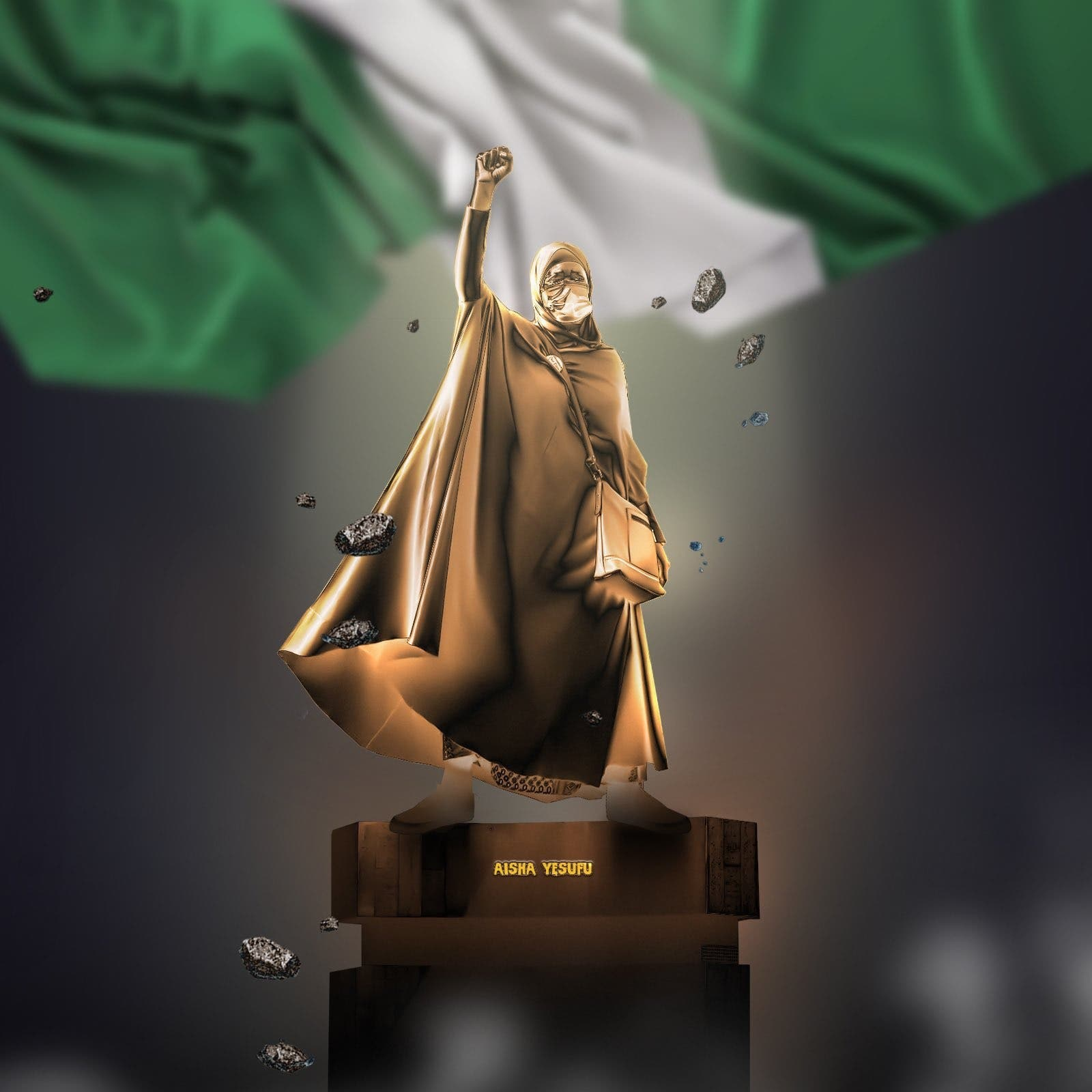
Tear gas has just been fired and police are moving around. Most people had scattered, but among them was one woman with thousands of others standing her ground — legs apart, fist raised, hijab wrapped tightly around her face, eyes blazing with something that looked less like defiance and more like destiny.
That woman is Aisha Yesufu, and in that single frame, she became the face of a generation's rage and its hope.
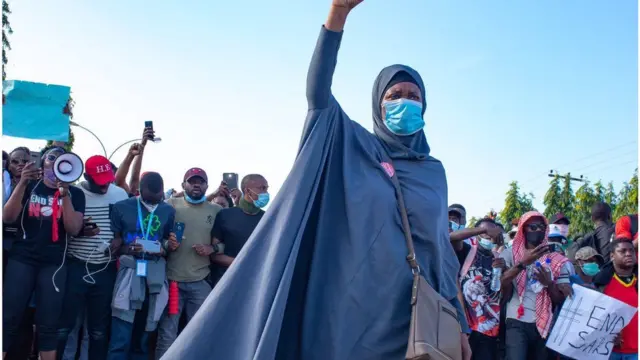
Nigerians called it the Nigerian Statue of Liberty. The image at the time spread across Twitter now called X, Instagram, and WhatsApp groups from Lagos to Aba in hours.
But what many people scrolling past that photograph did not fully know was the decades of fire that had already burned inside this woman long before the cameras arrived.
Aisha Yesufu is not a politician. She holds no office, controls no budget, and commands no army.
What she commands is something far more powerful in a country exhausted by broken promises, she commands attention, conscience, and collective action.
In celebrating women who have reshaped the world around them, her story demands to be told with full force.
Born Into the Silence, Raised to Break It
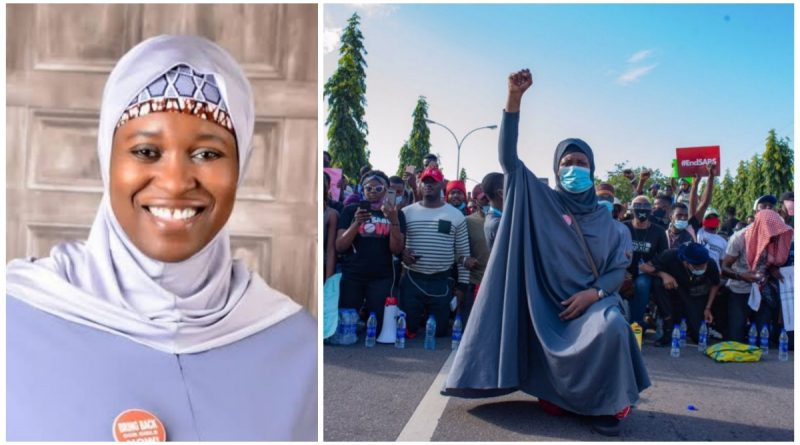
Aisha Somtochukwu Yesufu was born on December 12, 1973. She grew up in Kano State in northern Nigeria, though her roots trace back to Agbede in Edo State, a reminder of the complex, layered identity of many Nigerians who grow up straddling cultures and languages.
By the time she was eleven years old, Aisha had no female friends left. Not because she was difficult or isolated, but because they were gone.
Some were married off at a young age, others died during childbirth and most of these young girls were pulled from school before they ever had the chance to understand what school was for.
That reality, witnessed not in a textbook but in the disappearance of girls she played with, shaped something in her that no classroom could have taught. She understood, even as a child, that being female in Nigeria came with costs that boys never had to calculate.
She refused to pay those costs quietly. Aisha went on to earn a second-class upper degree in Microbiology from Bayero University Kano.
She built businesses in education and other sectors, becoming an entrepreneur before she became an activist. But the two were never truly separate. Everything she built, she built as someone who had already decided that the systems failing Nigerian women and children were not inevitable, they were a choice, and choices could be challenged.
From Chibok to the Streets: A Decade of Speaking Truth
On April 14, 2014, Boko Haram abducted 276 schoolgirls from their dormitories in Chibok, Borno State, in the dead of night.
The Nigerian government's response was slow, defensive, and dismissive. A government spokesperson suggested the abduction had not even happened. For a country already weary of institutional failure, the silence from the top was deafening.
Aisha Yesufu did not wait for permission to be outraged. She co-founded the #BringBackOurGirls movement, a campaign that turned local grief into a global conversation.
What began as a hashtag became a sustained, physical advocacy movement, with Aisha and her colleagues gathering daily, rain or shine, holding signs, demanding accountability, and refusing to let the country forget those girls even as attention spans shortened and news cycles moved on.

It was the kind of work that does not trend forever but never truly stops. Some of the Chibok girls were eventually released through negotiations and well, according to reports, others remain missing to this day.
Aisha has remained vocal throughout her entire life, not just about the girls, but about the broader culture of impunity that made their abduction possible and their recovery incomplete.
Well in the midst of her loud and crying voice came 2020 and the #EndSARS movement, a nationwide protest against the brutality of the Special Anti-Robbery Squad, a police unit that was alleged to have terrorised young Nigerians for years.
When the protests erupted across the country, Aisha was there, not behind a computer screen and not even sending tweets from a safe distance, she was fully present at the ground, in Abuja.
Standing amidst the flying smoke of tear gas and that was when that photograph was taken, fist raised, unbowed, it captured not just a moment but a movement, and the woman who had been its quiet engine for years.
The Weight of a Raised Fist: Legacy and What Comes Next

Recognition came not as a surprise to those who had watched her work, but as long overdue confirmation.
In 2020, Aisha Yesufu was named to the BBC's 100 Women list, a global recognition of women changing the world.
That same year, New African magazine included her in its Top 100 Most Influential Africans. She received the Martin Luther King Award. She became a symbol referenced not just in Nigeria but in pan-African conversations about protest, civic courage, and what it means to hold a government accountable when it would rather not be.
But awards have never been the point. Aisha Yesufu is not building a personal brand. She is building a culture, one where Nigerian citizens, and especially Nigerian women, understand that silence is a political act, and so is speaking.
She has said repeatedly that her activism is rooted not in ambition but in an inability to look away. The girls she grew up with who disappeared before age twelve never had the luxury of looking away either.
She remains as visible and as vocal as ever, on social media, at protests, in interviews, and in the daily, grinding work of holding power to account.
She is critical of governments regardless of party, impatient with performative politics, and deeply committed to a Nigeria where young people and women are not afterthoughts in the national conversation but its driving force.
In a country where many activists eventually compromise, go quiet, or pivot to comfortable positions, Aisha Yesufu has done none of those things.
She has remained, stubbornly and beautifully, herself, the woman in the photograph, fist in the air, feet planted, is going nowhere.
Some people change the room they are in. Aisha Yesufu is trying to change the country and if the last decade is any indication, she is not done yet.