Adeyemi Akitoye: The Cybersecurity Graduate Building A Piracy-Proof Platform For African Digital Creators
At 22, Adeyemi Akitoye is building Knowvas, an anti-piracy creator platform for African digital publishers, alongside his father. This is his story from a cybersecurity student to being a startup founder.
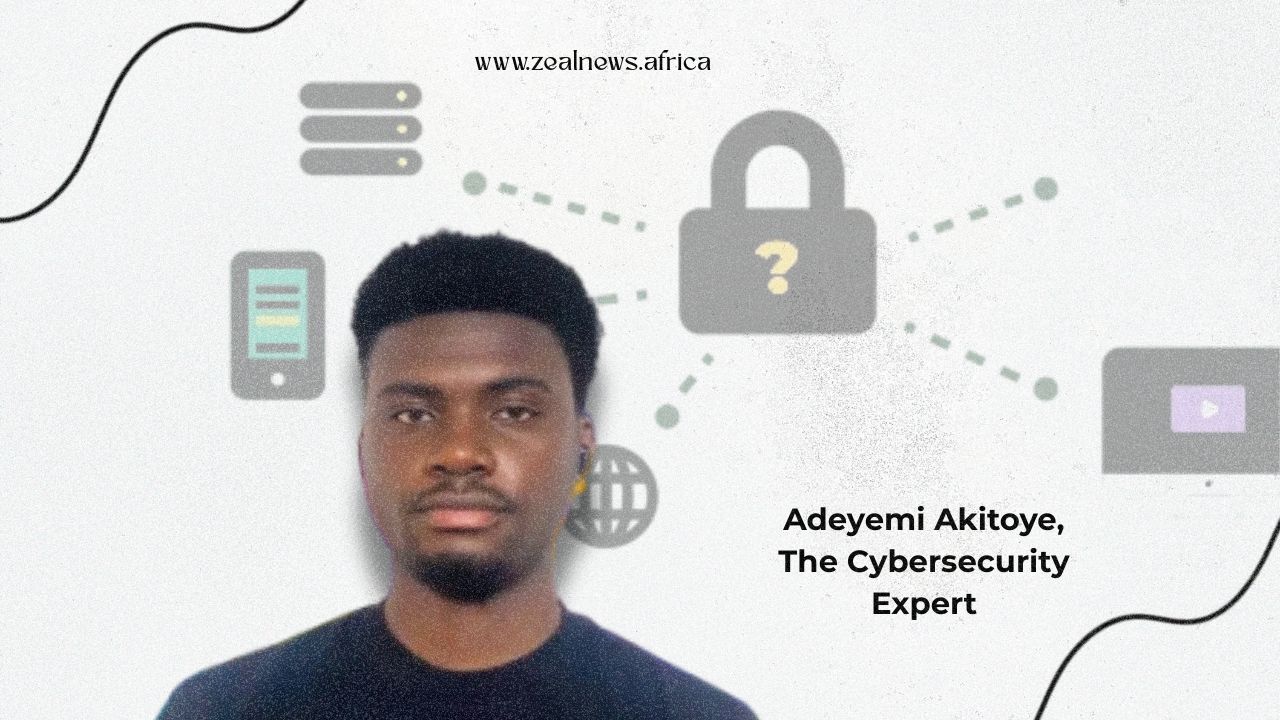
Adeyemi Akitoye is the Chief Technology Officer of Knowvas, a creator protection platform built for African digital publishers.
Most people think cybersecurity is just about firewalls, threat detection and looking for fraudulent activities, they're not entirely wrong.
But Adeyemi Akitoye will tell you it's about who gets protected, and who doesn't in the digital creator's economy.
Akitoye is a 22-year-old cybersecurity graduate and co-founder of Knowvas, a platform designed to give African creators what most existing distribution channels haven't: genuine control over their work.
He studied at Dominion University in Ibadan, Nigeria, taught himself penetration testing outside the classroom, and is now building a startup alongside his father.
His name won't appear on any bestseller list. But when an African author publishes their work on Knowvas and earns fairly from it without watching it get pirated within a week, that outcome traces back to decisions Akitoye made at the architecture level.
Knowvas launched officially in October 2025. The platform has been built with a security-first technical foundation, content isn't distributed in raw downloadable formats but accessed through controlled rendering systems within the app, similar to how streaming platforms operate.
The idea about how Know as works is simple: you can access the content, but you can't freely redistribute it.
The Computer at Four, and the Questions That Followed
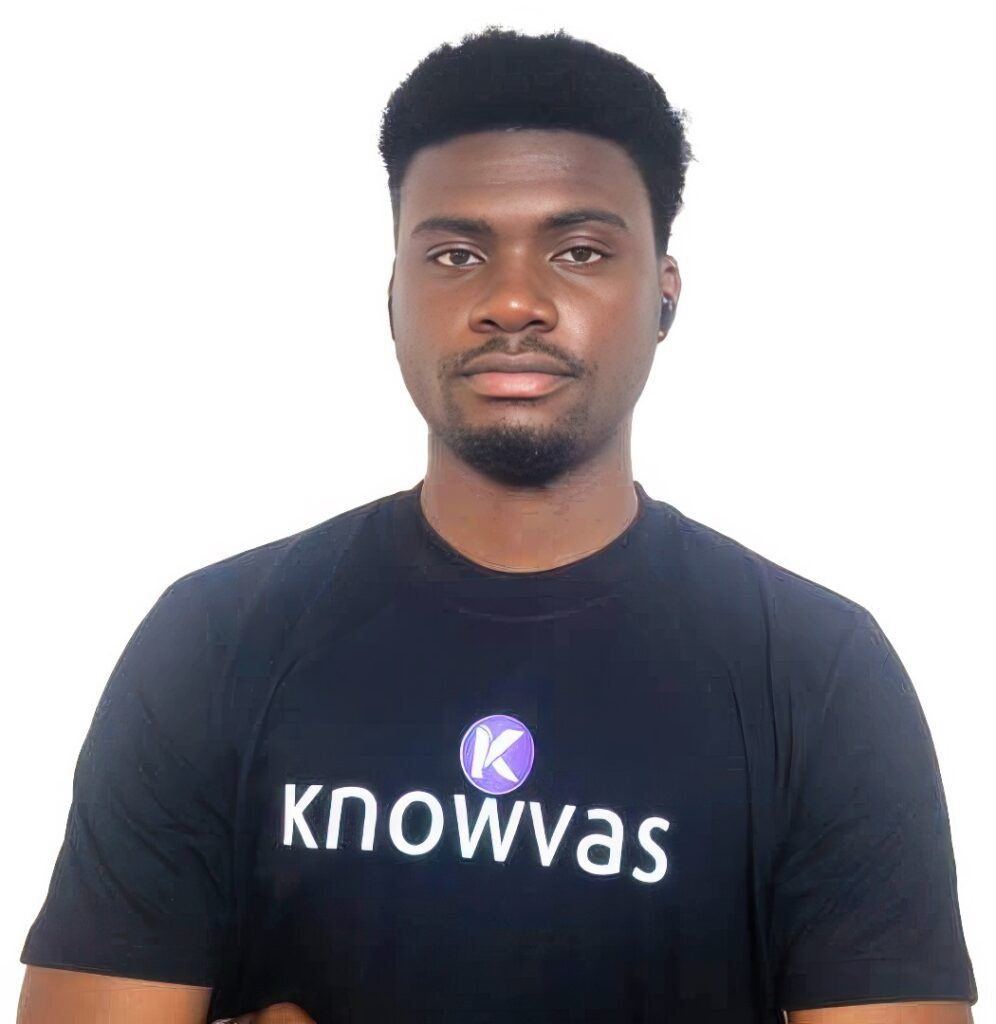
Akitoye's first real interaction with technology came at around four or five years old. Both his parents were familiar with computers and internet access, which gave him early exposure most Nigerian children of that generation didn't have.
He started on video games, his father wasn't particularly enthusiastic about that part, but alongside the games was tutoring software, and that's where the questions started.
He wanted to know what was happening behind the screen. Not what to click, but why clicking it did anything at all. Serious coding came later, during his early university years, when he picked up HTML, JavaScript, and Python independently.
By then, he'd already chosen cybersecurity as his field of study, deliberately. The reasoning was direct: it was a relatively new discipline in Nigeria, digital infrastructure was expanding fast, and security would inevitably become critical. He was right.
But the university curriculum leaned heavily on theoretical, risk management, systems thinking, and threat frameworks. The practical side fell on him and he set up his own environments using VirtualBox and Linux, learned penetration testing without a bootcamp or a trainer, and downloaded courses independently.
The deeper he went, the more he realised that to truly secure a system, he had to understand how it was built from scratch. So he taught himself software development too.
Piracy, Okada Books, and the Gap No One Was Filling
Knowvas wasn't born from a pitch deck. It came from a specific frustration Akitoye kept observing: African creators, authors, comic artists, audiobook narrators, podcasters. struggled to distribute their digital work while maintaining any meaningful control over it.
Most available platforms had an obvious structural flaw. Once a user downloaded content, the creator lost all leverage. The file could be copied, resold, shared for free, or undervalued on grey-market channels.
There was no recourse for all of this and piracy wasn't just a risk, it was practically built into the distribution model.
The shutdown of Okada Books, a popular Nigerian digital bookstore, made the gap more visible. Akitoye and his father spotted it at the same time. That shared recognition became the starting point for their working relationship and for Knowvas.
From a technical standpoint, Akitoye built the entire system with security as the base assumption, not an afterthought. Content on Knowvas isn't downloadable in the conventional sense.

It renders within the platform's controlled environment, following the same logic Netflix and Spotify use to prevent redistribution. Creators retain full post-publication control, pricing adjustments, access management, content updates, all handled on their end without going through customer support.
His father serves as Chief Executive Officer (CEO), handling creator onboarding, strategic guidance, and infrastructure partnerships that have kept the platform operational. Working with someone who actually understands the vision, Akitoye has noted, is rarer than it sounds.
AI, Bad Internet, and the Case for African Builders
Before Knowvas, Akitoye was already working, graphic design, video editing, motion graphics, contracts with a YouTube-based news channel and a media production company.
He started before university. Even while building the platform, freelance web development has been a financial necessity. Building a startup without a steady income is exactly as difficult as it sounds, and he doesn't pretend otherwise.
On the tools he relies on daily: artificial intelligence (AI) has changed his workflow significantly. Code that once took him weeks now takes hours. He uses it consistently, but deliberately, drawing a clear line between AI as an accelerator and AI as a replacement for thinking. He's seen what the latter produces, and it doesn't interest him.
X (formerly Twitter) is his primary platform for staying current, unfiltered, fast-moving, and useful when you're on the right side of the algorithm. Poor internet connection still remains the most persistent technical challenge for him, not because it's complex, but because it affects everything else upstream.
As an introvert, Akitoye takes deliberate breaks from social media, days offline to reset, not to disconnect from people but to reduce noise. He's candid about the tension between connectivity and productivity, and about using tools like ChatGPT occasionally to clarify communication, not because he can't write, but because precision matters.
On the question of technology in Africa, he's optimistic, not abstractly, but specifically. AI has lowered the barrier to building. Nigeria, like the rest of the continent, has no shortage of problems that need real solutions.
The next five to ten years, in his view, will produce builders who prove that and Akitoye is already one of them.