One Of Ghana's Historic Woman, Prof. Naana Jane Opoku-Agyemang
She was Ghana's first female Vice-Chancellor. Then its first female Minister of Education. Then on January 7, 2025, she became its first female Vice President. Prof. Naana Jane Opoku-Agyemang has spent a lifetime breaking ceilings and she is not finished yet. This is the story of a woman who treats history not as a trophy, but as a mandate.
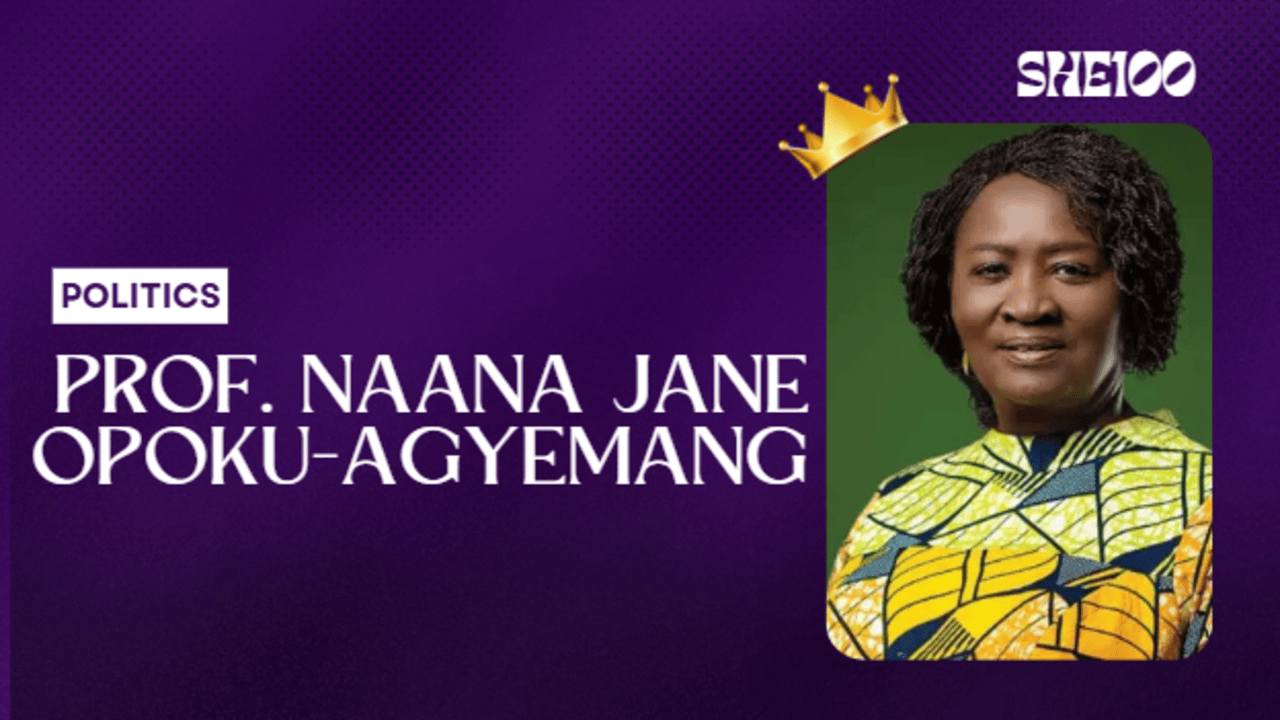
On the morning of January 7, 2025, Prof. Naanamade history at the Independence Square in Accra that was been seen for the first time in Ghana, in its sixty-seven years as an independent nation. She became the first woman to take the oath of office as Vice President of the Republic of Ghana.
Professor Naana Jane Opoku-Agyemang — an academic, educator, literary scholar, former Minister of Education, and was the first female Vice President in Ghana's history. But to understand what January 7, 2025 truly meant, you have to understand the decades that preceded it.
Because this was not a sudden arrival, this was the culmination of a life spent quietly and consistently breaking every ceiling that dared to exist above her.
She has said it herself, in a line that captures the spirit of everything she represents: "Making history is gratifying; but what really matters is what you do with it."
It is the philosophy of a woman who has never treated her firsts as destinations. For her, they have always been starting lines.
From Cape Coast to the World: The Education of a Pioneer
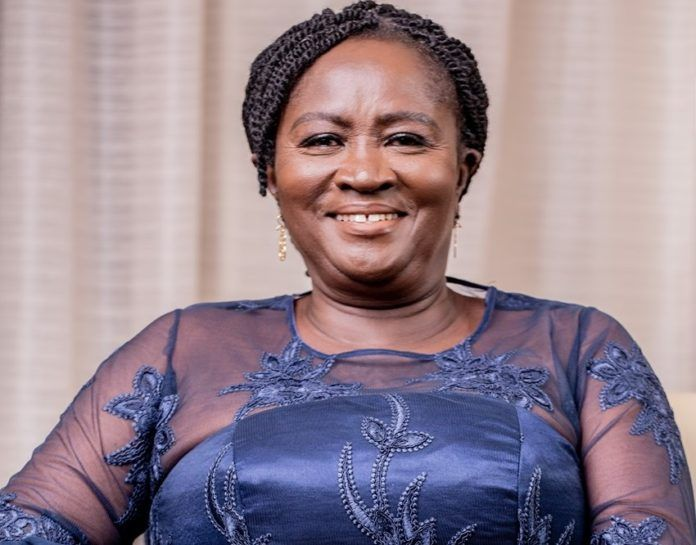
Born on November 22, 1951, in Komenda in Ghana's Central Region, an ethnic Fante who grew up in Cape Coast, Naana Jane Opoku-Agyemang came of age in a Ghana that was still finding its footing as a newly independent nation.
For women, the possibilities were narrower than they were for men, but that narrowness was not something the young Naana accepted as permanent.
She attended Anglican Girls' School in Koforidua and Aburi Presby Girls' School before completing her secondary education at Wesley Girls High School in Cape Coast.
She then enrolled at the University of Cape Coast, graduating in 1977 with a Bachelor of Arts in English and French. She eventually furthered her studies with a Diploma in Advanced Studies in French from the University of Dakar in Senegal, after which she went to York University in Toronto, Canada, where she earned her Master's degree in 1980 and her PhD in English Literature in 1986.
She came back home to Ghana in 1986 and joined the faculty of the University of Cape Coast, the same institution where she had once been a student. And over the next two decades that passed by, she climbed every rung of academic leadership available to her: Head of the Department of English, Dean of the Faculty of Arts, Founding Dean of the School of Graduate Studies and Research, and Warden of the student hostel.
She was also a two-time Fulbright Scholar and was elected as Ghana's representative to the Executive Board of UNESCO in October 2009.
In 2008, she became the first woman ever appointed Vice-Chancellor of a public university in Ghana, leading the University of Cape Coast until 2012.
It was a historic appointment and characteristically, she treated it as work to be done rather than a trophy to be polished. Her tenure was marked by significant advances in higher education and a consistent emphasis on women's inclusion in academic leadership.
She later served as Chancellor of the Women's University in Africa in Harare, Zimbabwe, from 2018 to 2024, and as President of the Forum for African Women Educationalists, positions that showed the continent, not just Ghana, was paying attention.
The Minister Who Went to the Classrooms Under Trees
In February 2013, President John Dramani Mahama appointed her as Ghana's Minister for Education, making her the first woman to hold that portfolio in the country's history.
She arrived at the ministry not as a politician learning on the job, but as an educator with decades of experience who understood, from the inside, what Ghanaian education needed and what it lacked.
Her tenure was defined by a commitment to reach the children that the system had not yet reached. She championed the abolition of schools operating under trees, makeshift structures that had stood for years as symbols of the state's failure to provide dignified learning environments for its youngest citizens.
Modern school buildings replaced them, free textbooks were distributed to basic education students and school uniforms were provided. The Inclusive Education Policy of 2015 was also introduced during her tenure, aimed at ensuring that children with special needs were not educated at the margins of the system but within it.
She was also a consistent advocate for girls' education, understanding, as someone who had grown up in Ghana in the 1950s and 1960s, exactly what it cost a girl to be kept out of school, and exactly what it gave her to be allowed in.

Her advocacy went beyond policy: she spoke at international forums about child marriage, domestic violence, and the social barriers that continued to interrupt girls' education across the continent, making clear that curriculum reform without cultural reform was incomplete.
When her ministerial tenure ended in January 2017, she left behind a transformed education landscape and a legacy that Ghanaians across party lines acknowledged. She also left behind a reputation, earned through action rather than rhetoric, as someone who showed up for the people the system had forgotten.
History Made, History Lived
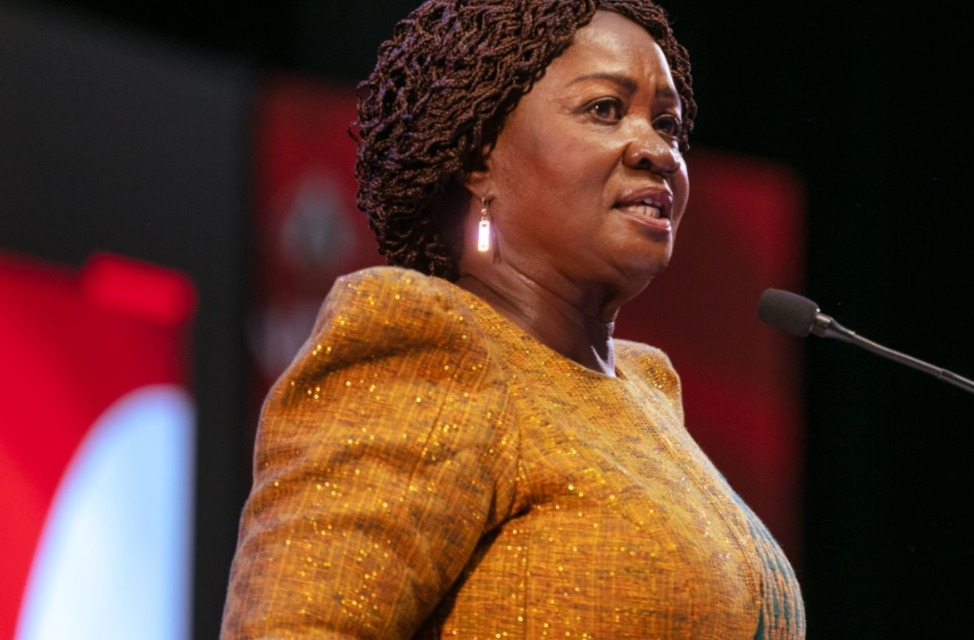
In July 2020, John Mahama picked her as his running mate for the presidential election, making her the first woman nominated as vice-presidential candidate by a major political party in Ghana's history.
The NDC lost that election, however she did not retreat nor give up. In March 2024, the NDC National Executive Committee officially endorsed her again as running mate. She campaigned alongside the presidential candidate with the same quiet conviction that had defined every chapter of her career, no attacks on opponents, no performative fury, just a record of service and a vision of what Ghana could be.
The NDC eventually won the December 2024 presidential election, and on January 7, 2025, the woman who had been breaking ceilings since 1986 broke the highest one yet.
Her intensive campaigning in coastal communities and her home region, the Central Region, had helped the party win nine out of sixteen regions in Ghana.
She had not just been a symbolic running mate. She had been a strategic asset and a campaigner of substance.
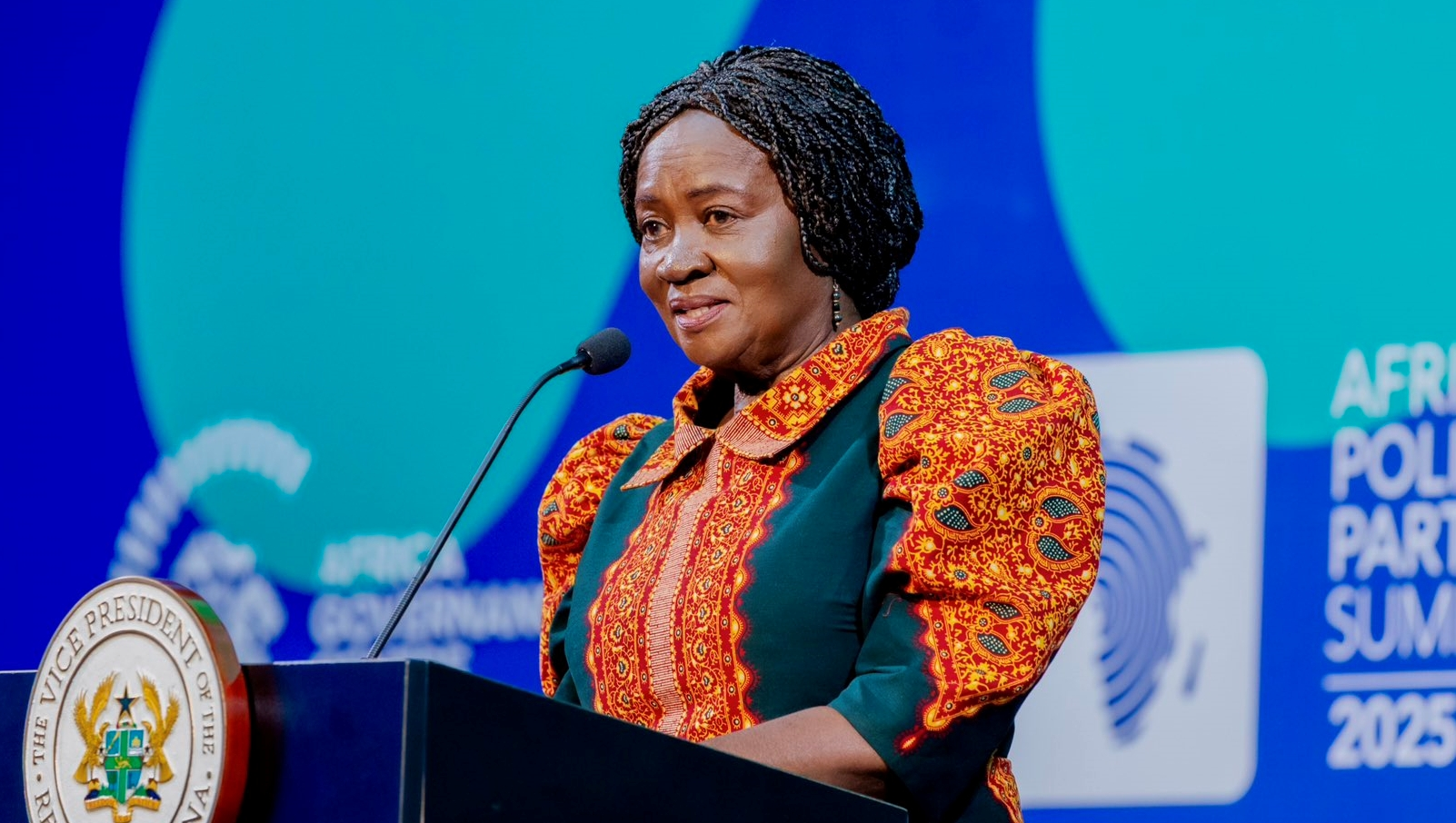
As Vice President, she has always moved swiftly. On International Women's Day 2025, she stood at the Women's Dialogue in Accra and called for urgent action to combat violence against women, demanding that stakeholders accelerate efforts toward women's rights, equity, and empowerment.
She called for tackling the social barriers that continue to hinder women's progress: child marriage, domestic violence, sexual abuse, and witchcraft accusations. These are not abstractions to her. They are the forces she has spent a lifetime pushing against.
She is married to Mr. Badu Opoku-Agyemang. They have three children, two sons, Kweku and Kwabena, and a daughter, Maame Adwoa.
She is a Life Fellow of the Commonwealth of Learning, a Fellow of the Ghana Academy of Arts and Sciences, and holds honorary degrees from the University of the West Indies and Winston-Salem University.
Ghana's first female Vice-Chancellor. Ghana's first female Minister of Education. Ghana's first female Vice President. The woman who holds all three of those titles is not resting on any of them. She is too busy doing what she has always done, showing up, building, and proving, by example, that history is not a monument. It is a mandate for her