NFF President Gusau Quits Amidst Staggering N17bn Fund Scandal!
Nigeria Football Federation President Ibrahim Gusau has resigned amid scrutiny over a N17 billion intervention fund and widespread criticism of national team performance. His decision, followed by the General Secretary's resignation, comes as security agencies investigate fund disbursement and national teams face significant qualification failures.
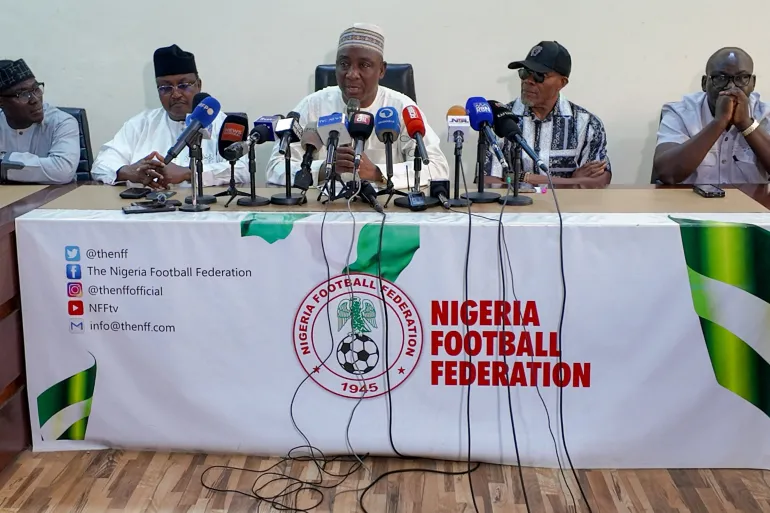
The President of the Nigeria Football Federation (NFF), Ibrahim Gusau, has officially resigned from his position.
This decision, announced at a press conference in Abuja, came amidst intense scrutiny over the federation's management of a N17 billion Federal Government intervention fund and growing calls for a change in leadership.
Gusau stated that his resignation followed extensive consultations with his family, friends, and various stakeholders, emphasizing his desire to continue contributing to Nigerian football based on his experience and relationships within African football.
The resignation of Gusau, who was elected NFF president in September 2022, was closely followed by the confirmation that General Secretary Mohammed Sanusi had also stepped down.
His tenure was originally expected to run until the federation's elective congress scheduled for September 27 in Lafia, Nasarawa State, but its status now remains uncertain, with reports suggesting the possible establishment of a normalization committee to oversee NFF affairs.
A significant factor leading to the leadership changes was the controversy surrounding the N17 billion intervention fund, which was approved by the Federal Government in 2024 to settle outstanding payments to national team players and officials.
Security agencies reportedly initiated an investigation into the use of these funds, requiring senior NFF officials to provide documents related to their disbursement.
Additionally, a fact-finding committee's report on the management of national teams raised concerns, including allegations of officials influencing player invitations to national team camps.
Further pressure mounted on the NFF leadership due to the disappointing performance of Nigeria's national football teams.
The Super Falcons failed to qualify for the 2027 FIFA Women’s World Cup, marking the end of Nigeria's unbroken participation since the competition's inception in 1991.
Similarly, the Super Eagles did not qualify for the 2026 FIFA World Cup, and Nigeria’s age-grade teams also experienced setbacks in their respective World Cup qualification campaigns, contributing to the demand for leadership accountability within the federation.