Music Icons Shaped Blaxploitation's Rise
The "Sounds Of Blaxploitation" series delves into the genre's distinct musical landscape, with a particular focus on inner-city coming-of-age dramas like "Together Brothers." This article explores how Barry White, known for his soul stylings, crafted a gritty, impactful score for the 1974 film, a score that ultimately outshined the movie itself and even found new life in modern music.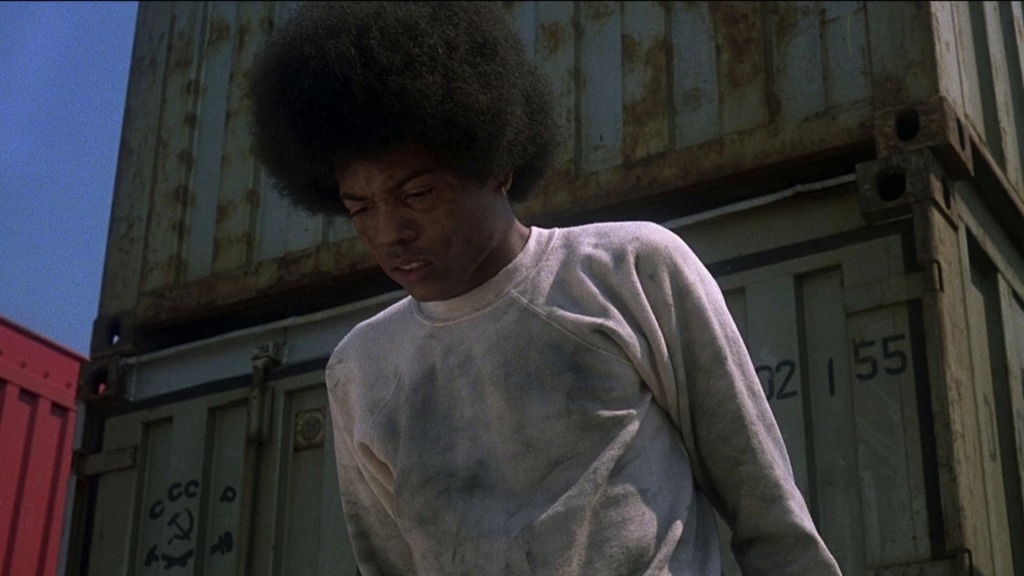
The year-long series, "Sounds Of Blaxploitation," explores the pivotal music that defined the Blaxploitation genre, connecting the era's soundscapes to the films that showcased them. Beyond the iconic portrayal of fierce protagonists, the Blaxploitation age also encompassed a distinct subgenre of inner-city coming-of-age dramas. Films such as "The Education Of Sonny Carson," "A Hero Ain’t Nothin’ But A Sandwich," and "Cornbread, Earl And Me"—which notably featured a young Laurence Fishburne—served as gritty, harrowing adolescent message movies set in challenging, crime-ridden urban environments. These narratives often depicted dark-skinned teenagers learning to navigate and survive their harsh surroundings, akin to "ABC Afterschool Specials in the hood."
Among these particular films, two stand out for their exceptional musical scores: "Together Brothers" and "Youngblood." Both pictures feature young, outspoken gangs who take justice into their own hands, targeting drug pushers, murderers, and other malevolent figures that plagued their neighborhoods. Central to these stories is a young, hotheaded protagonist, often an inexperienced juvenile actor, who must mature quickly to protect their community.
The 1974 urban thriller "Together Brothers" exemplifies a Blaxploitation/teensploitation fusion, directed by the veteran William Graham, known for his earlier work on the interracial high school romance "Honky." This film presents a minority-populated reinterpretation of Fritz Lang’s seminal mystery "M." The plot centers on a Galveston gang, led by H.J. (Ahmad Nurradin), who seek vengeance for the murder of Mr. Kool (Ed Bernard), the neighborhood’s sole virtuous police officer, a crime witnessed and traumatized by a silent young boy (Anthony Wilson). The killer is characterized by a sinister, whistle-laden theme, a clear homage to Peter Lorre’s iconic whistling psycho in "M," that plays whenever the villain appears.
Given that "Together Brothers" was set in the desolate streets of Galveston, 20th Century Fox enlisted Galveston-born Barry White to compose the score. White, then a rising R&B star on their 20th Century Records label, was renowned for his opulent champagne-soul style, which he crafted for himself and his backing group, Love Unlimited. For "Together Brothers," however, White set aside his usual romantic flair, immersing himself in the grittier, raw essence of the film, drawing on his own experiences growing up in Watts, South Central Los Angeles.
The main title theme, "Somebody’s Gonna Off The Man," is a quintessential Blaxploitation track. It’s an anxious yet funky composition that foreshadows the film’s events while delivering potent social commentary, echoing the sentiments of the era. White, making only two vocal appearances on the score, pours emotion into lines like: "In the name of justice / In the name of peace / When will this killing and fighting ever cease?" Collaborating with longtime arranger Gene Page, who also scored the Afro horrorshow "Blacula," and his Love Unlimited Orchestra, White produced an angsty, action-packed score that is notably more lush and polished than the movie itself.
Despite its cast of local, largely inexperienced non-professional actors, which contributed to its somewhat predictable and problematic nature, the film's legacy endures in an unexpected way. A montage depicting H.J. and his gang investigating the streets, accompanied by the energetic "Theme From Together Brothers," was later sampled by Quad City DJ’s for their Miami bass anthem, "C’mon N’ Ride It (The Train)."