Global Shift: New Survey Reveals China and Xi's Favourable Edge Over US and Trump
Pew Research reveals China now outranks the U.S. in global favorability for the first time in 20 years, as 25 of 36 countries surveyed favor Beijing over Washington.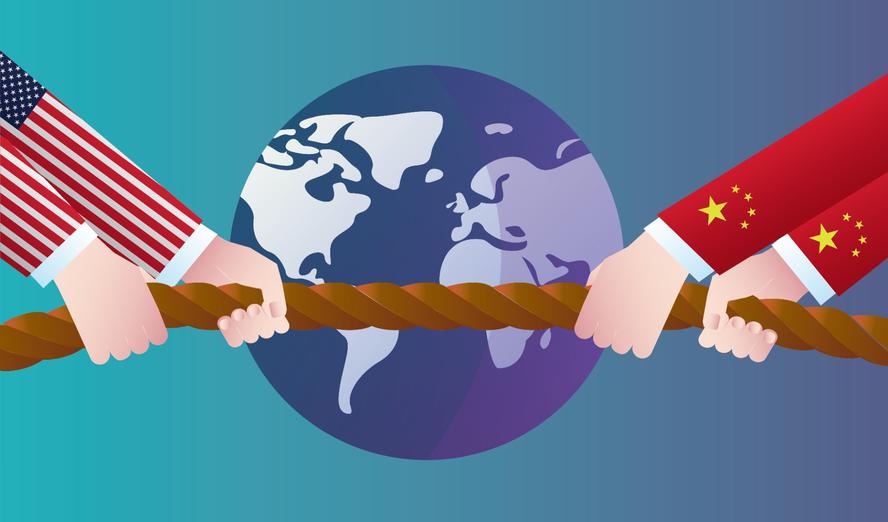
A significant geopolitical shift in global opinion has been revealed by a new poll from the Pew Research Center, indicating that for the first time in approximately two decades of tracking, China is now viewed more favourably than the United States by a majority of surveyed countries.
This remarkable turn, driven in part by escalating tensions between the Trump administration and traditional U.S. allies, reflects a changing international landscape.
The comprehensive poll conducted between February and May, covered 36 countries and territories, including crucial U.S. neighbors like Canada and Mexico.
The findings show that in 25 of these 36 regions, people hold more favourable views of China than the U.S. Conversely, only six countries which includes Israel, Japan, India, South Korea, the Philippines, and Poland, still perceive the U.S. more positively than China. Though even in these nations, views of the U.S. have diminished in recent years.
Beyond country-level favorability, the survey also highlighted a shift in leadership perception. Chinese President Xi Jinping is viewed more positively than U.S. President Donald Trump in 22 out of the 36 surveyed countries and territories, including Canada, Mexico, and key European powers such as France, Germany, and the U.K.
However, the poll also noted a general trend of low confidence in both leaders across many of these nations.
Laura Silver, associate director of Pew’s Global Attitudes Research and one of the study’s researchers, emphasized the unprecedented nature of these findings. She explained that while views of Beijing and Washington have historically been similar at times, China has never before held a significantly more favorable global standing than the U.S.
This shift coincides with the COVID-19 pandemic receding as a dominant global issue and a general souring of international perceptions towards the U.S.
Several factors are attributed to this decline in U.S. favourability. Silver pointed to a direct correlation between the outbreak of the U.S.-Israel war against Iran, Trump's demands to control Greenland, the American military raid capturing Venezuela's then-leader Nicolás Maduro and the U.S. handling of the Israeli-Hamas war in Gaza.
These actions, perceived negatively internationally, have led to decreased confidence in the U.S.'s role in contributing to global peace and stability, and a notable drop in confidence in Donald Trump's leadership.
Conversely, China appears to have benefited not only from the fading memory of the pandemic but also from direct comparison with the U.S. Researchers suggest that China is increasingly seen as a more reliable partner in many regions and more likely to contribute to global peace and stability.
This perception has translated into drastic shifts in opinion even among traditional U.S. allies.
For instance, Canada, a long-standing ally, saw its positive views of the U.S. plummet from 57% in 2023 to just 33% in the new survey. Over the same period, Canadian favourable opinions of China surged from 14% to 44%.
This dramatic shift in Canada followed trade tensions, including tariffs imposed by Trump on Canadian goods, and his provocative claim that Canada could become the “51st state.”
Major European countries, including France, Germany, Spain, Italy, Sweden and the Netherlands, have similarly recalibrated their opinions concerning the world’s two largest economies.
Even in the U.K., where 6 in 10 held positive views of the U.S. in 2023, opinions of China and the U.S. are now comparable which is a stark contrast to the 32-percentage-point lead Washington enjoyed three years prior.
Despite China's rising favorability, the U.S. still maintains a lead when it comes to government respect for personal freedoms.
However, this gap is narrowing significantly, primarily because people in nearly every surveyed country have become less likely to believe that the U.S. government respects its own people’s personal freedoms since 2021, the last time Pew asked this specific question.
The study involved surveying over 42,000 individuals across 35 countries, plus the West Bank and East Jerusalem, with margins of error ranging from 2.3 to 5.5 percentage points.