Mark Zuckerberg’s biggest AI bet isn’t a Model; It’s a person: Alexandr Wang.
Meta put $14.3B into Scale AI and tapped 28-year-old founder Alexandr Wang to run its AI push. Here’s how he got there, and what it means for Meta.
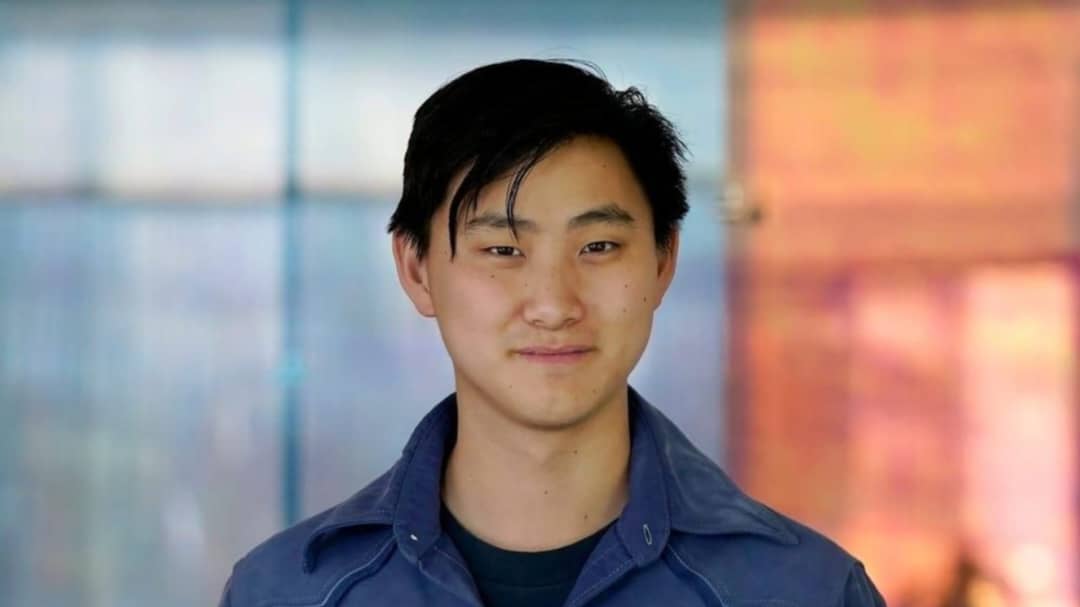
If you’ve been watching the AI race lately, you already know the vibe: every week there’s a new model, a new benchmark flex, and a new “this changes everything” headline. Meta’s move in 2025 cut through that noise in a different way, because it wasn’t just about shipping another chatbot feature or tweaking an algorithm.
Meta dropped about $14.3 billion into Scale AI and, in the same breath, pulled Scale’s 28-year-old founder, Alexandr Wang, into a top role in its “superintelligence” push.
That combo matters because it’s not a normal “big company invests in hot startup” story. Meta’s deal gave it a 49% stake in Scale AI and valued the company at around $29 billion, while Scale stayed independent and Wang moved over to lead Meta’s new superintelligence effort. It’s the kind of strategy that says, “We’re not just buying tools, we’re reorganizing the whole machine.”
So Who Is Alexandr Wang, And Why Does Meta Care This Much?
Wang’s background reads like the origin story of someone who grew up around science and decided to speedrun Silicon Valley. Reuters reported that he was born in Los Alamos, New Mexico, to Chinese immigrant parents who were physicists, and that he later dropped out of MIT to co-found Scale AI.
That detail matters less as “cute biography trivia” and more because it hints at how he thinks: technical enough to speak the language, but wired for building real systems that actually ship.
Scale AI started in 2016, and the pitch was simple in the way the best business ideas usually are: modern AI needs huge amounts of training data, and a lot of that data needs to be labeled correctly or the model learns nonsense.
The Associated Press notes Wang co-founded Scale with Lucy Guo while he was a student, and that they got early backing from Y Combinator. The “dropout” headline is easy clickbait, but the more important point is that Wang built a company around one of AI’s least glamorous problems, and turned that into a power position.
The Secret Sauce Isn’t Flashy: It’s Data (And The People Behind It)
Models don’t train themselves on perfect information that’s ready to go. Someone has to clean the data, structure it, label it, and check it, especially when the goal is high accuracy.
Scale’s business is basically “AI’s operations layer”, the stuff that’s not fun to tweet about, but is painfully real when you’re trying to train serious systems.
Reuters describes Scale as a company that provides accurately labeLled data, calling it pivotal for training sophisticated tools, and it notes Scale used subsidiary platforms like Remotasks and Outlier to recruit and manage gig workers who do labeling work.
This is why Scale became so embedded in the AI ecosystem: if your model is only as good as what it learns from, then your pipeline for getting quality training data is not a side quest, it’s the main storyline.
Scale AI Didn’t Just Grow, It Became Infrastructure
Scale’s rise wasn’t a “cute startup becomes medium-sized company” arc. In May 2024, Reuters reported Scale raised $1 billion in funding at a valuation of nearly $14 billion, with backers that included Nvidia, Amazon, and Meta.
Scale itself also posted that it closed a $1B financing transaction at a $13.8B valuation, describing it as a mix of primary and secondary financing led by existing investor Accel.
By the time Meta made its 2025 move, Scale wasn’t just “another AI startup.” It was a company that had already become part of the supply chain for modern machine learning, the same way cloud computing became part of everyone’s stack even if they didn’t think of themselves as “cloud companies.”
Why Meta’s Deal Is A Loud Message To Everyone Else
Meta’s investment wasn’t just big in absolute dollars; it was big in what it implied. According to AP, Meta called it a “strategic partnership and investment,” and Scale said the $14.3B investment put its market value at over $29 billion, with Meta holding a 49% stake.

Reuters similarly wrote that the deal values Scale at $29 billion and said Meta would take 49% for $14.3B, with the main driver being to secure Wang to lead the new superintelligence unit.
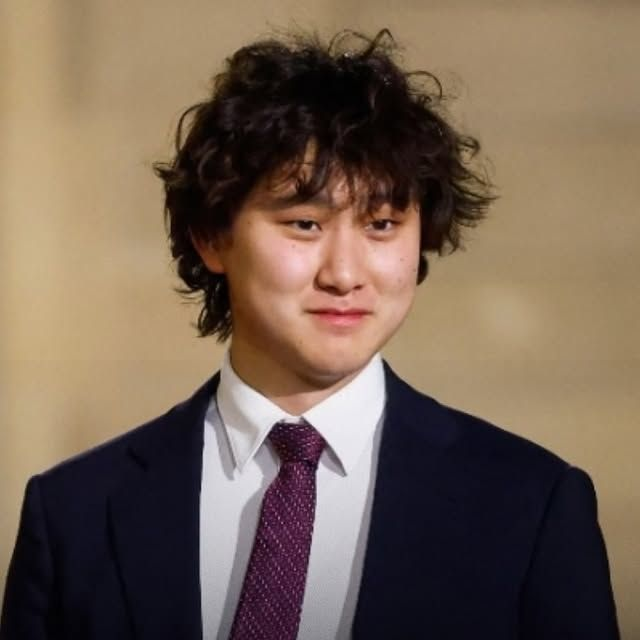
Meta also didn’t fully “absorb” Scale the way big tech sometimes does with acquisitions. Scale stayed independent, and Wang remained on its board, while Scale named Jason Droege as interim CEO. So Meta gets deep access and influence without triggering a classic “we bought you and now you’re a product team” situation.
What is Meta Superintelligence Labs, And What is Wang Actually Running?
In June 2025, Reuters reported Meta reorganized its AI efforts under a new division called Meta Superintelligence Labs, headed by Wang, who would be the chief AI officer of the initiative. The name “superintelligence” sounds like sci-fi, but structurally it’s a very corporate idea: unify teams that used to be scattered across research, infrastructure, and product so they stop moving like separate planets.
This matters because big companies don’t usually lose because they can’t hire smart people. They lose because their teams don’t line up, their incentives don’t match, and their systems move slower than the competition. A re-org is Meta basically admitting, “The old setup isn’t fast enough for where AI is going.”
Meta is making it clear that AI is no longer just one department among many. By putting Wang at the center of this push and building a new division around the superintelligence mission, Meta is trying to move faster, recruit harder, and coordinate better than it has recently managed.
If it works, Wang becomes the person who helped Meta stop feeling like it was chasing and start feeling like it was setting the pace. If it doesn’t work, this will be remembered as one of the most expensive “we tried to reboot the strategy” moves in modern tech.
Either way, the real headline isn’t just that a 28-year-old got promoted, it’s that Meta just told the world, in $14.3 billion worth of volume, that it’s done playing around.