M-Pesa and ADI Are Reshaping Africa’s Digital Money Through Stablecoin Payments
M-Pesa’s partnership with the UAE-based ADI Foundation introduces stablecoin payments across eight African nations. Here’s what it means for users, businesses, and the future of digital finance in Africa.
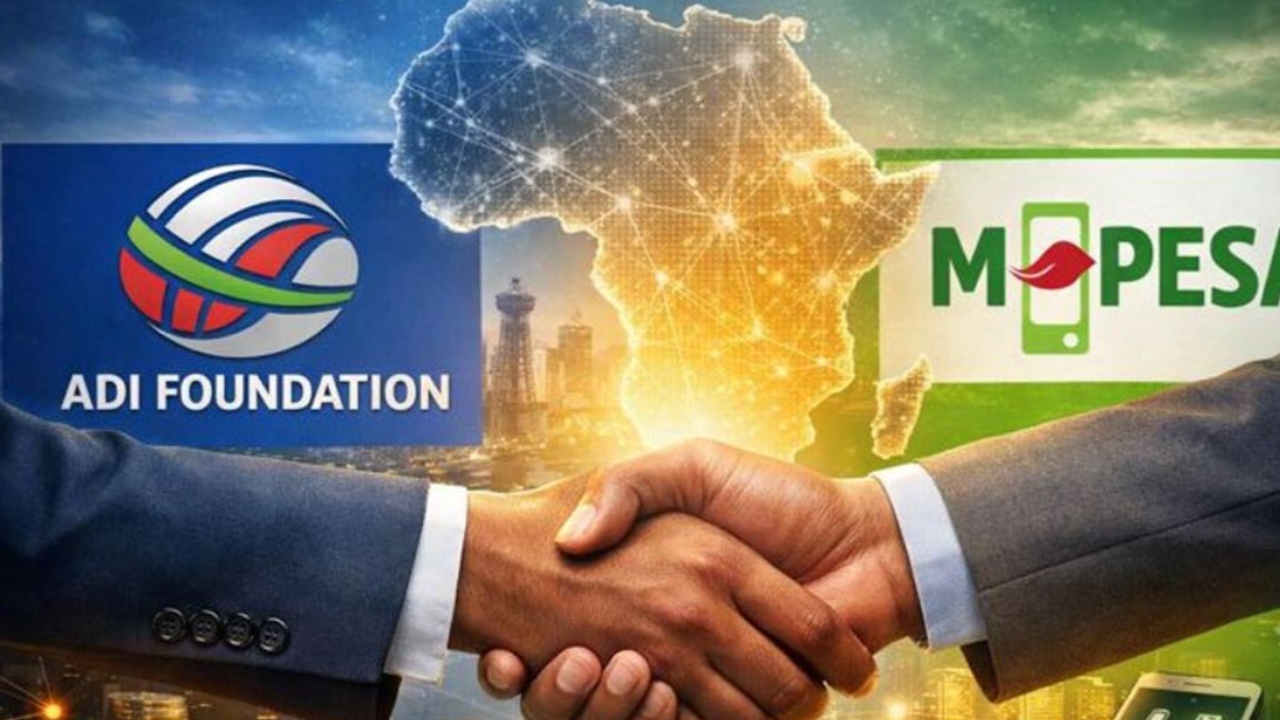
Africa's financial story is witnessing a strategic shape since the start of 2026, a shift born out of necessity and expansion of the fintech space.
We've all seen the growth of Africa's fintech and one can truly say it is booming. From cash-heavy economies to mobile money revolutions, great minds of the continent have repeatedly shown that innovation does not always follow traditional paths.
M-Pesa, launched in Kenya in 2007, stands as one of the clearest examples of this reality. M-Pesa began as a simple mobile money solution and has grown into a financial backbone for millions over the years in east Africa and other parts of the continent.
Now, with its new partnership with the UAE-based ADI Foundation, M-Pesa appears poised to take another decisive step, this time into blockchain-powered stablecoin payments that could reshape how value moves across borders of the continent.
M-Pesa, ADI Foundation, and the Meaning Behind the Partnership
M-Pesa is more than a mobile wallet, it was founded by Safaricom and Vodafone, the platform was designed with the sole aim of solving a very practical African problem and that was how to move money safely and efficiently without relying on traditional banks.
Over the past years, it has evolved into a financial ecosystem serving more than 60 million users across multiple African countries, enabling payments, savings, credit, and everyday transactions through a mobile phone.
The ADI Foundation, on the other hand, operates from a very different context, based in Abu Dhabi, the foundation is backed by Sirius International Holding, part of the IHC conglomerate. Its mission is centered on building institutional-grade blockchain infrastructure for governments and financial institutions, particularly in emerging markets.
Unlike the speculative side of crypto that dominates headlines, ADI focuses on compliance, security, and real-world utility.
The partnership between M-Pesa Africa and the ADI Foundation is not accidental or just for flashy headlines. It fully reflects a shared understanding between both partners showing that Africa is already digitally fluent in payments, but it still faces structural barriers such as currency volatility, expensive cross-border transfers, and limited access to global financial rails.

By integrating ADI Chain into M-Pesa’s existing platform, both organizations aim to create new digital rails that connect everyday users and small businesses to faster, more stable, and more inclusive financial services.
This partnership is about extending M-Pesa’s original promise, financial access without friction, into a new technological era.
Stablecoin Payments Explained: What’s Being Built and Why It Matters

To understand the importance of this collaboration, it is necessary to understand stablecoins and why they are central to the deal.
Stablecoins are digital currencies designed to maintain a stable value by being pegged to a real-world asset, such as a fiat currency. In this case, the partnership will introduce a UAE dirham-backed stablecoin, issued by First Abu Dhabi Bank and IHC under the oversight of the UAE Central Bank.

This matters because volatility has long been one of the biggest barriers to using digital currencies for everyday transactions. By anchoring value to a regulated and stable currency, stablecoins aim to combine the speed of blockchain technology with the predictability of traditional money.
Through the ADI Chain, a Layer 2 blockchain network built specifically for regulated institutions—M-Pesa users in Kenya, the Democratic Republic of Congo, Egypt, Ethiopia, Ghana, Lesotho, Mozambique, and Tanzania will gain access to blockchain-powered payments without needing to understand blockchain itself.
The technology will run quietly in the background, while users experience faster settlements, lower transaction costs, and improved cross-border transfers.
For individuals and small businesses, the benefits are tangible. Cross-border payments, which are often slow and expensive in Africa, will now become near-instant and more affordable.
Stablecoin transactions can also act as a hedge against local currency volatility, offering users a way to store and move value with greater confidence. For small traders, freelancers, and SMEs operating across borders, this would mean improved cash flow, pricing stability, and expanded access to regional and global markets.
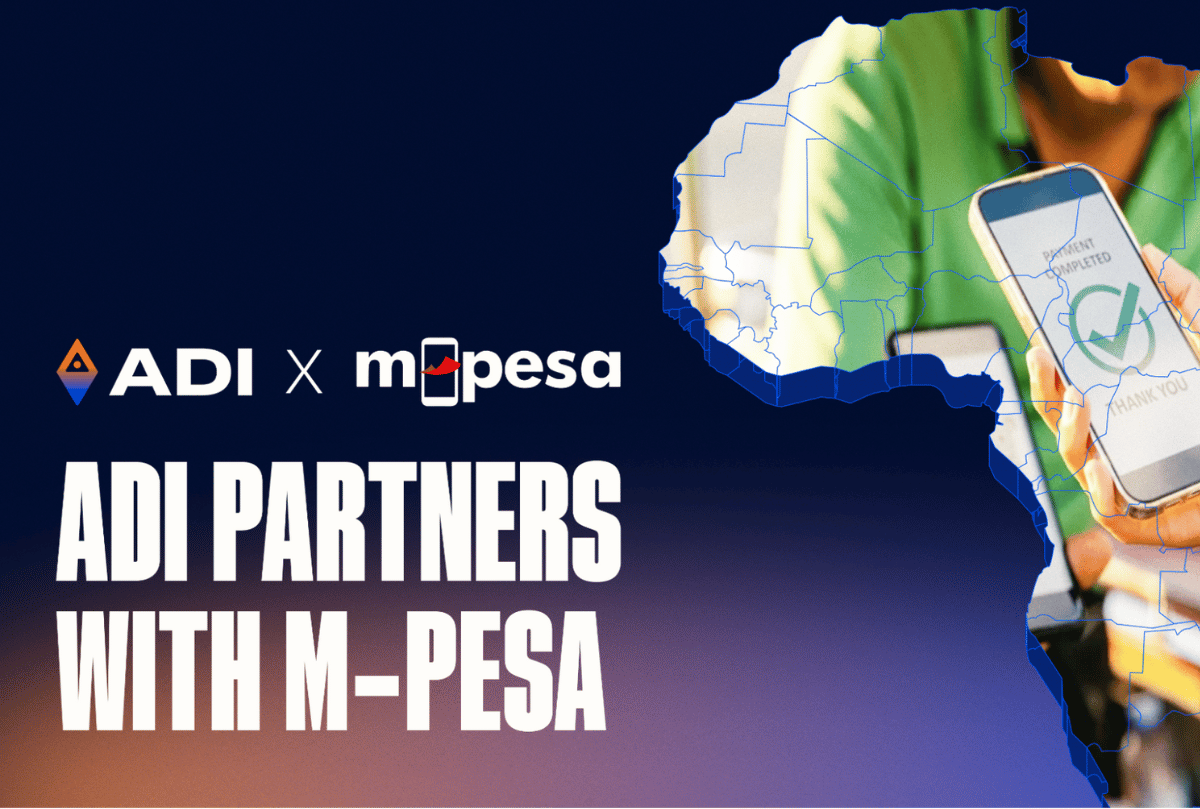
From a strategic perspective, partnerships like this are rarely one-sided. M-Pesa strengthens its infrastructure and future-proofs its platform, while ADI Foundation gains access to one of the largest and most trusted mobile money user bases in the world. Shareholders and investors benefit from new revenue streams and expanded use cases, while regulators see a model that blends innovation with oversight rather than bypassing it.
Africa’s relevance in this equation cannot be overstated. Despite progress in mobile money, a significant portion of adults in sub-Saharan Africa remain outside traditional banking systems. By merging mobile money familiarity with compliant blockchain infrastructure, this partnership addresses both access and scale, two of the continent’s most persistent financial challenges.
Take Away from Africa’s Stablecoin Moment
The M-Pesa–ADI Foundation partnership is not just a technology story; it is an act of sincere reshaping and shows lessons to learn in how financial systems evolve.
Payments do not change overnight, and meaningful innovation often builds on what people already trust and use. M-Pesa has earned that trust for over nearly two decades now. Blockchain, through ADI Chain, now becomes an invisible upgrade rather than a disruptive replacement.
For everyday users, the key takeaway is opportunity. Stablecoin payments promise faster transactions, better value stability, and easier participation in digital commerce.
For entrepreneurs and small businesses, this shift could unlock new markets and reduce long-standing inefficiencies in cross-border trade and looking at the broader ecosystem, it signals that Africa is not merely adopting global financial trends, it is helping shape how they are applied in real-world contexts.
As rollout plans begin, the success of this initiative will depend on execution, education, and continued regulatory alignment. But the direction is clear and everyone can see and read it that stablecoin payments, when thoughtfully implemented, can serve as a bridge between traditional mobile money and the next phase of digital finance.
In that sense, this partnership is less about novelty and more about continuity, an evolution of Africa’s financial story, written with new tools but guided by the same principle that made M-Pesa successful in the first place: making money work for everyone.