LIRR Shutdown Threat: New York Braces for $61 Million Daily Loss as Hochul Under Pressure
A potential Long Island Rail Road strike threatens to halt operations, causing daily economic losses of up to $61 million and disrupting 270,000 daily riders. The crisis presents a significant political test for Governor Kathy Hochul, while the MTA prepares limited shuttle services to mitigate commuter chaos.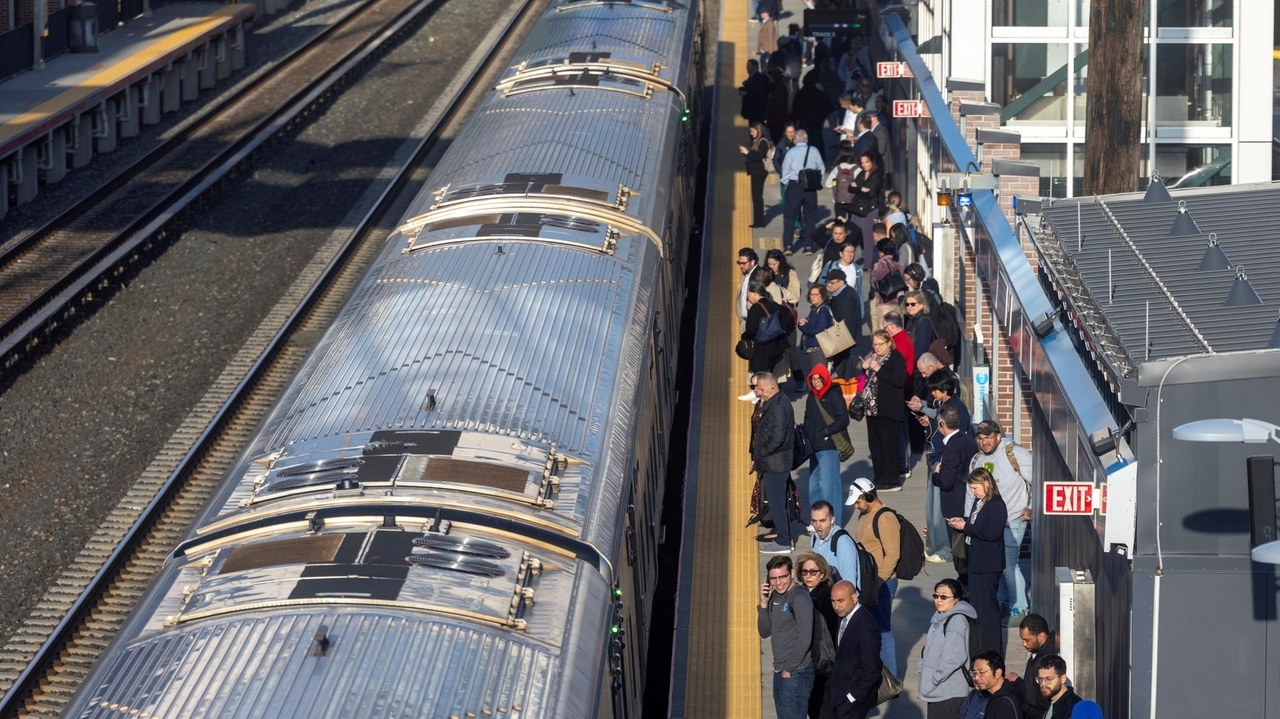
A looming Long Island Rail Road (LIRR) strike, triggered by a failure to reach a wage agreement between MTA and union leaders, threatens to halt operations just after midnight on Friday. Such a work stoppage at the nation’s largest commuter railway would throw the metropolitan area into chaos, disrupting an estimated 270,000 daily riders, causing severe congestion, and potentially doubling commute times into Manhattan, according to a Newsday analysis. The Metropolitan Transportation Authority has warned commuters to avoid nonessential travel and consider working from home if the strike materializes.
The economic ramifications of an LIRR strike are projected to be substantial, with State Comptroller Thomas P. DiNapoli estimating a daily cost of up to $61 million for the metropolitan area’s economy. This figure, though $9 million lower than the Long Island Association’s (LIA) $70 million per day estimate, highlights widespread financial impact, including reduced worker productivity, decreased retail sales, and significant losses in tourism revenue. Business leaders on Long Island, including Kyle Strober of the Association for a Better Long Island, concur that the economic fortunes of Nassau and Suffolk counties are intricately linked to New York City and the efficiency of mass transit. The timing, particularly the proximity to Memorial Day, which marks the unofficial start of the summer tourism season, would exacerbate these financial consequences, as nearly half of Long Island’s visitors, many relying on mass transit, flock to popular South Shore destinations like Long Beach and Jones Beach. Mitch Pally, interim CEO of Discover Long Island, emphasized the “dramatic economic negative impact” and the loss of sales tax revenue for the state and counties.
The strike threat also presents an unexpected political challenge for Governor Kathy Hochul in an election year. Initially, Hochul maintained a distance from the contract disputes between the MTA and the five labor unions, urging both sides to find a “middle ground.” However, as the deadline neared, she became more directly involved, phoning into negotiation meetings on Friday to press for a settlement, with an aide stating that “getting a deal requires both sides to work together, including labor. Nobody wins in a strike — riders will suffer and thousands of workers will lose out on wages they need.” As the effective controller of the MTA, the political fallout of a strike would primarily rest on Governor Hochul, as veteran Democratic strategist Hank Sheinkopf noted, “Strike happens, she wears it. Strike doesn’t happen, she wears it.”
Political experts suggest that the duration of any work stoppage would significantly impact its political consequences. While a brief strike might be manageable, a prolonged one lasting a week or two would lead to substantial public discontent, putting pressure on elected officials. Michael Dawidziak, a Long Island Republican strategist, warned that unions risk appearing greedy amidst rising consumer prices, yet voter anger would likely be directed at elected officials rather than labor. Both Lawrence Levy of Hofstra University and Christopher Malone of Farmingdale State University advised against Hochul distancing herself, seeing it as an opportunity to reaffirm strong leadership and engage her electoral base. Despite the LIRR collective bargaining process being governed by federal law, New York’s federal representatives, including Rep. Tom Suozzi and Rep. Andrew Garbarino, stressed that the negotiations belong with the state, the MTA, and the unions.
In anticipation of a shutdown, the MTA has outlined limited contingency plans for the 270,000 daily LIRR commuters. They plan to provide limited, free shuttle bus service on weekdays from six Long Island locations to Queens subway transfer points. Nassau commuters will have more options than those in Suffolk. During morning peak hours (4:30 to 9 a.m.), buses will depart every 10 minutes from LIRR stations in Bay Shore, Huntington, Ronkonkoma, Hempstead Lake State Park, Hicksville, and Mineola. These buses will transport riders to the Howard Beach-JFK Airport A subway station or the Jamaica-179 St. F subway station. Evening peak hours (3 to 7 p.m.) will see reverse service from Queens to Long Island, with limited reverse peak service also available. The MTA estimates this shuttle service could cost between $325,000 and $550,000 daily, utilizing 165 to 275 buses.
Beyond the MTA’s shuttle service, other transportation options exist, though with considerable caveats. NICE Bus services connect to various Queens subway lines (E, F, A, 7, J, Z) and the Jamaica Bus Terminal, and its ridership is expected to surge. Car drop-offs at specific Queens subway stations (Far Rockaway-Mott Avenue A, Kew Gardens-Union Turnpike EF, Ozone Park-Lefferts Boulevard A, Sheepshead Bay BQ, and Woodhaven Boulevard J) that are close to Long Island roadways might be feasible, but AAA warns of significantly increased traffic on already congested westbound roads during rush hour. Rideshare services, while an option, are considerably more expensive than public transportation, and anticipated surge pricing would drive costs even higher, with examples showing standard fares from Grand Central to Hicksville exceeding $120.