Mystical Insights: Unraveling the Evil Eye's History and Hollywood's Secrets to Protection
The ubiquitous 'evil eye' talisman, a powerful symbol across diverse cultures, is actually a protective amulet designed to ward off a curse believed to be cast by envious gazes. This detailed article explores the history of this ancient belief, its varied manifestations, and the myriad cultural methods, from eye-shaped talismans to hamsa hands and traditional rituals, used to protect against its malevolent influence.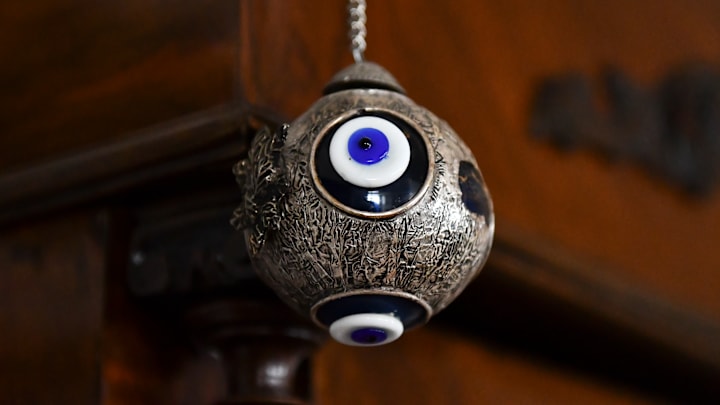
The distinctive blue-and-white eye-shaped talisman, commonly seen on celebrities, in markets, or as personal adornments, is widely known as the “evil eye.” However, this popular term refers not to the curse itself, but to a protective amulet designed to guard against it. These amulets are called "evil eyes" due to their perceived ability to deflect the negative energy emanating from the actual curse.
At its core, the evil eye is a powerful curse believed to be cast upon an individual through an envious gaze. This ancient folk belief suggests that misfortune can befall someone who is the object of another's jealousy, particularly concerning their success, wealth, or general good fortune. The symptoms attributed to this curse are varied and debilitating, often including emotional distress, insomnia, fever, persistent headaches, profound lethargy, and nausea. Beyond human suffering, the evil eye was also believed to inflict harm upon a wide array of entities, from vulnerable children to crucial crops and even machinery.
Certain groups were historically considered more susceptible to the evil eye. Pregnant women, young children, and those who had recently experienced a significant stroke of luck or wealth were often deemed particularly vulnerable. Conversely, the individuals traditionally associated with bestowing the evil eye were societal outcasts, strangers, and notably, people with blue or green eyes – a rare trait in the Near East where many of these beliefs originated. Interestingly, some narratives suggest that the evil eye could be deployed entirely accidentally, even by an envious person who had no conscious intention of causing harm.
The concept of the evil eye boasts an incredibly rich and widespread history, tracing its origins back to ancient civilizations across the globe. Evidence of this enduring belief can be found in ancient Mesopotamian texts, which contain chants specifically crafted to fend off malevolent gazes. Archaeological discoveries in modern-day Syria have unearthed "Eye Idols" – talismans reminiscent of evil eye amulets – dating as far back as 3,300 BC. The Ancient Egyptians, too, had their own protective eye symbol: the Eye of Horus, believed to possess the power to ward off evil, much like later evil eye amulets.
Ancient Greek philosophers were particularly fascinated by the evil eye. Plutarch, in his work "Quaestiones Convivales," elaborated on the phenomenon, positing that a person’s intense negative emotions could accumulate within their body and then be projected outwards through their eyes as damaging rays. Other prominent Greek scholars, including Plato and Aeschylus, also acknowledged the inherent dangers of being subjected to another's envy. Heliodorus of Emesa, in his romance "Aethiopica," vividly described this danger: “When any one looks at what is excellent with an envious eye he fills the surrounding atmosphere with a pernicious quality, and transmits his own envenomed exhalations into whatever is nearest to him.” The presence of evil eye mentions in revered religious texts, such as the Bible (Proverbs 23:6) and the Quran, further underscores its deep-rooted cultural significance. Today, the belief in the evil eye remains remarkably pervasive, found in diverse regions spanning from Ghana and Pakistan to Mexico, and notably, throughout Greece and Turkey.
Given the widespread belief in the evil eye, it is natural that cultures developed various methods for protection. This is the origin of the iconic eye-shaped amulets prevalent today. Archaeological findings point to the existence of eye-shaped talismans in Sumer, Babylonia, and the Mediterranean region dating back to 3000 B.C., believed to have been designed to ward off the evil eye. While some historians speculate a connection between these early talismans and the Egyptian Eye of Horus, concrete evidence linking the two remains scarce. The distinctive dark blue glass now strongly associated with evil eye talismans may have gained popularity through the Phoenicians, who inhabited the Eastern Mediterranean between 1500–300 B.C. and frequently incorporated blue eyes into their jewelry for protective purposes.
These protective objects primarily function by deflecting the malevolent power of the evil eye. This can involve simply absorbing negative intentions, or in some belief systems, actively redirecting them back to the sender. Beyond the eye amulet, the hamsa hand, also known as the “Hand of Fatima,” is another widely recognized symbol of protection against the evil eye, particularly in North Africa, the Middle East, and among Jewish and Islamic cultures. Traced back possibly to ancient Mesopotamia, hamsa hands are seen as an “anti-demonic device” that repels negative energy, akin to how two negative magnetic poles repel each other, as journalist Dr. Ellen Frankel explained.
Furthermore, numerous cultures have developed their own unique folk techniques and rituals to break curses and ward off the evil eye. In Spain, where the evil eye was often intertwined with witchcraft, people commonly burned specific herbs to cleanse spaces of bad energy. Indian traditions saw the use of amulets crafted from lemons and chilis to fend off curses. On the island of Cyprus, camel drivers would adorn their animals with harnesses featuring half-moon designs, believing these would protect their valuable steeds from envious gazes. During the Middle Ages, an intriguing custom emerged where excessive praise for children was considered an invitation for bad luck and the evil eye; instead, children were prayed for directly. In contemporary Turkey and other Mediterranean societies, it remains a common and cherished practice to present evil eye amulets to newborn babies for protection.
Ultimately, a multifaceted approach to protection is often embraced. Whether it involves wearing a protective amulet, engaging in prayer, performing cleansing rituals, or utilizing protective herbs and incense in one's environment, these practices reflect a deep-seated human desire to safeguard against the ancient and persistent threat of the evil eye.