Legal Drama Unfolds: Daddy Lumba's Landmark Verdict Sparks Debate on Family Rites
A Kumasi High Court has ruled that both Akosua Serwaa Fosuh and Priscilla Ofori were legally married to the late musician Daddy Lumba, dismissing Akosua Serwaa's claim to be the sole wife. Legal experts commend the judge's meticulous 74-page ruling, which clarifies Ghana's plural marriage systems and distinguishes between widowhood rites and succession.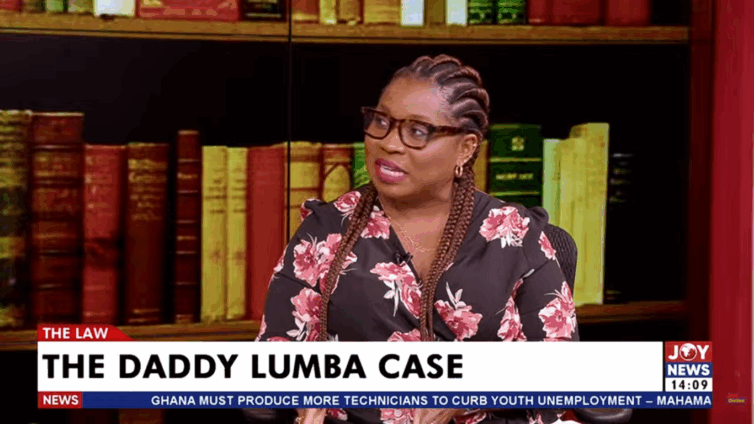
A landmark ruling by the Kumasi High Court, delivered on Friday, November 28, 2025, by Justice Dorinda Smith Arthur, has confirmed that the late legendary highlife musician Charles Kwadwo Fosuh, popularly known as Daddy Lumba, was legally married to two women at the time of his death. The judgment dismissed a suit filed by Akosua Serwaa Fosuh, who sought a declaration that she was the sole lawful wife of the musician, having married him under the Ordinance (Civil Marriage), and therefore exclusively entitled to perform his widowhood rites.
However, the court found that both Akosua Serwaa Fosuh and Priscilla Ofori, known as Odo Broni, were legally married to Daddy Lumba. Akosua Serwaa had contended that her Ordinance marriage made her the only surviving spouse. The court’s decision validates both the Ordinance marriage and a customary marriage, a determination that has sparked nationwide discussion on marriage systems, inheritance, and customary practices in Ghana.
Legal experts have widely commended Justice Dorinda Smith Arthur for her meticulous and clear approach in handling the complex spousal case. Iris Aggrey-Orleans, a Partner at Beyuo & Co., and Reindorf Twumasi Ankrah, a Partner at Morrison, Twumasi & Partners, both praised the judge's diligence and the accessibility of the 74-page ruling for the general public. Aggrey-Orleans noted that the judge took deliberate care in drafting the ruling, fully aware of the intense public and legal scrutiny it would attract, laying down principles in an easily understandable manner.
Reindorf Twumasi Ankrah further elaborated on the judge's commendable work, highlighting that she went beyond the immediate issues to educate the public on Ghana’s plural marriage systems. He pointed out that pages 31 to 33 of the decision demonstrate the judge's awareness of public confusion regarding marriage types. Due to significant public interest, Justice Arthur explicitly stated her intention to "veer off the issues and take some time to educate the public on the types of marriages." She meticulously examined customary marriage, marriage under Ordinance, and Islamic or Mohammedan marriage, detailing the incidences of each before addressing the specific questions before her.
Both legal minds agreed that the judge displayed remarkable foresight and thoroughness. Ankrah stated that the judge "anticipated every issue that may come up in the commentaries and addressed it as well," even going further to examine alternative possibilities, such as assuming no customary marriage existed, after determining its validity between Daddy Lumba and Odo Broni. This approach, he concluded, reflects a deep understanding of both the law and the issues at stake, resulting in a conclusion that is "more or less unimpeachable."
Aggrey-Orleans also provided crucial legal clarification regarding widowhood rites and succession under Ghanaian law. Speaking on JoyNews’ The Law, she explained that the court’s decision is consistent with Ghana’s legal framework, which admits of having more than one wife under customary law for the performance of widowhood rites. She stressed that widowhood rites and succession should not be conflated, as "succession has already been provided for under our intestate succession law," though she acknowledged that this area "needs some reform." The ruling, she reiterated, aligns with Ghana’s plural legal system where statutory and customary marriages co-exist, underscoring the importance of understanding both types, especially for those entering multiple unions without formal dissolution.