How a Zero-Funded Nigerian AI Startup Quietly Ranked Among the World’s Best
A Nigerian AI startup with zero funding has ranked fourth globally for spreadsheet accuracy. Here’s why Decide’s breakthrough matters for AI, Africa, and the future of work.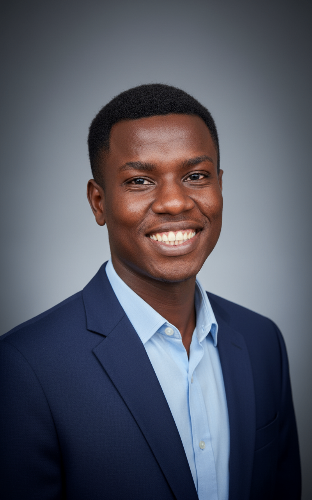

In conversations that have to do with artificial intelligence, the story often sounds the same and I bet you would agree with me—ranging from AI ethics across various sectors, massive funding rounds, sprawling teams, cloud credits burning by the minute, to valuations climbing faster than the technology itself.
Honestly, that script has become so dominant that we often forget to ask more concerning questions—and one of them is actually what happens when we demand real performance without the noise?
That is where Decide—a Nigerian startup enters the conversation.
With no external funding, a team of just three people, and a product that launched publicly only months ago, Nigerian AI startup Decide has ranked fourth globally for spreadsheet accuracy, according to SpreadsheetBench, one of the most respected benchmarks for evaluating how AI systems handle real-world spreadsheet tasks and just to be more clear; this is not fourth in Africa, not fourth among bootstrapped startups but fourth in the world.
For anyone paying attention to how AI is actually used in offices, banks, startups, and research labs, this ranking is more than a feel-good headline.
It raises an introspective need to observe how we measure AI progress, who gets to build world-class tools, and whether capital intensity is truly the gatekeeper of innovation.
Inside Decide’s Global Ranking and Why SpreadsheetBench Matters

Founded by former Flutterwave developer Abiodun Adetona, Decide was built out of a very practical frustration: too much professional time is wasted cleaning messy data, debugging formulas, and hopping endlessly between spreadsheet tabs. Anyone who has worked with Excel, Google Sheets, or financial models understands how these small inefficiencies quietly drain hours.
Decide approaches spreadsheets differently, so instead of merely suggesting formulas or generating explanations, the AI understands the structure of a spreadsheet, executes changes directly, and explains what it has done in plain language. The goal is not just automation, but clarity, an AI that works with users rather than around them.

That design philosophy paid off in measurable terms. On SpreadsheetBench’s Verified evaluation set, 400 carefully curated, real-world spreadsheet tasks, Decide achieved an 82.5% accuracy score, successfully solving 330 tasks. Only three AI agents ranked higher in this ranking: Nobie Agent, Shortcut.ai, and Qingqiu Agent.
The comparison is striking. Shortcut.ai was built by Fundamental Research Labs, which has raised $30 million in funding. Qingqiu Agent operates at an entirely different scale, with over 5,000 employees and an estimated $5 billion market capitalization. Decide, by contrast, has no venture capital backing and a three-person team.
The credibility of this result rests heavily on SpreadsheetBench itself, developed by researchers from Tsinghua University and Renmin University of China, and introduced at NeurIPS 2024—one of the world’s most respected AI conferences—the benchmark is designed to avoid artificial test cases.
Instead, it draws directly from real Excel questions sourced from online forums where users seek help with genuinely complex spreadsheet problems.


As Adetona explained, this approach makes SpreadsheetBench a reliable indicator of how well an AI system performs in actual workplace scenarios, not just controlled lab environments.
What Decide’s Performance Says About African AI and the Road Ahead

Beyond the technical achievement, Decide’s ranking feeds into a broader conversation about AI development in Africa. According to Techpoint Africa’s overview of notable African AI products, the continent’s AI story in 2025 has been defined less by scale and more by intent, focused on solving immediate, practical problems with limited resources.
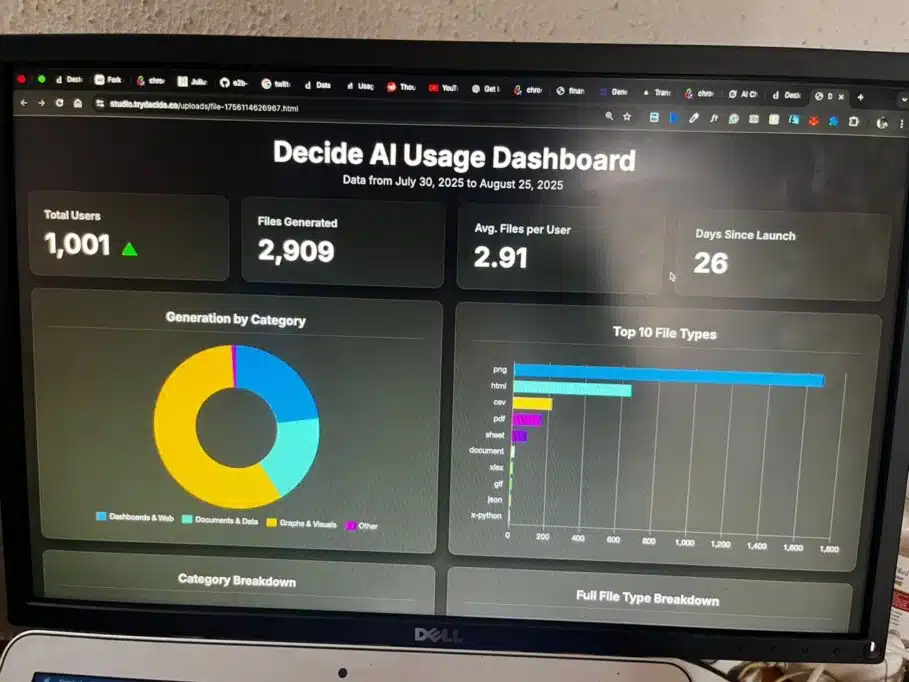
Decide fits squarely into that pattern, it gained 1,000 users within 24 days of launch, and has since grown to over 3,000 users, including paying customers. The growth is modest by Silicon Valley standards, but significant for a specialized productivity tool emerging from a resource-constrained environment.
Still, the ranking forces a difficult question into the open: Should African AI startups begin thinking at global scale from the onset of ideal and conception?
Decide’s performance shows that technical excellence is not the problem, the challenge lies in sustaining momentum. Building and maintaining AI systems at scale requires capital—for infrastructure, compute, research, and long-term talent retention.
Without funding, even standout products risk plateauing, not because the ideas fall short, but because the resources do. At the same time, Decide’s success quietly challenges the assumption that African startups must first prove themselves locally before competing globally. In this case, global competitiveness can be the goal from the onset first, African startups don't need to play small.
There is also a symbolic layer to this story, AI benchmarks, global rankings, and academic conferences have historically centered institutions from a narrow set of geographies. Decide’s presence near the top of SpreadsheetBench subtly disrupts that pattern, showing that meaningful AI progress can emerge from places often excluded from the conversation.
Whether Decide chooses to remain lean, pursue funding, or scale selectively, its ranking has already done something important, it has expanded the mental map of where serious AI innovation can come from and that is worth learning from.
Results Speak Louder Than Resources And Headlines

Decide’s fourth-place global ranking is not just a win for one Nigerian startup. It is a reminder that performance still matters in a landscape increasingly dominated by hype and capital headlines.
Built without funding, with a tiny team, and focused on a specific, everyday problem, Decide has demonstrated that world-class AI does not always announce itself with fanfare.
The bigger takeaway is not that funding is irrelevant, it clearly is not, but that intent, focus, and technical rigor still count.
As African AI continues to evolve, stories like Decide’s suggest a future where innovation is judged less by how much money is raised, and more by what actually works.
And perhaps that is the most curious part of this story is that an AI tool is quietly doing its job, while the world slowly catches up to what it has already achieved.