Is Your Career Path Yours or Social Pressure in Disguise?
Career choices for many, are not theirs alone. Read how family, society, comparison culture, and hustle culture shape modern career choices. It questions whether your career path is truly yours and guides readers toward defining success on their own terms.
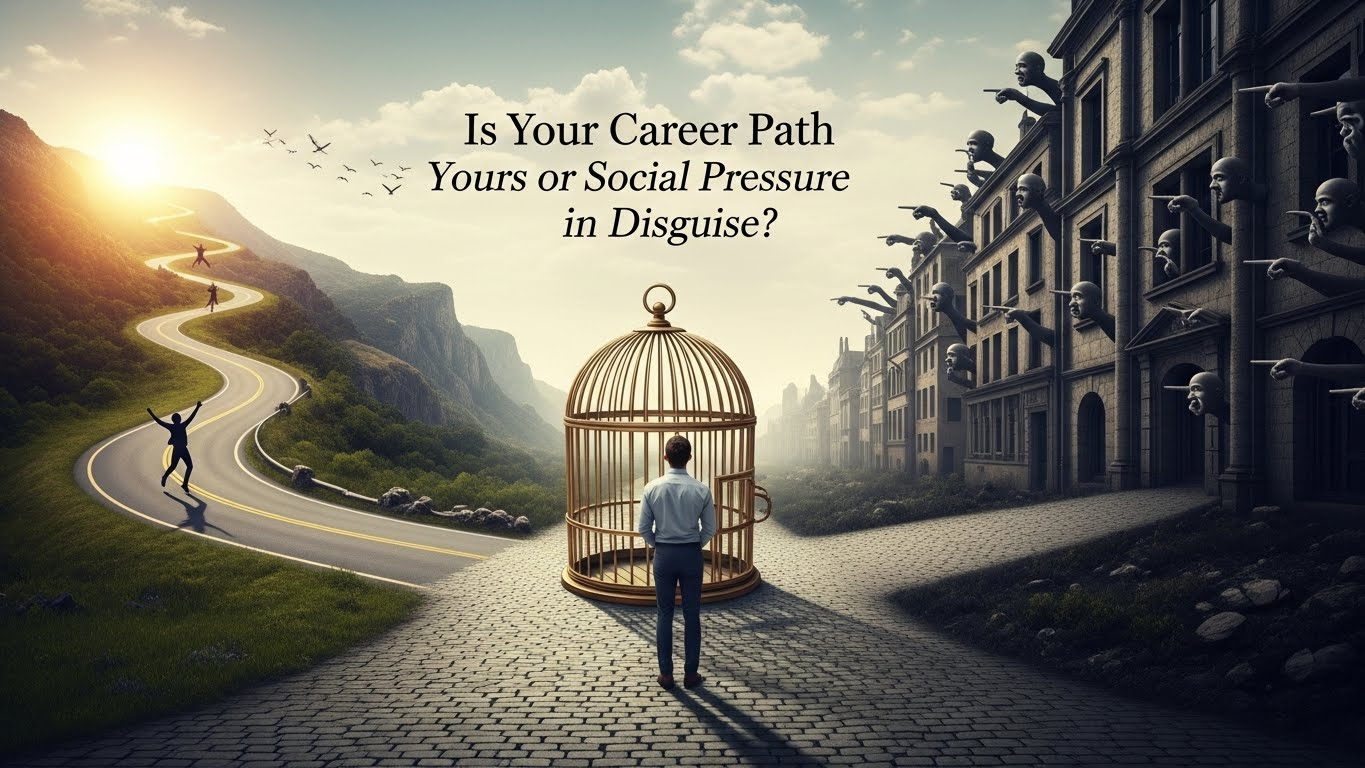
Picture a teenager sitting in front of a university application form, pen shaking slightly as they stare at a list of courses they barely understand. Around them, voices echo louder than their own thoughts. A mother’s soft but insistent “Choose something professional.” An uncle’s booming “Be a doctor, the family needs one.” A sibling’s subtle brag about engineering being the only respectable course. A friend pursuing law because everyone else is doing it. And then there is the ever-present, invisible influencer, social media, showcasing young people living glossy, successful-looking careers that seem to dictate what is worth doing and what is not.
The teenager eventually picks a course. Years later, they graduate. They find a job, or maybe they don’t. Along the line, they begin to ask a harder question: Did I choose this life, or did someone else choose it for me?
In a world where validation is louder than authenticity and comparison is more common than reflection, many young people are walking careers they do not want, pursuing dreams they never asked for, and living lives shaped by the expectations of others. The bigger question is not whether they have a career. The bigger question is whether that career truly belongs to them.
This is the conversation many avoid, yet it sits quietly in the hearts of millions: Is your career path truly yours — or just social pressure in disguise?
What Influences Our Career Choices Without Us Realizing?
Family Expectations
Across many households, the idea of “choosing a career” is not just a personal decision. It is a familial responsibility, a cultural inheritance, and sometimes even a debt owed to lineage. Generations have glorified the holy trinity of professions, medicine, law, engineering, to the point that anything outside this spectrum feels almost rebellious. Parents rarely intend harm; most simply want security for their children. But the methods used often silence the child’s voice long before they get a chance to discover who they are.

You find graduates who studied medicine but feel no empathy for patients because caregiving was never their gift. You meet engineers who dread mathematics but forced themselves through years of frustration because it was the prestigious thing to do. You encounter lawyers who never truly desired the courtroom but followed the well-worn path set by parents, uncles, aunties, and a society that worships titles more than talents.
The deeper truth is that many careers are chosen long before the child even knows what they are good at. Subtle pressures disguised as “advice,” loaded statements about dignity, and casual comparisons between children quietly push young people into careers that do not match their natural abilities or future dreams.
Social Media and the Comparison Culture
If family plants the seed of pressure, social media waters it until it becomes a forest. Platforms are filled with flashy job titles, curated entrepreneurial journeys, tech success stories, overnight millionaires, and creators who appear to be thriving effortlessly. The average young person scrolling through these highlight reels is not just consuming content; they are absorbing expectations.
When a 22-year-old sees another 22-year-old earning $100k in tech, the internal pressure grows. When someone announces they “made it” through crypto, influencing, or a start-up, others suddenly begin adjusting their career goals to match trends, not passions. The danger of this comparison culture is that success stops being personal and becomes a race. Careers become social badges. People pick industries not because they love them but because everyone else seems to be succeeding there.
Comparison never breeds fulfillment. It breeds anxiety, self-doubt, rushed decisions, and a career path that is shaped by the fear of being left behind rather than the desire to grow.
Cultural Definitions of Success
Every society has its own definition of what it means to “make it.” Some cultures prioritize wealth, others prioritize stability, while others prioritize prestige. In many African societies, success is often synonymous with titles, high income, or jobs that appear respectable. Creative fields get overlooked. Humanitarian careers get dismissed. Passion-driven paths are treated as hobbies unless they bring immediate financial gain.
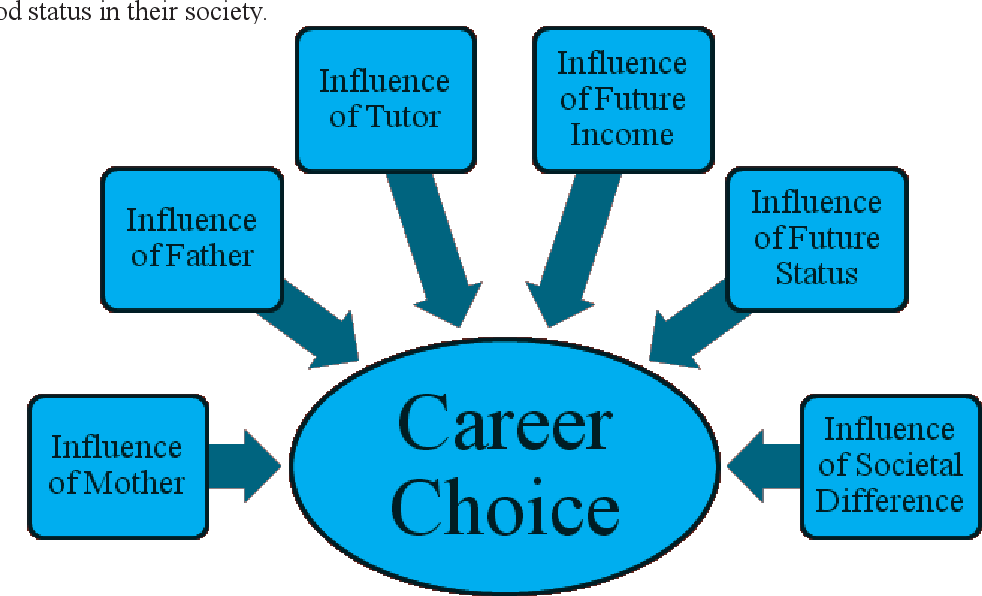
This cultural lens subtly dictates the careers people choose. When society applauds only a few professions, young people instinctively move toward those professions even if their strengths lie elsewhere. The result is a generation filled with competent professionals but very few fulfilled individuals.
The Hustle Culture Trap
Why We Glorify Overwork
Somewhere along the line, society decided that the more exhausted you are, the more successful you must be. “No sleep,” “grind 24/7,” and “if you’re resting, someone else is working” became the slogans of ambition. The tragedy is that people began measuring their value not by the quality of their work but by the level of their burnout. Even students began believing that stress is a sign of seriousness.
This culture creates individuals who chase work for the applause, not the alignment. They stay in jobs because the struggle makes them appear hardworking. They pile up degrees because being busy feels like progress. They forget that overwork is not a personality trait — it is a warning sign.
How Hustle Culture Hijacks Your Dreams

When you stop asking what you want, hustle culture fills in the blank. You begin chasing the kind of success that impresses others. You choose jobs that make you appear ambitious. You take on tasks that look good on social media. You enter industries not because you love them, but because they promise status.
Soon, you lose your voice. You forget the dreams you once had. You silence your true desires because hustle culture convinces you that slowing down is failure. But the greatest tragedy is that you often don’t realize this hijacking until you burn out or wake up one day feeling empty despite achieving everything society applauds.
Signs You’re Caught in the Cycle
You know you are inside the hustle loop when burnout becomes normal. When waking up tired becomes your daily reality. When you constantly compare your achievements to others. When you fear choosing a slower, more meaningful path because it may seem less glamorous.
The hustle cycle is dangerous because it makes you believe that speed is the same as progress. But speed without direction is chaos.
Are You Really Choosing Your Career? Questions Worth Asking
At some point, every adult must confront the quiet truth hiding beneath their choices. If the world stopped applauding your job today, would you still show up? If nobody praised your achievements, would you still care about them? If you removed your parents’ expectations, cultural norms, and social media influence, would your career look the same?

These are hard questions, but they reveal the difference between a self-chosen path and a pressure-driven path. The most important inquiry is simple: does your career give you life, or does it drain you? Fulfillment is not found in what the world respects; it is found in what aligns with your values, strengths, and long-term desires.
The uncomfortable reality is that many people fear answering these questions because the truth may require change, courage, or walking away from a path that society approves of. Yet authenticity is impossible without confrontation.
Redefining Success on Your Own Terms
The Power of Authentic Goals
There is no universal definition of success. The world may applaud money, titles, and fame, but real success is deeply personal. It is the quiet satisfaction of walking a path that feels right for you, even if it is not popular. It is choosing a life that nourishes your mental, emotional, and financial well-being holistically, not selectively.
When people begin to define success for themselves rather than inherit the definitions of others, they unlock a level of peace and clarity that hustle culture cannot imitate.
Creating a Personal Definition of Fulfillment
The most important question anyone can ask is: What kind of life do I want to live? Not what job do I want, but what life. What pace feels natural? What environment brings out my best self? What type of work energizes me? What values matter most?
Fulfillment is not the end of the journey. It is the compass that directs it.
Rebuilding Your True Path
Every authentic career journey requires courage. It means unlearning the labels society places on professions. It means choosing growth over validation. It means being honest about your strengths and willing to pursue new skills. It means accepting that leaving a career path that others admire is not failure, it is integrity.
Walking away from external validation is one of the hardest decisions anyone can make. But staying in a career that kills your joy is far more costly.
Conclusion — Your Path, Your Pace, Your Rules
At the end of the day, you are the one who lives with your choices. You bear the joy that comes from alignment, and you carry the emptiness that comes from disconnection. Not your parents, not your friends, not society, you.

Your career should not be something that happens to you. It should be something you shape intentionally, thoughtfully, and courageously. The world may have its opinions, but the truth remains the same: A career chosen out of pressure can create a life that never truly feels like yours.
You owe yourself the honesty of choosing your path. You owe yourself the dignity of defining success personally. You owe yourself the freedom to build a life that reflects who you are, not who the world expects you to be.