Is This the Beginning of the End of HIV Or Just Another Elite Privilege?
Have you heard about the new HIV control drug? LENACAPAVIR, examine the new HIV prevention drug, its global price divide, Nigerian and other African nation accessibility challenges, class dynamics, and what this breakthrough means for ordinary people.
Have you heard about the new HIV drug that requires only two injections a year? For many, it sounds like the long-awaited breakthrough, a medical miracle signalling the beginning of the end of HIV. But for others, especially those who live in countries where healthcare access depends on income, geography, and luck, it raises more questions than answers. If you’ve been scrolling through headlines lately, you must have seen the global excitement around a preventive HIV drug that costs a jaw-dropping $28,000 per year in the United States, while NGOs, through global partnerships, are projecting that it may reach countries like Nigeria, South Africa and Zambia for just $40 by 2026. It feels like a moment where hope meets reality, where science meets inequality, and where a medical breakthrough becomes a mirror reflecting the global divide.
This story is not just about medicine. It is about class. It is about power. It is about who gets to live, who gets protection, and who is left behind despite scientific progress. In a world where healthcare has long been shaped by structural inequality, the arrival of Lenacapavir is forcing us to ask: Is this truly the start of the end of HIV, or just another privilege reserved for the wealthy?
Lenacapavir: What it is And Why It Matters
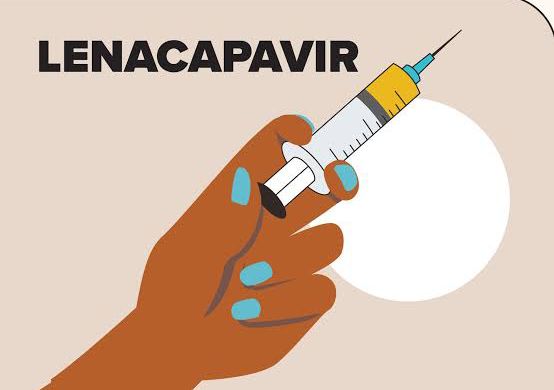
Lenacapavir is being hailed as one of the biggest leaps in HIV prevention science in decades. It is a long-acting injectable drug administered only twice a year. Unlike existing options such as PrEP pills that require strict daily adherence, Lenacapavir offers extended protection with minimal effort. For global health experts, this represents a revolutionary innovation, one that could shift the narrative around HIV prevention and significantly reduce new infections globally.
The excitement surrounding Lenacapavir is not misplaced. A drug that can provide six months of protection at a time is a scientific milestone. For people who struggle with daily medication, whether due to stigma, forgetfulness, or lack of consistent access, a twice-yearly injection could be the difference between exposure and protection. It could reduce the burden of adherence, simplify preventive treatment, and potentially cut transmission rates dramatically.
But even as the world celebrates this breakthrough, a question floats quietly in the background: Is this a cure? Not yet and we’ll address that later. But the fact that many people assume it is shows how desperate the world is for a final solution, and how eager societies are to cling to any hint of hope. Yet scientific hope without social justice becomes a privilege instead of a solution.
The Price Problem — $28,000 vs $40: A Tale of Two Worlds
But here’s where the triumph of science meets the politics of class. Lenacapavir costs $28,000 per year in the United States. That is equivalent to the annual salary of many Americans and more than the lifetime earnings of countless people across the Global South. The drug is, in its commercial form, built for those who can afford advanced healthcare, health insurance, or government coverage.
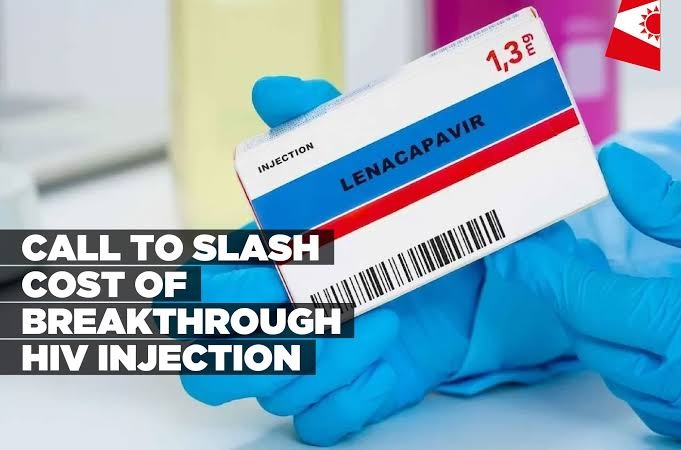
Now contrast that with the proposed global partnership price of $40 in countries like Nigeria and South Africa. This extreme gap forces us to confront an uncomfortable question: How can the same drug cost $28,000 for one population and $40 for another? Is this generosity, strategy, or pharmaceutical politics? And even if the subsidized price becomes a reality, how do you compress a cost this drastically without compromising something? More importantly, how will access be managed? Just because the drug “exists” in a country does not mean people who need it will get it.
This is where the conversation shifts from healthcare to economics. The discrepancy raises deeper questions about how pharmaceutical pricing works, who gets priority, and why the Global South must depend on “partnerships” and negotiations to access life-saving treatments. If the rich world pays $28,000 and the rest of us pay $40, what does that say about the value placed on different lives? What does it say about global power structures? And will this create yet another system where the drug is technically available but practically inaccessible to millions?
Lenacapavir may be a scientific breakthrough, but its pricing exposes the harsh reality of global inequality: science is advancing, but fairness is not.
Accessibility in Nigeria: Even at $40, Who Can Truly Afford This? Will There Be a Social Divide: Who Gets Protection First?
Let’s assume the projected $40 price eventually becomes available in Nigeria. That roughly translates to ₦58,000 for two injections per year. For the average Nigerian, is this as affordable as it sounds? The truth is more complex than the numbers suggest. ₦58,000 may be manageable for the educated middle-class youth living in cities like Lagos, Abuja, or Port Harcourt. But Nigeria is a country where millions survive on less than ₦5,000 a day, where many workers earn below ₦50,000 monthly, and where healthcare is often an out-of-pocket luxury rather than a right.

Even if Lenacapavir becomes accessible on paper, will it be accessible in reality? Nigeria’s health system is no stranger to some level of alleged dysfunction. Stock-outs in hospitals are common. Corruption frequently undermines distribution channels. Rural communities remain far from clinics. Social stigma still shapes conversations around HIV. And lack of sensitization means many people may never hear about the drug at all.
This raises the spectre of a class-based rollout. Will the rich and urban gain access first while the poor and rural wait indefinitely? Will private hospitals receive supply while public hospitals ration it? Will awareness campaigns target educated audiences while the less privileged remain unaware that such protection exists?
Nigeria’s health inequity is often shaped by who knows what, who can travel where, and who can afford to pay how much. Lenacapavir risks widening that inequality. In a society where technological access, education level, and proximity to healthcare are unevenly distributed, medical breakthroughs do not always translate into social breakthroughs.
The divide could become stark: the informed vs the uninformed, the protected vs the vulnerable, the privileged vs the forgotten.
Is Lenacapavir a Cure for HIV? And The Global Health Politics Behind the Drug
It must be stated clearly: Lenacapavir is not a cure for HIV, it is a medication that controls the virus, lowers the amount of HIV in the blood, and can help delay the progression of AIDS. It is basically a powerful prevention drug—essentially an advanced form of PrEP—but it does not eliminate the virus from the body. So why do people keep asking whether this is the cure? Because after 40 years of battling HIV, humanity still longs for a definitive end. Every scientific milestone reawakens hope that the final solution may be near.
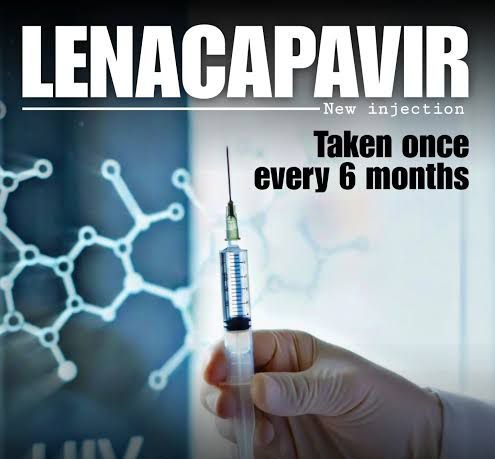

Prevention breakthroughs, however, are still deeply important. In countries like Nigeria, where new infections are disproportionately high among young people, especially women, a twice-yearly drug could reduce new cases significantly. But prevention does not erase the underlying issue: why does it take decades for life-saving medicines to trickle down to the global poor?
The reason lies in global health politics. Pharmaceutical companies guard patents. Wealthy nations negotiate faster access. Global institutions attempt to bridge the gap, but partnerships, donations, and subsidies often become the only means through which Africa receives essential medical advancements. WHO, the Global Fund, and PEPFAR have long acted as brokers between pharmaceutical power and developing nations. Yet this dependency highlights a painful reality: Africa is rarely the priority market, it is the negotiation market.
Behind every breakthrough lies a struggle between pharma profits and public health needs. Lenacapavir is no exception.
The Nigerian Reality: Will Lenacapavir Change Anything?
Even if the drug arrives, Nigeria must face its realities. Will stigma reduce simply because a new drug exists? Will people trust an injection that promises six months of protection? Nigeria, after all, remains a country where medical trust is often fragile and conspiracy theories flourish.
There is also the danger of fake versions entering the market as demand and scarcity create opportunities for exploitation. Another issue is distribution: will the drug be available only in selected elite hospitals or HIV centres, leaving other regions underserved? And will corruption distort distribution so that those with influence access it first?
The rollout might present a familiar Nigerian pattern: innovation arrives, excitement builds, access becomes restricted, and inequality quietly expands. The gap between scientific availability and social accessibility could again become glaring.
What the Average Person Should Take Away
Lenacapavir is undeniably a breakthrough, a scientific achievement that deserves global celebration. But breakthroughs do not always translate into fairness. Inequality still shapes who gets protected and who remains vulnerable. As the world celebrates this new weapon in the fight against HIV, societies like Nigeria must confront the deeper truth: a drug is only as powerful as a system’s ability to distribute it equitably.
This moment demands reflection on why we must strengthen public health funding, demand accountability, and challenge the systems that allow inequality to determine survival. Science may be moving forward, but social justice must move with it. Because medical miracles are only as powerful as the world’s willingness to share them. And in the fight against HIV, science may be winning—but inequality is still the strongest virus.