If Payments Are Solved, What Is Fintech Actually Building Now?
Payments are no longer fintech’s biggest problem. As margins shrink and competition rises, the industry is shifting toward credit systems, embedded finance, and invisible infrastructure that now shape how money is used.
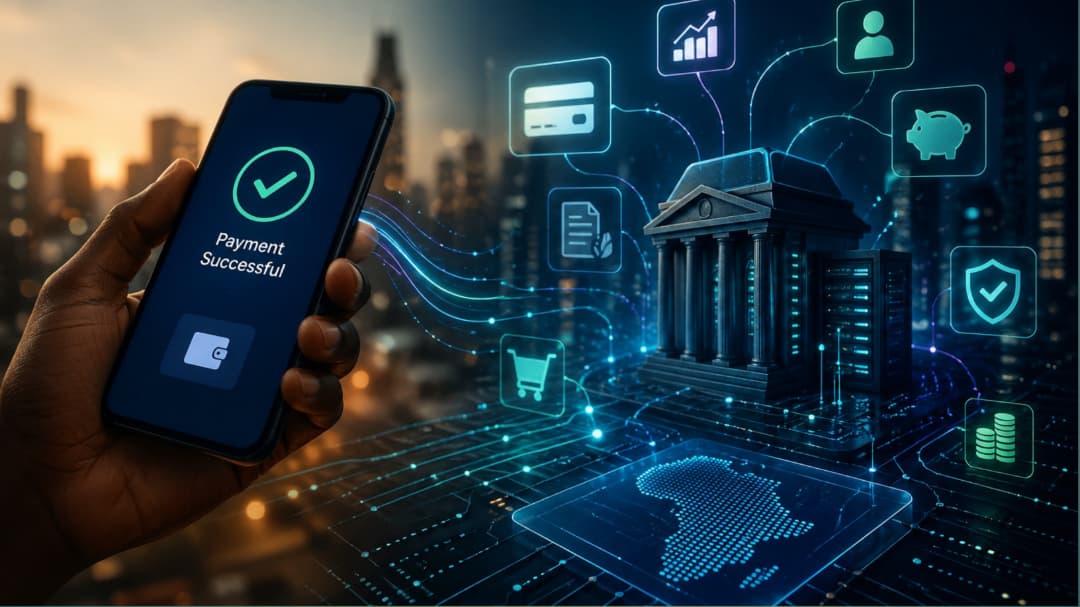
A few years ago, fintech had a clear enemy: friction.
Moving money was slow, expensive, and often frustrating.
The entire industry grew around removing that friction and in many markets, especially across Africa, that mission largely succeeded.
Today, sending money is no longer the problem it once was. Transfers are instant, wallets are widespread and even traditional banks have caught up with real-time digital payments.
And that shift is now being reflected inside the industry itself.
Recently, fintech leaders and ecosystem players point to something subtle but important– payments are no longer seen as the main frontier of innovation.
The problem that once defined the space is, in many ways, considered solved.
Now, the question is: if payments are no longer the challenge, what exactly is fintech building now?
Payments stopped being the business but not the pressure

Payments, while solved in terms of user experience, are no longer as financially powerful as they once were.
Margins have tightened and competition has pushed fees down.
In many markets, transfers are either extremely cheap or entirely free. What used to be a core business model has now become closer to infrastructure which is essential, but not highly profitable on its own.
That creates pressure that is easy to miss from the outside but very real inside the industry: if payments alone don’t generate enough value, fintech companies must move elsewhere to sustain themselves.
This is where fintech stops being just a story of innovation and becomes a story of economic survival.
The expansion beyond payments is not optional

What looks like diversification in fintech is often a necessity.
Many companies are moving into lending, savings, credit scoring, and financial products that go beyond transactions. This is not just ambition, it is adaptation to a changing revenue reality.

Once payments became stable and widely accessible, the question shifted. It was no longer how do we move money? but how do we create more value from the money already moving?
That shift explains why fintech companies are increasingly behaving like financial institutions. Loans are being built on transaction histories. Risk models are being generated from user behaviour.
Financial services are being embedded into platforms where users don’t consciously engage with “finance” at all.
The product is no longer the transaction. It is what can be built from it.
Banks are no longer the only reference point
At the same time, traditional banking systems are not standing still.
Banks are modernising faster than before, strengthening digital platforms and tightening their presence in the same space fintech once dominated alone. Regulators are also becoming more involved, especially around lending, licensing, and data use.
The result is not a clean competition anymore. It is convergence.
Fintech companies are becoming more bank-like. Banks are becoming more digital. And both are being shaped by regulation and infrastructure constraints that define how far each can move.
In this environment, competition is no longer about who processes payments better. It is about who controls the underlying financial systems everything else depends on.
What fintech is actually building now
If payments were the first chapter of fintech, they are no longer the main story. They are the foundation everything else is built on.
What fintech is building now is not a single product category. It is a layered system:
infrastructure that powers financial activity in the background
credit and lending systems built on behavioural data
embedded financial tools inside non-financial platforms
Each of these layers serves a different purpose, but they share one direction: moving finance from visible actions into invisible systems.
Conclusion
The first phase was about removing friction from money movement, and that phase is largely complete.
The next phase is about building the systems that sit underneath financial life itself, that is, systems that decide how money behaves once it enters circulation.
Fintech is no longer primarily about helping people send money.
It is about influencing what happens after the money moves, how it is assessed, how it is accessed, and increasingly, how it is controlled.