Africa’s Agrifood System Relies on Women, But Are They Rewarded?
Women make up 76% of sub-Saharan Africa's agrifood workforce, yet face limited access to resources. Closing this gap could unlock $53 billion in economic value.
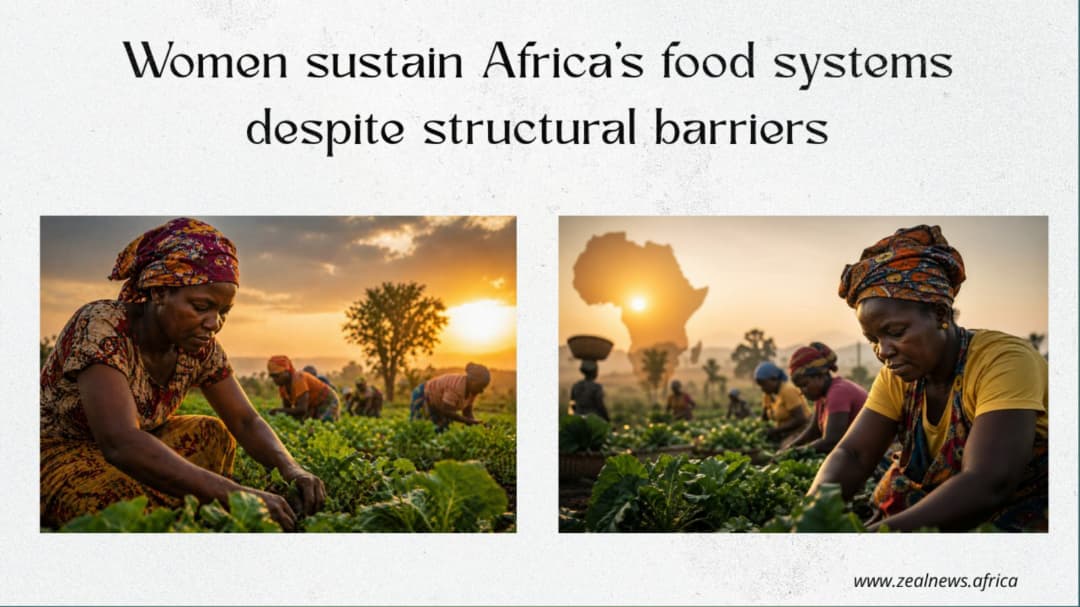
Women account for76 percent of the agrifood workforce in sub-Saharan Africa, yet the systems they sustain continue to operate without them at the centre of power.
This isn't a marginal contribution, it is the foundation of how food systems function across the region.
Yet, the same system they sustain still limits their access to land, finance, and basic protection and this shows a persistent gap, one where contribution is high, but control, access, and protection remain systematically limited.
The Backbone of Africa's Food System
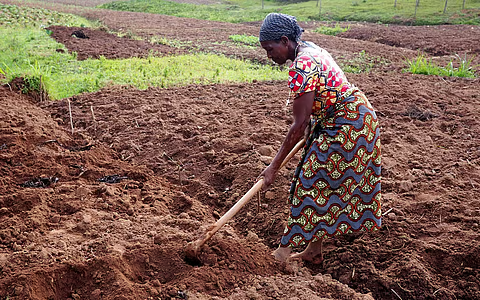
Across rural and peri-urban communities, women are embedded in nearly every stage of the agrifood chain.
They process crops, trade in local markets, transport goods, and sustain informal supply chains.
Their participation also extends intooff-farm activities, where they are significantly more active than men, with their share growingfrom 21 percent in 2005 to 29 percent in 2022.
These roles are essential, but they often exist outside formal recognition.
As a result, high participation does not translate into stronger financial security or influence over decision-making.
High Contribution, Low Control
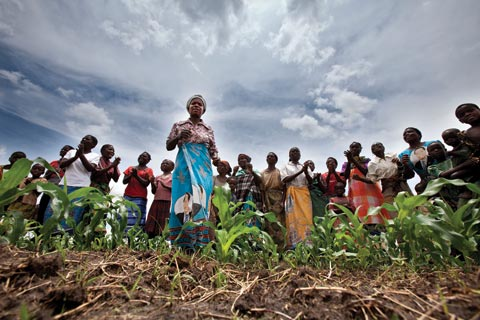
Despite their central role, access to critical resources remains structurally uneven.
Land ownership is limited, in the majority of33 countries tracked in the data, men are more likely than women to own agricultural land.
Financial services are systematically harder to access.
Social protection is minimal as only 13 percent of women in the sector receive cash benefits, and fewer than 7 percent have access to pensions.
These constraints directly affect productivity and income potential.
Without access to inputs, credit, and infrastructure, the ability to scale or stabilise income remains restricted.
What fills that gap is adaptation.

Women diversify income streams, form cooperative savings groups, and adjust to changing conditions.
The Cost of Ignoring the Gap
The imbalance is not only social, it is economic.
Closing gender gaps in productivity and wages within agrifood systems could increase Africa's GDP by 2.58 percent, equivalent to around $53 billion, while also reducing food insecurity across the region by nearly 4 percent.
This reframes the conversation.
What is often framed as inclusion is, in practical terms, an efficiency issue. When the majority of the workforce operates below its potential due to systemic barriers, the entire economy absorbs that cost.
In this context, investing in women is not peripheral. It is central to growth.
Africa's Food Future Depends on Fixing This
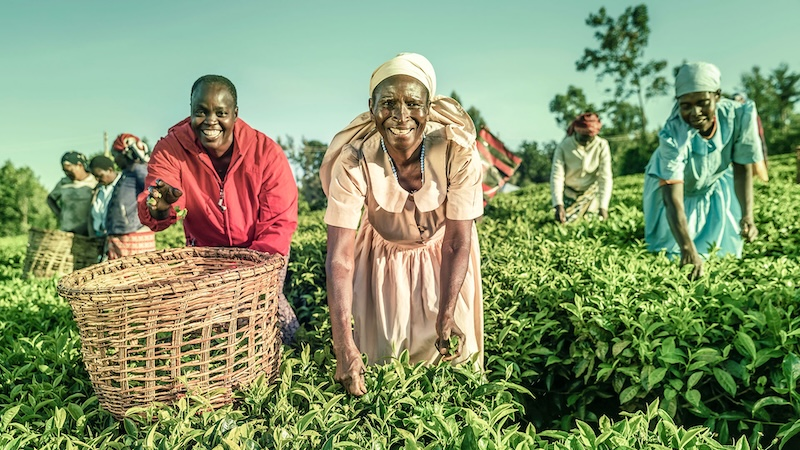
Agrifood systems sit at the centre of broader pressures like food security, climate resilience, and population growth.
The UN has declared2026 the International Year of the Woman Farmer, a global call to action that signals growing urgency.
Women are already navigating these challenges, often at the frontline of environmental and economic shifts.
But without structural change, that role becomes increasingly difficult to sustain.
There should be stronger legal protections, expanded social safety nets, improved access to finance and technology, and land rights reform.
A system where contribution is high but support is low cannot deliver long-term stability.
Beyond Recognition
There is no shortage of acknowledgment when it comes to women's role in Africa's agrifood systems.
The challenge is structural realignment.
As long as the imbalance persists, the burden remains uneven, carried by those who already contribute the most.
Until that balance shifts, Africa's agrifood system will continue to depend on women without fully working for them.